Explore how real leadership transcends job titles and organizational hierarchy. Discover why competence, consistency, and credibility matter more than authority in earning people's trust and commitment.
Her Story
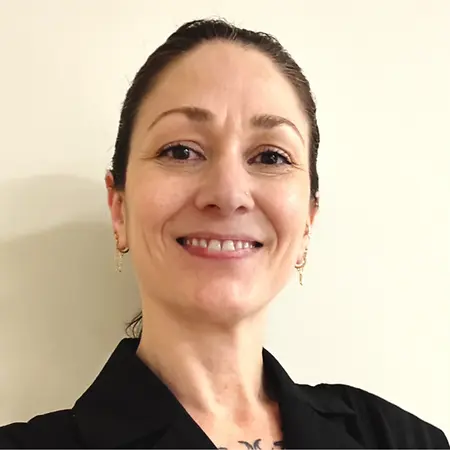
About Greta
Greta Callan is a Principal Genomics Automation Engineer at CooperGenomics who specializes in transforming complex laboratory operations into scalable, reliable, and compliant automation ecosystems. With more than 15 years of experience spanning pharmaceutical research, clinical diagnostics, and laboratory engineering, she has led automation initiatives from concept through global deployment at organizations including CooperGenomics, Merck, BioAgilytix, and PPD.
Her expertise extends beyond robotics and software. Greta is known for connecting scientific objectives, engineering solutions, validation strategy, and operational excellence into automation programs that laboratories can confidently rely on. She believes successful automation is not simply about implementing technology—it is about designing systems that improve quality, strengthen regulatory compliance, empower laboratory teams, and remain sustainable as organizations grow.
Throughout her career, Greta has partnered with scientists, software developers, quality organizations, information technology teams, and executive leadership to bridge the gap between technical complexity and business strategy. Her systems-thinking approach enables her to identify opportunities that improve efficiency while maintaining scientific integrity and patient safety.
Equally passionate about developing people, Greta serves as an Industry Advisor for Seton Hall University’s Transformative Leadership Initiative, where she mentors emerging professionals and encourages them to approach challenges with curiosity, critical thinking, and the confidence to ask better questions. She believes innovation begins by understanding the underlying science, questioning assumptions, and creating environments where diverse perspectives can improve outcomes.
Whether leading multi-site automation programs, advising organizations on validation strategy, or mentoring the next generation of scientific leaders, Greta is driven by a simple philosophy: technology delivers its greatest value when it enables people to do their best work. Her commitment to continuous improvement, collaboration, and thoughtful leadership has established her as a trusted voice in laboratory automation and digital transformation.
Her Interview
Ten minutes with Greta
01What do you attribute your success to?
I attribute my success to curiosity, persistence, and a willingness to ask questions others may overlook. Throughout my career, I have found that the most meaningful breakthroughs come from understanding how individual pieces fit into the larger system. Whether solving complex technical challenges or leading cross-functional initiatives, I approach every problem with a long-term perspective and a commitment to continuous improvement. Equally important has been the encouragement of mentors and leaders who recognized my potential, challenged me to grow, and trusted me with opportunities before I felt fully ready. Their confidence reinforced an important lesson that now guides my own leadership: invest in people, because belief in someone’s potential can change the trajectory of their career.
02What’s the best career advice you’ve ever received?
The best career advice I have ever received was to never stop asking questions. Early in my career, I learned that seeking clarification is a strength, not a weakness. The people who make the best decisions are rarely the ones who assume they have all the answers—they are the ones willing to ask thoughtful questions, challenge assumptions, and continue learning. I have also learned that if an environment discourages curiosity or makes people afraid to speak up, it is unlikely to foster innovation or meaningful growth. The best organizations create space for respectful questions because that is where better ideas and better solutions emerge.
Innovation doesn’t come from having all the answers—it comes from creating an environment where people feel comfortable asking better questions.
03What advice would you give to young women entering your industry?
Believe in the value of the perspective you bring, even when you’re the newest person in the room. Some of the most meaningful innovations begin with someone asking, “Have we considered looking at this another way?” Don’t be intimidated by experience or hierarchy, but don’t assume you need to have all the answers either. Build a strong scientific foundation, stay curious, and never stop learning. Ask thoughtful questions, listen carefully, and let your work speak for itself. Confidence grows through preparation, integrity, and consistently delivering results—not by trying to be the loudest voice in the room.
04What are the biggest challenges or opportunities in your field right now?
One of the greatest opportunities in laboratory automation is shifting the conversation from automating individual tasks to designing complete, resilient laboratory systems. Successful automation requires far more than robotics or software—it demands collaboration between scientists, engineers, quality professionals, information technology teams, and laboratory operations. The challenge is ensuring that technology improves scientific outcomes while remaining compliant, scalable, and practical for the people who use it every day. Organizations that invest in cross-functional collaboration, thoughtful validation strategies, and adaptable automation ecosystems will be best positioned to accelerate scientific discovery and improve patient care.
Technology alone doesn’t transform laboratories. People, processes, governance, and scientific understanding are what turn automation into lasting innovation.
05What values are most important to you in your work and personal life?
Curiosity and integrity are the values that guide both my professional and personal life. I believe the best solutions begin with a willingness to ask thoughtful questions, challenge assumptions, and remain open to learning. Equally important is intellectual honesty—the ability to evaluate evidence objectively, acknowledge mistakes, and adjust course when new information emerges. I strive to build trust through transparency, accountability, and follow-through because strong relationships, whether within a team or outside of work, are built on consistency and respect. Ultimately, I believe continuous improvement is only possible when people feel safe to learn, collaborate, and grow together.
Her Content Hub
Articles by Greta
Leading Without the Title
How to Build Real Influence Through Competence, Consistency, and Integrity Rather Than Job Title Alone

When People Think About Leadership
When people think about leadership, they often picture an organizational chart.
- Manager
- Director
- Vice President
- CEO
Those titles certainly come with authority, but they don't automatically create influence. Real leadership begins long before someone updates your job title.
I've spent much of my career leading projects where I had little—or sometimes no—formal authority over the people involved. Engineers, scientists, quality specialists, operations teams, vendors, finance professionals, and executives all had different priorities, different incentives, and different definitions of success. None of them reported to me. Yet the projects still had to move forward. That reality taught me one of the most important lessons of my career:
People follow competence before they follow authority.
Authority can require compliance. Influence earns commitment. There's a significant difference.
Competence Before Authority
Early in my career, I believed the person with the most expertise naturally became the leader. Experience eventually showed me otherwise. The smartest person in the room isn't always the one people trust when uncertainty arises. People look for something deeper. They look for consistency.
- Can you solve problems when circumstances change?
- Can you remain calm when others become emotional?
- Can you explain complexity in a way everyone understands?
- Can you admit when you're wrong?
- Can you make difficult decisions while treating people with respect?
Those qualities aren't listed on a résumé, but they often determine whether people choose to follow your lead.
One of the biggest misconceptions about leadership is that influence comes from having all the answers. In reality, influence often comes from asking better questions. When a project stalls, it's tempting to propose solutions immediately. Strong leaders resist that impulse long enough to understand why the problem exists in the first place. Curiosity uncovers obstacles that authority alone never will.
I've found that some of the most productive meetings begin with a simple phrase:
"Help me understand."
That small shift changes the conversation from defending positions to solving problems together.
Making Yourself Replaceable
Leadership also requires a willingness to make yourself replaceable. That may sound counterintuitive. Many people build careers by becoming indispensable. While that can create job security, it can also create dependency. Organizations become fragile when knowledge exists in only one person. The strongest leaders build systems that allow others to succeed without them.
- They document processes.
- They mentor future leaders.
- They share knowledge freely.
- They celebrate when someone else performs a task just as well as—or even better than—they can.
That's not losing value. That's multiplying it.
I've learned that leadership isn't measured by how many people need you. It's measured by how many people no longer need you because you helped them grow.
Credibility and Consistency
Influence also comes from credibility. Credibility isn't built by always being right. It's built by being honest. If you don't know something, say so. If a mistake was made, own it. If a plan needs to change, explain why. People can adapt to changing circumstances. What they struggle to adapt to is inconsistency.
The Reputation You Build
Perhaps the greatest lesson I've learned is that titles eventually change. Projects end. Organizations restructure. Business cards are replaced. But the reputation you build through your actions follows you everywhere. Long after people forget your exact role, they'll remember how you made decisions, how you treated others, and whether they trusted you when the stakes were high.
Leadership was never about sitting at the top of an organizational chart. It's about creating clarity amid uncertainty, building trust before asking for commitment, and developing people instead of controlling them.
It's about leaving every team stronger than you found it.
Because the most influential leaders rarely begin with authority. They begin by earning the confidence of the people around them—one decision, one conversation, and one act of integrity at a time.
Join Influential Women and start making an impact. Register now.