Her Story
About Hanna
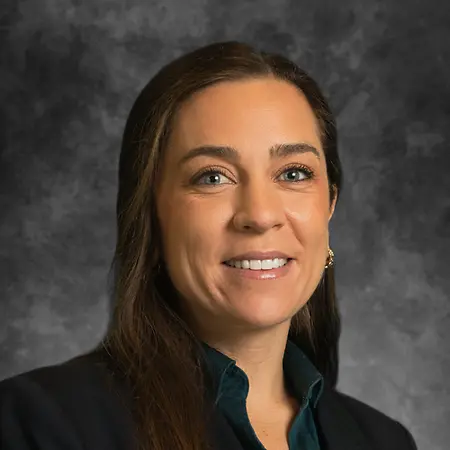
Hanna Kirlin, PSM, MPH, is the Grants Manager for Gaston County Government in North Carolina, where she leads a team responsible for the oversight of 129 grants across 30 county departments. In this role, she provides countywide leadership across the grant lifecycle: identifying and developing competitive funding opportunities to financial oversight, compliance, reporting, and post-award management. She works closely with departmental leadership and community partners to align funding opportunities with identified needs, strengthen grant management practices, and translate complex data and community priorities into fundable initiatives.
With more than a decade of experience spanning local government, public health, housing, nonprofit leadership, and community investment, Hanna has built her career around connecting resources with community needs. Her work has involved federal, state, local, and philanthropic funding supporting public health, housing stability, economic mobility, public safety, behavioral health, and other community priorities.
Before joining Gaston County’s Finance Department, Hanna served as Senior Manager of Grants and Foundation Giving with United Way of Greater Charlotte, where she managed institutional funder relationships and led grant development and reporting in support of the organization’s community investment strategy. Previously, she spent six years with the City of Charlotte’s Housing & Neighborhood Services Department, including serving as LeadSafe Charlotte Program Manager. In that role, she oversaw a $3.8 million federally funded housing and environmental health initiative and supervised a multidisciplinary team focused on housing rehabilitation, aging-in-place, and lead-hazard remediation.
Her public service career also includes nearly six years with Gaston County’s Department of Health and Human Services in quality assurance and health education and nearly three years of service with the U.S. Peace Corps in Morocco, where her work included supporting vaccination and community health initiatives among nomadic populations.
Hanna holds a Master of Public Health and a Professional Science Master’s in Health Informatics from the University of North Carolina at Charlotte, a Certificate in Global Health from UNC Chapel Hill’s Gillings School of Global Public Health, and a Bachelor of Arts in Integrative Physiology from the University of Colorado Boulder.
Her commitment to public service was shaped early by her family. She grew up volunteering alongside her mother and watching her father devote twenty years to service on city council, experiences that helped establish a lasting belief in the responsibility of public institutions to serve their communities and residents well.
Today, Hanna brings that perspective to her work by emphasizing integrity, accountability, collaboration, and responsible stewardship of public resources. She is particularly interested in strengthening coordination across government and community organizations, building sustainable systems for grant-funded programs, and ensuring that external funding translates into meaningful, measurable outcomes for the communities it is intended to serve.
Her Interview
Ten minutes with Hanna
01What do you attribute your success to?
I attribute much of my success to my parents, who taught me early that service is something you do, not simply something you talk about. I grew up volunteering alongside my mother, picking up trash on the roadside and participating in organizations like Keep Gastonia Beautiful and the United Way, and watched my father balance his career as a podiatrist with twenty years of service on city council. They showed me the importance of showing up, working hard, and contributing to the community around you.
I also credit a willingness to keep learning and to take on challenges even when I don't have every answer at the outset. Much of my career has required me to step into complex situations, learn quickly, bring the right people together, and figure out a path forward. I am naturally curious, persistent, and not afraid of hard work and difficult conversations. Combined with the example my parents set, those qualities have shaped both my career and my approach to leadership.
More than anything, I think success comes from doing work with purpose and intent, treating people well, and leaving the organizations and communities you serve stronger than you found them.
02What’s the best career advice you’ve ever received?
The best career advice I’ve received is to never be afraid to say, “I don’t know, but I’ll find out.” You don’t have to be the person in the room who knows everything; you need to be willing to ask good questions, listen to people who know more than you do, and then do the work to find an answer.
That advice has served me throughout my career because I’ve worked across very different fields, from public health and housing to philanthropy and government. Every new role has required me to learn something new, and some of the best opportunities I’ve had came from being willing to step into something before I felt completely ready.
I’ve also learned not to confuse leadership with having all the answers. Good leadership is often about bringing the right people together, understanding what each person brings to the table, and creating a path forward. Be curious, be willing to learn, and don’t let not knowing something yet keep you from taking the opportunity.
03What advice would you give to young women entering your industry?
My advice is to be willing to ask. Ask for the meeting, the introduction, the opportunity, or the chance to learn something new. Reach out to people whose work interests you, even if you have never met them. Use LinkedIn, professors, colleagues, professional associations, and the people already in your network. Most people are much more willing to share their experience and help than we sometimes assume.
I would also encourage young women not to wait until they feel completely qualified before pursuing an opportunity. Some of the most important growth in my career has happened because I was willing to step into something new and learn along the way. You can be confident in what you bring to the table while still acknowledging what you have left to learn. Be curious, ask questions, build genuine relationships, and advocate for yourself.
04What are the biggest challenges or opportunities in your field right now?
One of the biggest challenges in grants and community investment is that funding and services are often fragmented. Government agencies, nonprofits, healthcare organizations, schools, and other community partners may be working toward many of the same outcomes without always knowing what others are doing. That can lead to duplicated efforts, gaps in services, and programs that become difficult to sustain once a particular funding source ends.
I also see that as one of our greatest opportunities. Grants can be much more than a source of funding; they can be a catalyst for bringing organizations together around shared needs and measurable outcomes. Better communication, data sharing, and collaboration can help us identify where resources already exist, where the true gaps are, and where partnerships make more sense than creating another standalone program.
For me, the goal is not simply to secure more grant dollars. It is to pursue the right funding, use it responsibly, and build programs and partnerships that can create value beyond the life of a single grant.
05What values are most important to you in your work and personal life?
Integrity, honesty, and accountability are incredibly important to me, both professionally and personally. If I don’t know something, I’m comfortable saying that and then doing the work to find the answer. If I make a mistake, I own it. I believe trust is built by being honest about what you know, following through on what you say you will do, and taking responsibility when things don’t go as planned.
I also place a high value on boundaries. I care deeply about my work and take my responsibilities seriously, but I don’t believe that being committed to your career requires being available every hour of the day. I want to be fully present when I’m at work and equally present for my family and my life outside of it.
Ultimately, I want to do meaningful work, do it well, and do it with integrity, without losing sight of the people and parts of life that make the work meaningful in the first place.
Join Influential Women and start making an impact. Register now.