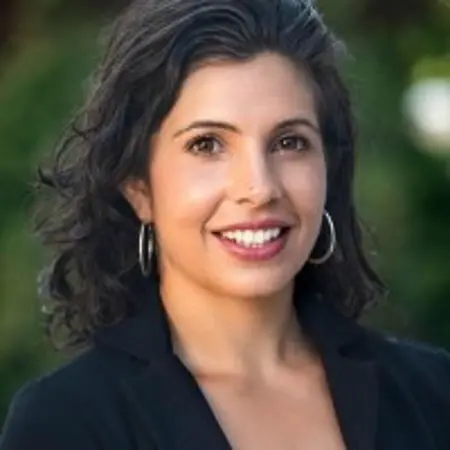
Her Story
About Heather
Heather Jimenez is a public health educator, advocate, and change agent with more than 19 years of experience spanning higher education, healthcare, and nonprofit settings. She currently serves as an Assistant Professor of Public Health and Health Sciences at Goodwin University, where she teaches community-based undergraduate courses, publishes community-focused public health research, and coordinates internships and partnerships that connect students to real-world impact. Known for her student-centered approach, Heather is deeply committed to diversity, equity, inclusion, and preparing the next generation of public health and healthcare professionals through experiential learning and mentorship.
Heather’s career began in health promotion and disease prevention after earning her bachelor’s degree in public health, followed by nearly a decade working as a patient navigator and later as a healthcare administrator within cancer care. During her tenure at UConn Health, she led initiatives in cancer prevention and education, secured grant funding to establish a Community Health Worker program, and successfully guided a cancer center through national accreditation. Alongside her administrative work, she built a strong teaching portfolio as an adjunct professor at Southern Connecticut State University, delivering public health and healthcare studies courses and supporting student success through advising and program coordination.
An engaged community leader, Heather serves as a board member of the Hispanic Health Council, contributing to strategic planning, fundraising, and initiatives that advance health equity for Latino communities in Greater Hartford. She holds a master’s degree in nonprofit and public management and earned her Doctorate in Health Science from University of Bridgeport. Whether in the classroom, the community, or the boardroom, Heather brings a collaborative, advocacy-driven philosophy focused on turning education into action and improving quality of life through public health.
Her Interview
Ten minutes with Heather
01What do you attribute your success to?
I'm a first-generation college student, and my mom, who was a single parent and only took two college courses herself, has always been my motivator. Now that she's gone, it's even more motivating to make her proud. I knew I needed to get a college degree and make a better life than I had for myself and my family. During my freshman year, I said maybe this isn't for me because it was really tough to adjust, being away from my sick mother and balancing work while in college. But I had a handful of people who believed in me when I wanted to give up. When I said I don't think I could do this, they said yes you can, and you're not stopping, and I'm not letting you. That set me on a path to never giving up. A couple of years ago, before applying for doctorate school, I got tested and discovered I've been neurodivergent forever. Learning has always been tough for me. People can study for two hours and get an A on a test, where I'm studying for a week and getting a B+ or a C. I always felt like a fish swimming against the water, wondering why it's so much harder for me than the normal person. Back when I was going through school, that wasn't a focus, so I got tested before trying to get a terminal degree, especially now that I have children and more responsibilities than I had during my undergraduate and master's. Having people really support me and being the cycle breaker and changemaker has been what drives me.
02What’s the best career advice you’ve ever received?
If there is one lesson my journey has taught me, it’s that perseverance paired with community changes everything—none of my milestones were achieved alone, and mentors, colleagues, students, and family all played a role.
03What advice would you give to young women entering your industry?
Don’t let imposter syndrome get the best of you—you are far more capable than you think, and your voice, perspective, and leadership belong in this field.
04What are the biggest challenges or opportunities in your field right now?
One of the biggest challenges—and opportunities—in my field is navigating work–life balance while meeting caregiving responsibilities and addressing the accessibility needs of neurodivergent learners, an experience I understand firsthand as a full-time faculty member pursuing an online doctorate while raising a family. At the same time, there is a powerful opportunity to strengthen interprofessional collaboration in education, ensuring future public health and healthcare professionals are trained to work across disciplines rather than in silos.
05What values are most important to you in your work and personal life?
Determination and resilience guide both my work and personal life, alongside a deep commitment to education, community service, social justice, family—especially honoring my mother’s legacy—and promoting health and wellness.
Join Influential Women and start making an impact. Register now.