Her Story
About Helene
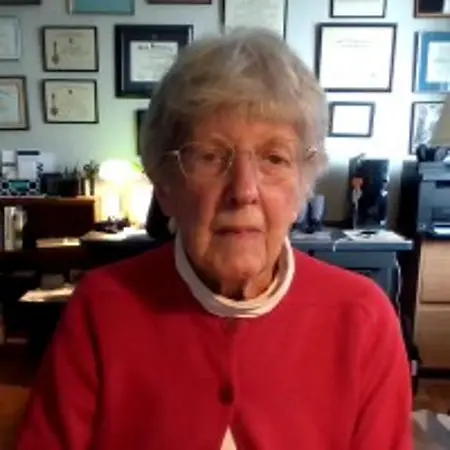
Helene Hill, PhD, is Professor Emerita at Rutgers New Jersey Medical School (formerly UMDNJ–NJ Medical School), where she devoted more than four decades to medical education and research in radiology and biology. Over the course of her distinguished academic career, she also held faculty appointments at Marshall University Medical School and Washington University School of Medicine. Her work spanned cancer research, genetics, and laboratory investigation, and she was known for her commitment to rigorous scientific inquiry and mentoring future physicians and researchers.
Dr. Hill earned her PhD in Biology from Brandeis University after completing her AB in Pre-Medicine and French at Smith College. She conducted postdoctoral research at Harvard Medical School and built a career grounded in hands-on laboratory science, experimental design, and the pursuit of research integrity. Throughout her tenure in academic medicine—beginning in the 1960s, when women were significantly underrepresented in science—she navigated and challenged systemic barriers while continuing to contribute meaningfully to higher education and biomedical research.
In retirement, Dr. Hill has turned her focus to writing, publishing memoirs and investigative works that reflect on her experiences as a woman scientist seeking truth in medicine and academia. Her recent memoir, The Crying Window: Memoir of a Woman Scientist Looking for Truth, chronicles her professional journey, advocacy for women in science, and efforts to address ethical concerns in research. Through her writing and continued engagement in scholarly dialogue, she remains committed to inspiring future generations and contributing to important conversations about integrity, equity, and the evolving role of women in science.
Her Interview
Ten minutes with Helene
01What do you attribute your success to?
I guess just plugging along. But I think honesty is extremely important, especially in science and medicine. I think it's very important to be honest and to accept the fact that you can be wrong sometimes, and you're willing to admit that you have been wrong, and then do what you can to right the wrong. Unfortunately, I have encountered people who have not been honest and have made up data in order to succeed. I think there's a lot of that in medical research, for example. You have to get grants, you have to get big grants from the NIH or something like that in order to get promoted and get tenure, and the competition is really very stiff for grant support. I think that drives people to cheat, and I think that's very sad. I'd like to see the system change so that it's easier to get research funding and to not have to compete with other people so strenuously.
02What advice would you give to young women entering your industry?
I think that, you know, I think it's very important to be honest if you want to be in research. And to accept the fact that you can be wrong sometimes, and you're willing to admit that you have been wrong, and then do what you can to right the wrong. I think honesty is extremely important, especially in science and medicine. Unfortunately, I have encountered people who have not been honest and have made up data in order to succeed. I think there's a lot of that in medical research. The competition is really very stiff for grant support, and I think that drives people to cheat. I think that's very sad. I'd like to see the system change so that it's easier to get research funding and to not have to compete with other people so strenuously.
03What values are most important to you in your work and personal life?
I think honesty is extremely important, especially in science and medicine. I think it's very important to be honest and to accept the fact that you can be wrong sometimes, and you're willing to admit that you have been wrong, and then do what you can to right the wrong. Unfortunately, I have encountered people who have not been honest and have made up data in order to succeed. I think there's a lot of that in medical research. You have to get big grants in order to get promoted and get tenure, and the competition is really very stiff for grant support. I think that drives people to cheat, and I think that's very sad. I'd like to see the system change so that it's easier to get research funding and to not have to compete with other people so strenuously.
Join Influential Women and start making an impact. Register now.