Her Story
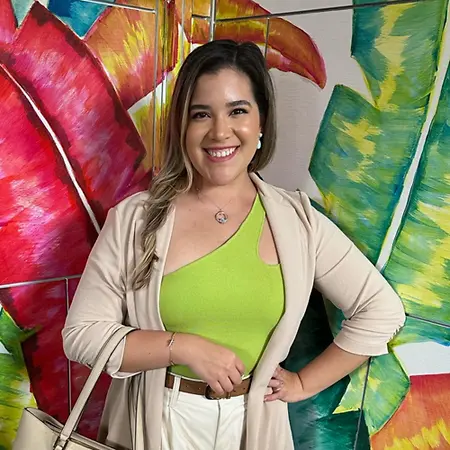
About Indira
I've been in digital health for a decade, and what I love about this industry is that I can bring the perspective I gained from my anthropology background into my work. My background is in anthropology, specifically medical anthropology, which is the study of how different cultures view or perceive healthcare. Today, as a Senior Quality Engineer at Vitality since 2020, I test and lead implementation for our health plans. The company I work for incentivizes healthy behaviors to improve somebody's health and lifestyle. What I do is talk to business and talk to the technical teams, make sure we have all the product requirements correct, but my niche is bringing it all together to the member or patient to improve their health. My typical day involves making sure everybody is aligned, from our technical key stakeholders to our business stakeholders, because each stakeholder has a different way that they perceive information. I'm able to take the technical aspects and make it in simple terms, in layman's terms, and also make the business requirements be understood by the technical developers. I'm basically interchanging the way that I speak every single meeting depending on the stakeholders, and I think that's a really cool skill to have. My most recent achievement is implementing a data management strategy that went across from business to technical to keep everything organized, so we could match all of our test data to be aligned with real user scenarios. That way we're actually testing for the real-life user instead of just random data. I implemented that data management strategy and I'm very proud of that because it was complete chaos before, bringing everybody together across different teams so we could launch a quality product.
Her Interview
Ten minutes with Indira
01What do you attribute your success to?
I attribute my success to my parents. My parents came to this country to give us a better life, and they raised us with knowing our Venezuelan culture but also understanding the importance of education. My dad always says the papelito is important, the little paper is important. Regardless if you have a little certificate of an 18-month program, or a bachelor's or a master's, the little paper is important. I attribute that education to my parents because they always instilled that nobody could take your education from you. That's what my parents have instilled in us. It's also the immigrant mindset of having to work triple as hard. As an immigrant who came here when I was young and was raised in Chicago but born in Venezuela, we're neither here or from there. The mindset of having to be the best of the best, or just work triple as hard, there's no mediocracy. That's a lot of the immigrant mindset and being a Latina in tech.
02What’s the best career advice you’ve ever received?
The best career advice I've received is to always stay true to yourself. In every situation, ask yourself: does this align with your values, with your foundation, with your morals? Listen to that from the beginning. Don't sell yourself short.
03What advice would you give to young women entering your industry?
You belong. Don't question your ability or your skill sets. You belong anywhere that you step foot. We all struggle with imposter syndrome, and at the end of the day, there's a reason why we are in different phases, whether you are starting out or whether you're a tenured professional. You belong in that space at that moment in time. For our next generation, I want them to see that in healthcare, there was either two paths - you either became a nurse or a doctor - but there's other careers in healthcare, such as what I have now in implementation. There's a lot more that we could do in this industry than just becoming doctors or professionals. Everything is digital. There's not one path for everybody.
04What are the biggest challenges or opportunities in your field right now?
Being in digital health is imperative because I'm bringing not only my knowledge from my education, but I'm also bringing the perspective for my Hispanic community that can be very undervalued in healthcare. There's such things as food deserts that are in our communities. There's no real grocery sometimes in certain demographics. Being the only one in those rooms can be very lonesome when we're talking about improving individuals' health, but most of the science is based on Anglo-Saxon science. So being in the rooms and saying, hey, did we think about our chronic diseases that are impacting African American communities, Hispanic communities? Did we think about that? Did we think about how we're providing healthcare devices like Apple Watches or Fitbits to these communities to improve their healthcare? I'm bringing that perspective in those rooms for demographics that are usually overseen. The challenge has been being the only Latina in my systems department. Making sure that I understood my voice to not become too aggressive when I'm speaking. I had to learn my soft skills a little bit more because my delivery has to be more magnified than regular John Smith's delivery. But it's worth the frustration when we execute the product and launch, and I realize they really did hear me. That makes a difference.
05What values are most important to you in your work and personal life?
Integrity is most important to me. Always have integrity, be accountable for your actions and your words, and be kind. Everybody has a story behind their actions, but always be kind to everybody that you speak to. We're all humans at the end of the day. We're all the same.
Join Influential Women and start making an impact. Register now.