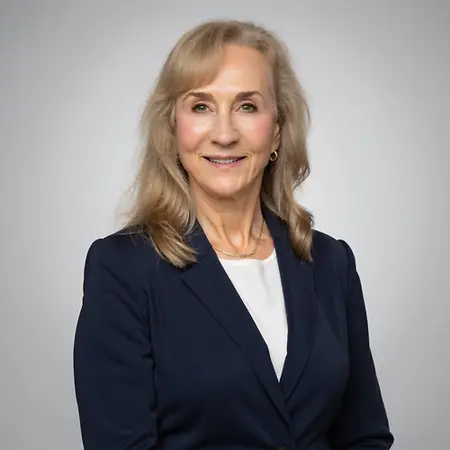
Her Story
About Ingrid
Dr. Ingrid Faro is Interim President and Professor of Old Testament at Northern Seminary in Lisle, Illinois. A scholar, speaker, and author, she is widely recognized for her work on the problem of evil, suffering, and abuse, and for her commitment to integrating rigorous biblical scholarship with compassionate leadership. At Northern Seminary, she also serves in senior academic leadership, bringing together theology, community development, and organizational vision. Her teaching specialties include biblical Hebrew, the Pentateuch, Poetic and Wisdom Literature, and Old Testament theology, and she is passionate about equipping the church to engage its communities with humility, justice, and faithful presence.
Faro’s journey to theology was unconventional. Before entering the academy, she built a successful career as an entrepreneur in the insurance industry, running multiple businesses and developing products nationally. After working herself into a disability while managing two companies and consulting for a third, she entered a season of deep personal reflection. Wrestling with questions about God’s existence, love, and the reality of evil—shaped by her own experiences of abuse and trauma—she began theological studies while continuing to work in business for several years. She earned both her Master of Divinity and Ph.D. in Old Testament from Trinity International University, receiving the President’s Award for her doctoral work. Over time, her calling shifted fully into theological education, where her research and teaching focus on helping others navigate suffering and discover the possibility of transformation through pain.
In addition to her leadership at Northern Seminary, Faro has taught internationally, including a decade as Associate Professor of Old Testament and Semitic Languages at the Scandinavian School of Theology in Uppsala, Sweden, and prior faculty roles at Trinity Evangelical Divinity School and North Park Seminary. She is the author of Demystifying Evil (InterVarsity Press, 2023) and Evil in Genesis (Lexham Press, 2021), works that combine biblical exegesis, theological reflection, and personal narrative to explore how evil distorts what God created as good—and how God’s redemptive work brings hope. Across her scholarship, leadership, and speaking, Faro is driven by a conviction that people come first and that even the deepest wounds can become places of growth, courage, and renewed calling.
Her Interview
Ten minutes with Ingrid
01What do you attribute your success to?
Being open and taking the time to reflect on my inner peace, asking those hard questions does God exist and does God love me.
02What’s the best career advice you’ve ever received?
Follow the joy. Seek work that is life-giving. Even though it's hard, even though sometimes it's extremely hard, there's something inside you that there's a passion for that gives you joy, that sustains you through the challenges and the beatdowns and everything else. So follow what is life-giving, and follow what brings you joy deep in your core.
03What advice would you give to young women entering your industry?
In the midst of every challenge is an opportunity. I used to have a plaque that said this, and I still want to get it back again. Don't let people bury you. Someone said recently, I wasn't buried, I was planted. People will try to bury people, but if instead you say, no, I'm being planted, I'm coming back stronger than ever. My main motivation is to give hope and encouragement to other people. So often, the stories in people's heads are 'I'm not enough, I'm not qualified enough, I can't do this.' I've had lots of obstacles in life, and my story gives others hope to say, yeah, I can do this, and I'm at least gonna try. I'm going to go ahead, even no matter who is telling me I can't, including my own head. I encourage people to face the hardships they've been through, because burying pain ends up having health consequences. Refuse to be buried.
04What are the biggest challenges or opportunities in your field right now?
I love that you used both words, challenge and opportunity, because I used to have a plaque that said, in the midst of every challenge lies opportunity. One of the biggest challenges in my field is fundamentalism and legalism. Telling, for example, women all the things they're not allowed to do. That's one of my biggest challenges, because my seminary, and I am extremely supportive of women and whatever they feel called to do. It's essentially people who are trying to tell other people all the things they can't do because of a narrow box that they have placed themselves in and want to put other people in. They can be pretty vicious with name-calling. But the opportunities are incredible. I absolutely love our seminary's work with Christian community development in difficult parts of cities and also in rural America. Our professors who are pastors have significantly impacted communities in the Lawndale neighborhood and West Garfield Park in Chicago. One is president of the Christian Community Development organization. They live in the neighborhoods and have brought in grants to provide healthcare, job aid, legal aid, and social workers to de-escalate situations before police arrive. We train people all over the country to do community development work. It was originally started by John Perkins, and we've got students in neighborhoods making changes, bringing in work, finances, employment opportunities, and healthcare.
05What values are most important to you in your work and personal life?
People come first, treating others with patience and respect. I lead with kindness and care and respect for the people who are working with me and for me. Leadership and collaboration matter deeply to me. Character actually matters. People who keep their word and treat others with dignity and respect actually matters. I've had the opportunity to reflect on what does leadership look like, and in this country today, that's an important issue. So many people are abused and mistreated by bad leadership, not just in the home or in personal relationships, but in their work environment. People are traumatized in their communities and in their work environment as well.
Join Influential Women and start making an impact. Register now.