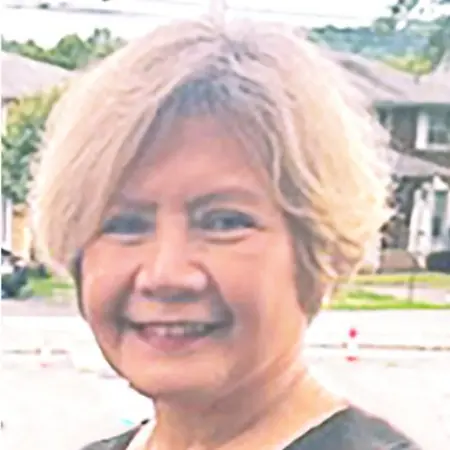
After retiring from a high-level global career, I faced ageism and pivoted to retail, reinforcing my belief that true leadership is defined by character and work ethics.
Irmina Jose · In Her Own Words
Her Story
About Irmina
My career has been defined by determination and careful planning. I started working while still in university on scholarship, when one of my professors introduced me to a law firm. After waiting 8 hours in the lobby, I discovered my interviewer was actually my law professor. Despite having limited shorthand skills, I used my retentive memory to transcribe everything accurately and got the job. That same professor later moved me to the largest finance company in the Philippines, where my typing speed on aging of receivables stunned the entire floor, and within 3 months I was promoted to Executive Assistant to the executive vice president. I deliberately planned each step of my career, visualizing where I wanted to work next. I would drive past the Asian Development Bank every Wednesday and tell myself I was going to work there. One day on my lunch break, I walked in, took the exam, and got the job. I worked at WHO and UNDP in the Philippines, and eventually achieved my ultimate goal of working for the United Nations. After moving to the United States, I took the UN exam in New York, standing in long lines with many others, and passed. I spent 10 years in The Hague working on high-profile cases at the ICTY, including Milosevic and Srebrenica, dealing directly with victims and witnesses of crimes in the former Yugoslavia. When I retired as Senior Research Program Analysis Assistant, I held the highest grade of general service staff. My field of expertise was oversight and accountability, and I managed the office whenever the chief of my unit was away. Even after mandatory retirement, the UN continues to call me back for temporary assignments because of my skills and experience. I'm well-rounded and can be put anywhere in anything that needs to be done.
Her Interview
Ten minutes with Irmina
01What do you attribute your success to?
I think it's determination and faith in myself, and I still see good in humanity. I try to be good, because otherwise you'll be so unhappy. Although we're human and we still have those moments when I'm really down, I stop myself and always remember what I've always been taught by my parents: look at what you've got, not what you do not have. That's how I go with my life. Sometimes you see other women achieving things and think, oh, I'm still here, but then I look at where I've gone and look what I've done. I measure my life not in what others have achieved, but in what I achieved and what I can achieve some more. Even at my age, I still have plenty to offer. I have a very strong faith too, so my faith gets me by each day.
02What’s the best career advice you’ve ever received?
My professor told me that I need to move up. I was enjoying my job at the law firm and said I was happy there, but he said no, you need to move. He pushed me to go to a finance company, which turned out to be the largest finance company in the Philippines. That advice to keep moving forward and not get too comfortable, even when you're happy, really shaped my career trajectory. My parents also taught me to look at what you've got, not what you do not have, which has guided me throughout my professional life.
03What advice would you give to young women entering your industry?
Don't be disheartened by what you hear or see from people who are unhappy, because if you're unhappy, why stay and be miserable and then get people to be miserable just as you are? My position is this: you stay in the organization, and I love the organization, and you see all the flaws and everything, and you try your best to not be a part of that flaw. You try to make it better. Make people feel that this is the organization you love. It's not just certain people or certain departments, it's the whole thing. Look at the whole picture and see what it does, and how it contributes to the society, to the world, and to yourself. What I want to reach out to women for is that we can do anything we want, as long as we have that drive. We can't just give in and say, you know, I give up, this is only meant for young people, or I give up because I'm not qualified for that. I always tell this to my sons and my friends: if he can do it, you can do it. There is no stopping you. What's stopping you is you. You have to go and do what you think you can do, you know you can do, and move forward with it. Don't hesitate.
04What are the biggest challenges or opportunities in your field right now?
I'm a very strong believer that women like us are always put in the background because people think that we're not capable, or we're old. One thing that irks me is when you apply for a job on LinkedIn and you know you're qualified, in fact you're sometimes even overqualified, but you don't even get as much as a thank you note or an acknowledgement, even with their little tiny footnote that says we value all these things. The age thing is a big thing. I'm saying to myself, you forget that it's us aged people that value work, that value time. A man my age will get a job, while a woman my age has a slim chance, if ever. You can't even do networking, because they think, hmm, I don't want to waste my time with her. You can work still, even if you're, let's say for the sake of argument, 80, but your faculties are there and you're really good at your job. I think it's unlawful and illegal for people to be asking when did you graduate, what year were you born, all those things. It's so not necessary, because it has nothing to do with one's brain. I do see that even in the UN, because some of us old-timers get frustrated. They hire all these young people off the street who have no clue what the UN is all about. They're just simply there to earn the good salary and benefits, and they don't even care. They're not even doing their jobs. There's no loyalty, no sense of duty. Know what you're doing first, be good at what you're doing, I'd say a minimum of 5 years, and then you move up. You don't come in, barely there 6 months, see a job opening and apply for it. Sometimes they get lucky and get taken for that job, but they don't know what to do because they didn't have the background or experience.
05What values are most important to you in your work and personal life?
I still see good in humanity and I try to be good, because otherwise you'll be so unhappy. My parents taught me to look at what you've got, not what you do not have, and that's how I go with my life. I measure my life not in what others have achieved, but in what I achieved and what I can achieve some more. Even at my age, I still have plenty to offer. I have a very strong faith too, so my faith gets me by each day. I love the organization I worked for and believe you should try your best to not be a part of the flaws but try to make it better. Make people feel that this is the organization you love. Look at the whole picture and see what it does, and how it contributes to the society, to the world, and to yourself. I value work and value time, and I believe in loyalty and doing your job well before moving on to the next thing.
Join Influential Women and start making an impact. Register now.