
I built confidence through preparation and creating comfortable spaces for questions. My graduate students' professionalism made teaching collaborative and rewarding.
How She Built Confidence in a Room She Was New To
Explore moreInfluence is not about being seen but it’s about creating pathways where others can rise. True leadership leaves doors open long after you’ve walked through them.”
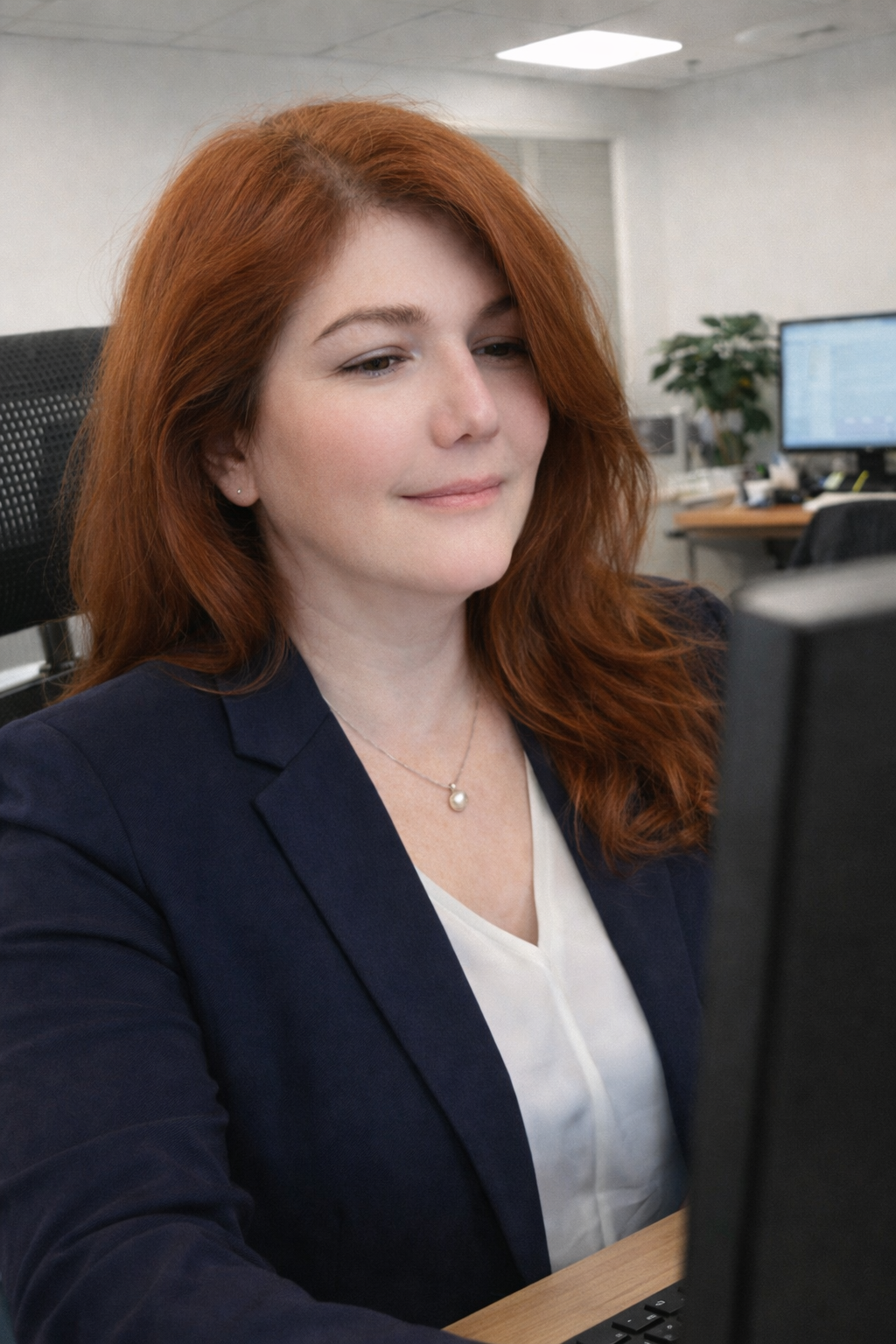
Isabel L. M. Fontgalland · In Her Own Words
I built confidence through preparation and creating comfortable spaces for questions. My graduate students' professionalism made teaching collaborative and rewarding.
How She Built Confidence in a Room She Was New To
Explore moreHer Story
Isabel Fontgalland is a Professor of Economics and Finance with more than 25 years of international academic and research experience across Brazil, France, and the United States. Her interest in economics began early, shaped by a deep curiosity about political debates and public policy and their capacity to expand opportunity for younger generations. Inspired by innovation-driven institutions such as NASA, she developed a lasting commitment to understanding how economic systems adapt to technological change and how policy can promote sustainable and inclusive growth. She began her professional career in Brazil working in intellectual property as a young economist and researcher before pursuing advanced academic training abroad.
After completing her master’s degree, Dr. Fontgalland moved to France, where she spent seven years earning her Ph.D. in Industrial Economics while working as a research assistant. She subsequently returned to Brazil and served for 16 years as an Associate Professor, teaching doctoral, master’s, MBA, and undergraduate students while managing federally funded research grants. One of her most significant grants focused on profiling women in technology-related fields—including engineering, computer science, and machine learning—highlighting her dedication to advancing diversity in innovation-driven sectors. She defines herself as an applied economist, integrating microeconomics, macroeconomics, and econometrics to produce rigorous, policy-relevant research.
Based in Ohio for the past 17 years, Dr. Fontgalland currently holds academic appointments at the University of Mount Union and the University of Akron. In addition to teaching and advising students, she serves on the Presidential Scholarship Committee, oversees research initiatives, and manages grants focused on green energy and sustainable economic systems. Her current research examines climate change–related disasters in the U.S. Midwest, combining economic modeling with engineering-based risk assessment to inform policymakers and guide strategic public and private investment. Her work is particularly centered on strengthening economic resilience for agricultural communities facing climate stress, reinforcing her commitment to data-driven, interdisciplinary solutions for long-term sustainability.
Her Interview
01What do you attribute your success to?
I attribute my success to my unwavering belief in the opportunities this country provides and my commitment to serving others. When I came to the United States 17 years ago, I embraced every opportunity with a vibrant belief that I was capable and would be successful, and it happened. I believe this is a land of opportunity where it doesn't matter if you come with $20 or $20 million - you have the same chance to be successful if you want it. I breathe each day believing that what I can do for others is meaningful, and what I can do for the country is meaningful. Even though I was invited here to do my postdoc rather than arriving as an immigrant, the opportunities grew so strong in my heart. My American dream became true because I embraced opportunities with conviction and a focus on how I can serve and help others through my work.
02What’s the best career advice you’ve ever received?
The best thing I could have received when I was a young economist was a strong intellectual foundation together with guidance and opportunities to think independently about economic problems. Developing solid analytical skills in mathematics, statistics, and economic modeling would have helped me move beyond simple descriptions and build clearer explanations of how economies function. Having a mentor who challenged my ideas, encouraged critical thinking, and helped refine my research and writing would also have been extremely valuable. Exposure to the classic ideas of economists such as Adam Smith, John Maynard Keynes, Milton Friedman, and Robert Lucas Jr. would have helped deepen my understanding of markets, institutions, and macroeconomic dynamics, while early research experience working with real data or academic projects would have strengthened the connection between theory and practice. It would also have been important to develop intellectual courage—the willingness to question dominant ideas, follow evidence carefully, and accept debate. In addition, exposure to real-world institutions such as governments, financial markets, and central banks would have helped connect economic theory with policy and practical decision-making. Finally, learning how to communicate economic ideas clearly through writing and teaching would have been essential, since economics is not only about analysis but also about helping others understand complex economic realities.
03What advice would you give to young women entering your industry?
My advice to future leading women in this wonderful country is that besides the power that science can give to us, there are many ways to be important and recognized, and one of them is to be humble and giving. Whatever your work, field, or message, the number one priority should be to serve others. This is the meaningful importance - how can I help others, whether by teaching, by being influential with books and articles, or through other means. I believe this is our main entrepreneurship: to serve others. Once we do that, life is much more smooth, and we can easily find our way to be meaningful. I would tell my own daughter, who is a strong woman, that the key is understanding that our purpose is in service to others, and that makes everything else fall into place.
04What are the biggest challenges or opportunities in your field right now?
The biggest challenge for women in all fields, including economics and academia, is that we are challenged to produce more than men. In fields that involve not only intellectual work but also promotion of your own kind, women face the burden of being much more demanding than it is for men. We need to prove all the time that we are able to bring grants, to be outstanding, to be on the clock. When you are new in a place, field, or company, you must show that you are capable as the others are. While we are convinced that as years pass we are becoming more concerned about social problems, the big problem of women in professional fields gets neglected because it is not so visible. We live in a society based in meritocracy, and sometimes we must be equal, but it is not always with the same fairness. The challenge is cultural and traditional worldwide, and as we focus more on wars, inflation, education, and technology, the struggles of women in the field become less visible.
05What values are most important to you in your work and personal life?
The values that are most important to me in both my work and personal life are integrity, intellectual curiosity, responsibility, and respect for others. Integrity guides how I approach decisions, ensuring that my work is honest, transparent, and consistent with my principles. Intellectual curiosity motivates me to continuously learn, question ideas, and explore new perspectives, especially when dealing with complex economic or social issues. Responsibility is also essential, as it reflects a commitment to fulfilling my duties with dedication, whether in professional responsibilities, teaching, research, or personal commitments. Finally, respect for others is fundamental in building meaningful relationships, encouraging constructive dialogue, and appreciating diverse viewpoints. Together, these values help shape not only the quality of my work but also the way I interact with people and contribute positively to the communities around me.
Her Content Hub
Climate change intensifies agricultural uncertainty, raising insurance costs and farm risks. Farmers respond through investments in climate-resilient practices while governments implement support policies. Accounting documentation and risk management become critical for financial stability and food security.
How Climate Uncertainty Is Reshaping Agricultural Insurance, Risk Management, and Farm Economics
Climate change is increasing uncertainty in agriculture. Farms rely on stable weather, but droughts, floods, and temperature fluctuations are becoming more frequent. This raises the risk of crop losses and unstable yields. From an economic perspective, when risk increases, the cost of protecting against that risk also rises. Insurance companies respond by raising premiums, adjusting coverage rules, or requiring more detailed information about how farms manage their land. In some regions, farmers may find insurance more expensive or harder to obtain because climate risk is considered higher.
This situation affects both insurance markets and farm decision-making. Farmers may need to invest in irrigation systems, drought-resistant crops, or improved soil management practices to reduce exposure to climate shocks. These investments are economic responses to risk because they help stabilize production and make farms more attractive to insurers. Governments may also expand crop insurance programs or provide subsidies to support farmers and protect the food supply. As climate risk grows, insurance becomes an increasingly important tool for managing uncertainty in agricultural production.
From an accounting and compliance perspective, farms must document these risks and investments carefully. Equipment such as irrigation systems or drainage infrastructure must be recorded as capital assets, while environmental management practices may appear as operating costs. Insurance contracts and government programs may also require documentation showing that farms follow certain environmental standards. Accounting therefore plays a key role in demonstrating financial stability and compliance. Climate change affects not only farm production but also how farms report financial information and manage risk.
Economists have debated the reality and economic impact of climate change for decades, and today its effects are becoming increasingly visible, particularly in agriculture. Farming depends heavily on stable weather conditions, and even moderate changes in rainfall, temperature, or seasonal cycles can influence crop yields and productivity. In recent years, more frequent droughts, floods, and extreme weather events have heightened uncertainty for farmers, making agricultural production less predictable and increasing the financial risks associated with farming activities.
This growing uncertainty directly affects agricultural insurance. As climate conditions become more volatile, the probability of crop losses rises, prompting insurance companies to adjust their risk assessments. Insurance premiums may increase, coverage conditions may become stricter, and some regions may experience greater difficulty obtaining affordable insurance. For farmers, these higher costs can reduce profitability and complicate long-term planning. Climate risk therefore affects both production and the financial structures surrounding agricultural activity.
These challenges are significant, and economists have long advised policymakers on appropriate fiscal policies and risk-management strategies. Governments may use tools such as crop insurance subsidies, disaster relief programs, tax incentives, or support for climate-resilient technologies. These policies help farmers adapt to changing conditions while maintaining agricultural stability and food security. Through economic analysis and data evaluation, economists can design policies that balance public spending, insurance markets, and agricultural sustainability in the face of increasing climate uncertainty.
Join Influential Women and start making an impact. Register now.