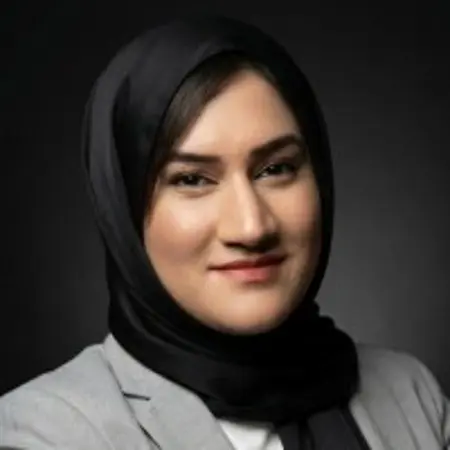
Influential Woman · AI Technology, Visual Technology
Jabeen Zaidi
Founder and CEO, Spring AI, Inc.
Frisco, TX 75033
Her Story
About Jabeen
Jabeen Ali Zaidi is the Founder and CEO of Spring AI, a visual technology company building intuitive generative AI tools for creatives, brands, and retailers. Based in the Dallas–Fort Worth Metroplex, she is a product designer and creative AI thought leader with over 12 years of experience across enterprise software, digital platforms, and emerging technologies.
Through Spring AI, she is redefining how ideas are visualized and experienced, turning advanced AI into accessible tools for real-world creative and retail applications. The company’s platforms—including Spring Studio and Spring Glas™, an interactive AI-powered mirror—enable immersive experiences such as virtual try-ons for fashion and beauty brands. The technology has appeared in activations at New York Fashion Week and Art Basel.
Jabeen holds a background in industrial and product design from the New Jersey Institute of Technology and is a strong advocate for AI education and women in technology.
Her Interview
Ten minutes with Jabeen
01What do you attribute your success to?
I attribute my success to actually being in the real world and listening to my target audience and users and mentors. Obviously, there's tons of noise out there, and a lot of people give advice, but my core focus has been on solving real problems and then getting that validated in the real world. I wasn't willing to go to any investor or any client until I actually proved this to myself, so I would go in the field, standing 7 hours at an event with a device and checking that this is working on every type of face and body shape to test the accuracy of virtually trying on makeup and dresses, and pushing the technology to its limits. I did all the grunt work myself to make sure it's working, and then I was like, now I can tell people about it, now I can actually promote it, because I believe in it. It's really just being able to not just hypothesize and promise. You have to prove it with a real use case. That's the only way you can get to success that you want, because it's actually a real success, not like you're just planning for it. Measurement is the biggest part of what this is. It's about measuring the data and the actual accuracy.
02What’s the best career advice you’ve ever received?
The best advice I ever received was from my angel investor when I was presenting. I had 4 minutes and was specifically told "not to pitch", just be clear about who I am and what I'm looking for. I had to present in front of some really important people. She told me, just give them a little dose of what you're doing, and just let them ask the questions. She said, just tickle them. And it was so good, because that's what I did. I made a really impactful, powerful kind of story, and then I just said, okay, and then we did it, and this is how it works, and there we go, this is a success. And then, boom, ended it, and then they were just like, wait a minute, tell me more! It was so good. I kind of left it hanging and made them want to know more instead of overwhelming them with everything upfront.
03What advice would you give to young women entering your industry?
If you're building a solution, it would have to be, first of all, questioning exactly why. What is that pain point that you're solving? Is it for themselves, for others that they're deeply connected to? And then, do they qualify for that expertise to solve that? Like, have they been in this legal field, or wherever, whichever field they're trying to build a solution for? And then talk to those specific people and understand deeply, what are those gaps and pain points and things that already exist. That's where you get that golden nugget, and you'll find that opportunity inside the pain points, inside the struggles that people are facing. Where's the gap, and then how can you fill it? That's for anything, but specifically if you're building something new that doesn't exist yet, like a product or app or a company or organization, it has to really fill something that is needed, and not just a nice-to-have and a fun thing. Then it's not viable. You want something that's actually going to make an impact and be able to measure something against that.
04What are the biggest challenges or opportunities in your field right now?
The biggest challenge in my field right now is that since I'm in AI technology, there's a lot of variables that are constantly changing, moving, and evolving. Maintaining up to speed with everything and ensuring that our platform is sustainable for growth and drastic market shifts is challenging. It's like navigating a ship on very rocky water. Keeping that foundational structure so that it won't shake if something were to happen is important. What's the worst case if something that we were dependent on were to change? Being very proactive about that takes effort, but it's worth it in the end rather than having any type of failure happen. Just having to always think ahead is a challenge that every founder really has.
05What values are most important to you in your work and personal life?
The most important values to me are balance. Sometimes it does get a lot of overload of meetings and priorities and things, and what I was forced to do, because I have two small kids, is take breaks and set boundaries. I have to be at family time and be in the moment with them, actually be present with them, and then it gives my brain a little bit of a break. When I'm in my very non-active thinking state and subconsciously doing a chore, that's when your best ideas actually come, because in the background, your brain is still continuing to solve something that you may have left unfinished. There's an actual word for it, like subconscious problem solving, where your brain will automatically just come to you, almost like an epiphany. And you weren't even trying to get there a few hours ago, but it just comes to you naturally. That's the benefit of taking breaks and balancing out, because if you're constantly doing that, you'll get burnt out. And then honestly, build real relationships with people, you never know where they can end up. Having that giving mindset, with expectation of no return, unlocks a lot more opportunities.
Join Influential Women and start making an impact. Register now.