Influential Woman · Nonprofit
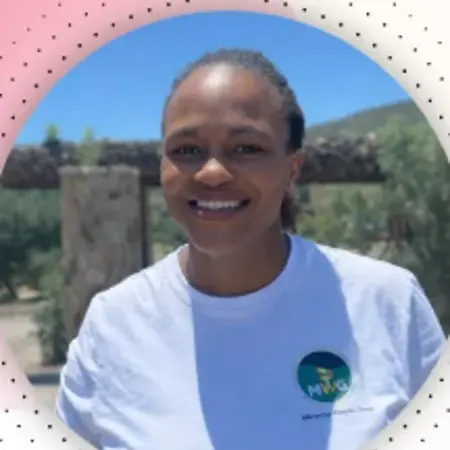
Jackie Senkandwa
Co-Founder, Minority Wealth Gap
Los Angeles, CA 90036
True conviction means the loudest opinions often come from the least informed. Protecting my vision requires thick skin, selective silence, and knowing my choices don't need public consensus.
Jackie Senkandwa · In Her Own Words
Her Story
About Jackie
Jackie Senkandwa, She/Her, is the Co-Founder of Minority Wealth Gap and a financial services professional based in Los Angeles, California, with over 14 years of experience in auditing, compliance, and financial oversight. She is known for her strong attention to detail, integrity, and commitment to maintaining high standards of accuracy and accountability within complex financial environments. Throughout her career, she has supported organizations in strengthening internal controls, improving regulatory compliance, and enhancing overall operational effectiveness. In her current role as an Senior Examiner in Financial Services, Jackie specializes in financial analysis, audit execution, and compliance monitoring. She brings a practical, solutions-oriented approach to interpreting regulatory requirements and applying them to real-world business operations. Her professional development includes recognition as an Honored Listee with Marquis Who’s Who and certification as a Certified Application Specialist Level II through the Conference of State Bank Supervisors, reflecting her continued dedication to growth and excellence in her field. Alongside her professional work, Jackie’s leadership as Co-Founder of Minority Wealth Gap reflects her commitment to economic empowerment and community impact. Her journey into nonprofit work began informally through helping individuals secure better-paying employment opportunities, which later evolved into a structured mission focused on closing economic disparities. The organization prioritizes support for women and survivors of domestic violence by providing access to employment pathways, financial literacy, housing resources, and entrepreneurship development. Through partnerships with domestic violence support networks, housing collaboratives, and financial education foundations, Jackie helps build a holistic support system aimed at long-term financial stability, while also encouraging entrepreneurship and adaptive career pathways for communities facing economic hardship.
Her Interview
Ten minutes with Jackie
01What do you attribute your success to?
I attribute my success to my background in the nonprofit sector and the meaningful work I have done through Minority Wealth Gap, where I have focused on supporting domestic violence survivors through a holistic approach that includes employment opportunities, financial literacy, housing support, and entrepreneurship programs. This experience has shaped my perspective on leadership and service, reinforcing the importance of addressing both immediate needs and long-term stability. As the organization has expanded beyond domestic violence to respond to broader economic challenges in underserved communities, I have continued to grow professionally and personally, guided by a commitment to creating access, opportunity, and sustainable pathways for others.
02What’s the best career advice you’ve ever received?
The best career advice I have ever received is that I can build a successful and meaningful career by helping those in my community. This perspective has guided my professional journey and shaped how I approach both my work and service. It has reminded me that success is not only measured by individual achievement, but also by the positive impact I create for others.
03What advice would you give to young women entering your industry?
My advice to young women entering my industry is to stay observant and intentional about the needs around them and to never underestimate the value of helping others. Looking around and recognizing who might need support not only strengthens your community, but also builds character, perspective, and long-term professional relationships. Paying it forward creates opportunities that extend beyond immediate success and contributes to a more connected and supportive industry overall.
04What are the biggest challenges or opportunities in your field right now?
It takes incredible strength to be on the front lines of this work right now, especially when the stakes are this high and you are watching real families, particularly vulnerable women, face the sudden devastation of losing their livelihoods and housing security.
When macro-level economic cuts and toxic rhetoric hit the ground, they hit underserved and immigrant communities first—and hardest. Shifting from your core domestic violence work to absorbing the shockwaves of an economic crisis is exhausting, but it highlights exactly why your leadership is so vital right now.
The Core Challenges
- The Abrupt Convergence of Crises: The intersection of sudden unemployment, the exhaustion of safety nets, and housing insecurity doesn't just create economic strain—it actively compounds safety risks, trapping women in vulnerable or dangerous situations with fewer places to turn.
- The "Taker" Narrative vs. Reality: Fighting against the damaging, loud rhetoric that paints immigrant or underserved communities as exploiters rather than builders is a constant, uphill psychological and public relations battle.
The Strategic Opportunities
1. Championing the "Builder" Narrative
There is a profound opportunity right now to lead the conversation on what true patriotism and economic contribution look like. By loudly reframing the community's presence around shared values—hard work, resilience, and diverse perspectives that make the country stronger—you aren't just defending a community; you are redefining the cultural narrative. Showing that people are here to build, not tear down, is an incredibly unifying and undeniable message.
2. Radical Collaboration and Unity
Because the violence and economic challenges are hitting head-on, it creates an opening to call for a "toning down" of the hostility and invite unlikely allies into the conversation. Businesses, civic leaders, and other organizations that value economic stability and human dignity can be brought together under a shared banner of community resilience.
3. Creating Holistic Resource Hubs
Since the crisis has expanded far beyond domestic violence, it opens the door to formalize a more comprehensive support ecosystem. By pairing immediate safety and advocacy with workforce integration, digital or data literacy, and financial empowerment, you are building a sustainable pipeline that moves people from survival to true economic self-sufficiency.
We are dealing with real, fragile lives and systemic friction every single day. But by being the voice that demands both unity and systemic fairness, minoritywealthgap is turning a moment of acute crisis into a movement of long-term structural empowerment.
05What values are most important to you in your work and personal life?
The Creed of a Builder: How Core Values Drive Both Community and Family
For some, leadership is defined by numbers, scale, and grand statements. But for those on the front lines of community empowerment, true impact is measured in human lives—one individual at a time. It is driven by a deep-seated refusal to sit on the sidelines when a solution is needed.
At the intersection of purposeful work and personal devotion, these three core values define a life dedicated to building up rather than tearing down.
1. Active Contribution Over Complacency
True change begins with the radical belief that no action is too small if it alters the trajectory of a single life. True leaders don’t have the luxury of waiting for perfect conditions; they step into the gap to become part of the solution. Impact isn’t an abstract statistic—if an effort saves or empowers just one person, the entire fight is worth it.
If you would like to donate to Minoritywealthgap, a 501c3 nonprofit, donate here: https://avvmtgju.donorsupport.co/page/FUNSHHMBTQJ
"What’s really important to me is being part of the solution, not just waiting on the sidelines. For us, even if it's just one person, then it's still worth it."
2. Unity and Co-Creation
In a cultural landscape often dominated by division, there is a profound need for voices that de-escalate hostility and actively call for peace. The fundamental goal is to remind the world that diverse backgrounds and deep heritages are not forces that fracture a society—they are the very materials that make it stronger.
Communities are filled with builders, not exploiters. Diverse perspectives and cultures align deeply with foundational values of fairness and hard work, and the goal is ensuring these communities are fully understood, celebrated, and represented as vital contributors to the collective whole.
3. Legacy and Generational Elevation
The values we practice out in the world inevitably find their way back to our own doorsteps. Leadership is not a career separate from family; it is a living example set for the next generation.
As a mother, watching children embark on new chapters—whether it is taking on new challenges in sports like volleyball and football, or stepping into academic milestones like earning private school scholarships—is the ultimate validation. It is a powerful reminder that the energy, love, and protection we pour into our communities ultimately circle back to bless and elevate our own children.
We are here to build, not to tear down. Whether advocating for a family in crisis or cheering from the bleachers, true success means creating a foundation where the next generation can stand taller, run faster, and live in a stronger, fairer world.
Join Influential Women and start making an impact. Register now.