Her Story
About Jaimie
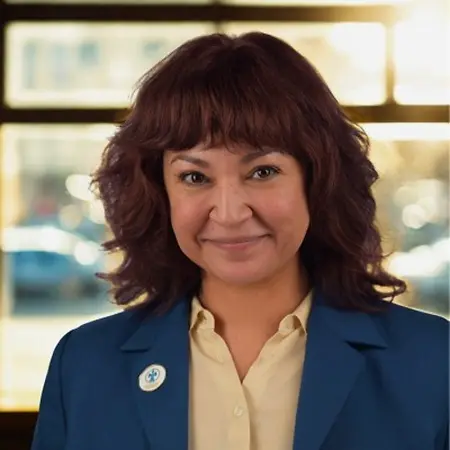
Jaimie Gua, M.Ed, PMP, is an education systems strategist and Program Officer with the American Indian Higher Education Consortium (AIHEC), where she works nationally with Tribal Colleges and Universities to advance student success and institutional transformation. With more than 20 years of experience across classroom teaching, charter design, philanthropy, and statewide education advocacy, she specializes in aligning public systems, community power, and philanthropic investment to strengthen equitable outcomes for Indigenous, immigrant, rural, and first-generation students. She is a certified Project Management Professional (PMP) and brings additional training in coaching, nonprofit management, data analytics, and restorative practices.
Throughout her career, Jaimie has held leadership roles spanning tribal education, policy strategy, and cross-sector coalition building. She previously served as Director of National Programs and Partnerships at the Tribal Education Departments National Assembly (TEDNA), Senior Director of Policy & Strategy at Oklahoma Umbrella, and a fellow with the Groundwork Project, where she supported grassroots organizing and systems change initiatives. She is also the founder of J. Gua Consulting, focusing on strengthening civic participation and organizational strategy in faith and rural communities. In addition, she serves on the Board of the Oklahoma Route 66 Association, contributing to efforts that elevate Indigenous and underrepresented histories along the historic route.
Jaimie’s work is guided by a deep commitment to student voice, equity, and community-led change. She is a former educator who attributes her leadership philosophy to her students and believes young people should be positioned as decision-makers in systems that shape their lives. Grounded in the Seven Grandfather Teachings—wisdom, love, respect, bravery, honesty, humility, and truth—alongside a strong emphasis on joy and community, she is known for her collaborative, restorative approach to leadership. She continues to mentor emerging leaders and advocate for inclusive education systems that empower students to lead, contribute, and thrive.
Her Interview
Ten minutes with Jaimie
01What do you attribute your success to?
I attribute my success to my students and the lessons I learned during my years in the classroom. Spending time with young people taught me the kind of leader I aspire to be, and I credit them with helping shape the person I have become. I firmly believe that anyone who can lead and inspire a classroom of students can confidently lead boardrooms, policymakers, and organizations. My commitment to ensuring that young people have a voice in decisions made in their name has guided my entire career.
02What’s the best career advice you’ve ever received?
For many years, the advice that guided me was, 'If there’s no seat at the table, bring a folding chair.' Over time, my leadership philosophy evolved. Today, I believe that if there is no seat at the table, it is often more powerful to create something new where people who share the vision can gather and thrive. Rather than continuously forcing myself into spaces that may not welcome me, I have learned that building communities where people are celebrated and empowered can create even greater impact.
03What advice would you give to young women entering your industry?
My advice to young women entering education and leadership is simple: if there is no room at the table, start the party somewhere else and people will follow. Do not wait for permission to lead. Trust yourself and never doubt your ability to figure things out. Throughout my career, I have learned that authenticity, courage, and confidence are far more valuable than trying to fit into spaces that were never designed with you in mind.
04What are the biggest challenges or opportunities in your field right now?
One of the greatest challenges—and opportunities—in education today is the fact that many leadership models still fail to actively seek the perspectives of students. Too often, important decisions are made in the name of young people without including them in the conversation. I believe the opportunity before us is to fundamentally rethink leadership by ensuring that students are not merely recipients of policies and programs but active participants in shaping them. Creating systems that genuinely value student voice has the potential to transform education for future generations.
05What values are most important to you in your work and personal life?
Much of my leadership philosophy is rooted in the Seven Grandfather Teachings that I inherited through my Native culture: wisdom, love, respect, bravery, honesty, humility, and truth. These values guide how I collaborate, make decisions, and serve others. In addition to those teachings, I place a high value on joy. I strive to lead with a spirit of optimism, curiosity, and gratitude, because joy helps me connect with students and communities in meaningful ways. I also believe deeply in the power of community. None of our dreams for young people can be realized alone, and meaningful change requires us to support one another and work together.
Join Influential Women and start making an impact. Register now.