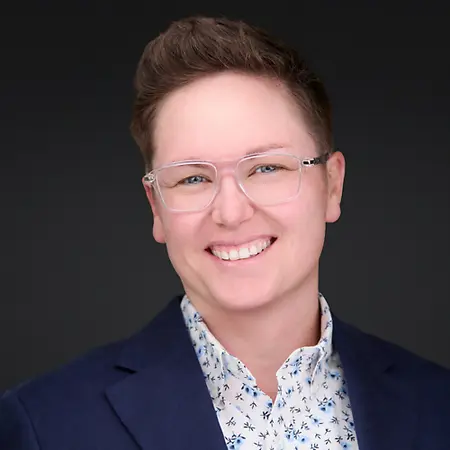
Her Story
About Janelle
Janelle Crisp is a licensed professional counselor and forensic mental health specialist based in Pittsburgh, Pennsylvania, with more than 20 years of experience working at the intersection of mental health and the criminal justice system. Her career began in correctional mental health, first as a jail therapist and later working with individuals transitioning out of federal prison. Over time, she developed a specialized focus in sex offender treatment and rehabilitation, dedicating her work to helping individuals who have caused sexual harm rebuild stability, accountability, and healthier lives within their communities.
In 2017, Janelle founded Crisp Forensic Counseling LLC with a mission that extends beyond traditional therapy. Recognizing the significant barriers individuals face after incarceration—particularly those with felony convictions—she built programs designed to address practical needs alongside clinical treatment. Her practice includes self-funded initiatives such as a food pantry, clothing and professional development resources, and employment-focused programs like headshot and LinkedIn profile workshops for clients reentering the workforce. She believes rehabilitation is most effective when individuals have access to stability, opportunity, and support across every area of life.
Alongside her private practice work, Janelle serves as a board member of Pennsylvania’s Sex Offender Assessment Board and is currently pursuing a doctorate degree in criminal justice to deepen her expertise in law, constitutional rights, and forensic practice. Her professional philosophy centers on empowerment, accountability, and evidence-based rehabilitation, including innovative approaches such as monitored technology programs that help clients safely reintegrate into modern society. Through counseling, advocacy, and reentry support, she continues to work toward reducing recidivism while helping individuals build sustainable and productive futures.
Her Interview
Ten minutes with Janelle
01What do you attribute your success to?
I've had several influential mentors throughout my career who really made a difference. Sharon Sutton was a wonderful professor in trauma-informed care, and Joellen Smith was a great intern instructor. I learned a tremendous amount from Dr. Kufel at his practice where I worked with federal offenders. Right now, I find a lot of inspiration from Dr. Stacey Janessen, who is the clinical director at the Sex Offender Assessment Board, and I've been learning quite a bit from Dr. Kim Spence from Florida, who I met through networking. But honestly, I think my biggest accomplishment was getting rid of imposter syndrome in the last couple years. It took 16 years in the making, but really believing in myself, having people believe in me, and embracing that yes, I'm doing this and making it work has been huge. Finding my professional footing and truly believing in my craft has been transformative.
02What advice would you give to young women entering your industry?
I actually supervise interns, so I work with young women coming into this field regularly. I just had a young woman, Cassidy, graduate from Carlow University, and I helped guide her through the application process for finding a full-time job. The main things I tell them are to have confidence in their craft and be open-minded in learning. Really push yourself to work hard on your CEUs, your continuing education credits. Go to those trainings, continue to learn, and continue to build your resume. Join professional memberships and get involved in networking. I try to share my own stories about how I met different people and now I'm going to conferences and doing different things. I tell them to embrace networking earlier and find it earlier in yourself. I even gifted Cassidy a professional headshot for her LinkedIn and bought her a student membership to ATSA, the Association for Treatment of Sexual Abusers, to help her get started.
03What are the biggest challenges or opportunities in your field right now?
One of the biggest challenges I'm working on is helping people transition from prison to society, especially those with federal felonies or sex offense felonies. It's very difficult for them to reintegrate. That's why I've had to create additional support systems like the food pantry, dress for success program, and the headshot program. I'm also trying to be progressive and lead the way rather than follow old methods. For example, I just started a monitoring software program for clients convicted of internet offenses. Before, if you got convicted of an internet offense, you just didn't have the internet for however long you were on probation. But in this day and age, you have to have internet to survive, to get jobs and apartments. Now we're allowing clients to learn how to use the internet in a safe way with safety parameters. The county was static about this approach, but I'm trying to explain that we need to be progressive and not set people up for failure. When you work for certain agencies, they want things done a particular way, but I want to try new things and empower people through change in different ways.
04What values are most important to you in your work and personal life?
The most important value to me is creating opportunity and stability for people. I believe that if we create stability across the board, like getting a job, creating housing opportunities, and providing support in multiple areas, people are less likely to make poor choices because desperate people make desperate choices. So if we take some of the risk away of making desperate choices, they're more likely to make better choices at the end of the day. I don't look at my clients with judgment the way some other people might. When I hear their stories, even the most horrific things, I look at them and think, okay, what's the game plan to help you? What's our next step? How did you get here and where do we go from here? I also believe strongly in handling things with grace. When I went through my own challenges with back surgeries, I kept saying, why not me instead of why me? This is just something I have to go through. I share this philosophy with my clients. You can hit a hurdle in life, there's always going to be hurdles, but the question is what do you do when you hit it? Are you going to lay on the ground and say poor me, or are you going to get up and finish the race? I also value protecting what I have because I didn't come from much. I come from a single mother household where my mom and grandma raised me, and I had to take every loan possible to go to school. I opened my business with only $2,000 in my bank account. Nothing was given to me, and I work hard to protect what I've built.
Join Influential Women and start making an impact. Register now.