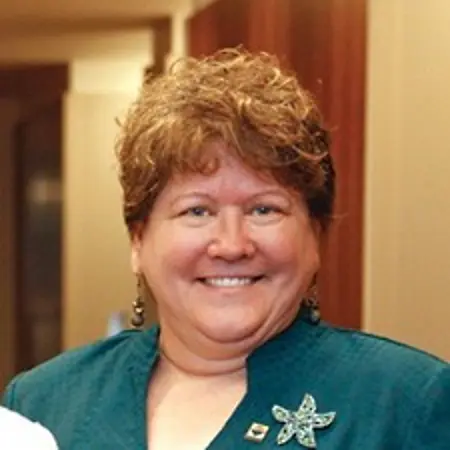
Her Story
About Janet
Janet Bryant is a recently retired applied nuclear chemist and research scientist with over 40 years of experience in multidisciplinary science and engineering. She built her career at the Pacific Northwest National Laboratory, where she worked across the full nuclear fuel cycle, including safeguards, environmental remediation, detection systems, and sensor technologies. Her work also contributed to global science policy related to nuclear materials, supporting efforts for both national security and international collaboration.
Throughout her career, she served as both a project manager and senior scientist, leading complex initiatives for organizations such as the U.S. Department of Energy, Department of Defense, Nuclear Regulatory Commission, and the International Atomic Energy Agency. She authored 86 professional publications and delivered numerous invited talks worldwide, earning recognition as a Fellow of the American Chemical Society and receiving multiple national and regional awards for her scientific and volunteer contributions. She also holds a B.S. in Chemistry and an MBA from the University of Washington.
In retirement, Janet continues to contribute to the scientific community through mentorship, advocacy, and volunteer leadership within professional organizations. She is deeply committed to supporting the next generation of scientists and engineers, with a strong focus on interdisciplinary collaboration, science policy, and workforce development. Her legacy reflects a lifelong dedication to advancing chemistry, strengthening scientific institutions, and demonstrating the real-world impact of science on global safety and society.
Her Interview
Ten minutes with Janet
01What do you attribute your success to?
I attribute my success to tenacity, openness to new possibilities, and a multidisciplinary approach to problem-solving. I have consistently worked across scientific disciplines, building and leading diverse teams that bring together chemists, engineers, physicists, mathematicians, statisticians, and nuclear engineers to solve complex challenges. In a major $9 million Department of Energy program focused on remediating contaminated sites, I learned the importance of bridging different “scientific languages” to achieve shared understanding. My strength lies in assembling and managing cross-functional teams, fostering collaboration, and building strong relationships that enable effective, holistic solutions.
02What’s the best career advice you’ve ever received?
The best career advice I have ever received is to do what I love and love what I do, but also ensure that it is financially sustainable.
03What advice would you give to young women entering your industry?
My advice to young women entering my industry is to actively build strong professional networks and seek out mentors who can provide guidance and support throughout their careers. I also encourage pursuing leadership development opportunities early, so you are prepared to open doors for others as you advance. Equally important is connecting with other women scientists and engineers to build a sense of community, reduce isolation, and foster mutual support in what can often be a challenging field.
04What are the biggest challenges or opportunities in your field right now?
A major challenge in my field is the current political landscape, particularly concerns around sustained funding and investment in science in the United States. In addition, the continued underrepresentation of women in certain STEM disciplines remains an ongoing issue. At the same time, this also presents a meaningful opportunity to actively mentor, support, and develop the next generation of diverse scientific leaders.
05What values are most important to you in your work and personal life?
My most important values in my work and personal life are integrity, curiosity, and excellence. I also value creativity and a strong appreciation for history and craftsmanship, which is reflected in my interest in vintage and antique clothing.
Join Influential Women and start making an impact. Register now.