Her Story
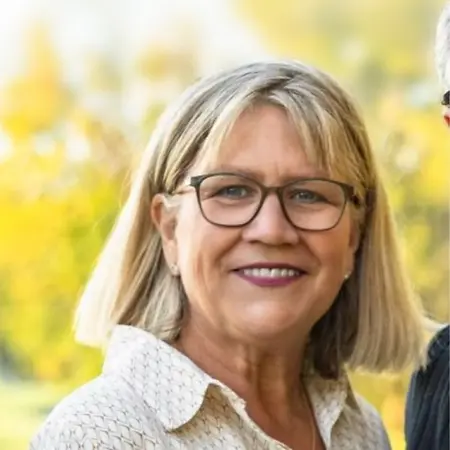
About Janice
I've been a pediatric physical therapist specialist for almost 40 years, teaching families how to work with their babies with disabilities, because coming home with a baby with a disability is hard. My work went national and then international, and as I traveled internationally, they started showing us some of the things they do in other countries, which is the way it should be done here. Twenty-six years ago, I had my own son with a disability, and even though my husband is a physician and I'm a therapist with my own team, it was hard for us. We decided that if we're going to fight every battle, let's fight this for other people too. My husband and I took on the task of creating Watch Us Farm ourselves, and it's just been building momentum ever since. I was part of the AGRA Institute, the Agriculture Leadership Program, Class of 21, working with top agriculture leaders not only here in our state but some in Washington, and then we went to Africa. I get up early in the morning, get on my computer, free emails, then go out to the greenhouse to make sure everyone's set up, work at our shop, meet with donors, write grants, work with teams as we develop the campus, write newsletters, and get information out to our communities. My day is crazy, but I'm excited about what we're building and the momentum we're gaining.
Her Interview
Ten minutes with Janice
01What are the biggest challenges or opportunities in your field right now?
The biggest challenge is that people with intellectual disabilities have been invisible. Up until 3 years ago, they weren't even recognized in the definition of health disparity. After high school, 98% of the funding drops off, and they have no place to go. I have mothers who are OB-GYN doctors who have been working for 17 years, and when their child is out of high school, they become part-time because their child has no place to go. We're trying to educate our government, medical institutions, and different companies to see that after high school, people need places to go. Some of them could have perfect SATs, they could have degrees, I have several with engineering degrees and master's degrees, they just can't work because they need to be trained. The opportunity is that communities are starting to see this issue, and as they see it, they're saying 'we want this.' We have 8 states already looking at this model. People are starting to understand that this is important, and we just need some bigger funders to say 'I'm in' and help us get the word out so we can replicate this in other communities.
02What values are most important to you in your work and personal life?
The most important value to me is seeing people and making sure everyone in the community is visible and valued. I believe communities need to see everybody, and it's become so divisive that we've stopped seeing people. I've been in the business a long time, and kids with disabilities come in every color and every diagnosis, and I feel like I can find good in anybody. That's my gift, my superpower. I believe that when we start bringing these kinds of things together, people start really working together, and that's how we build and that's how we heal. We heal families who are hurting, parents who are afraid to die because they wonder what will happen to their child. I want to address the question of 'who do you want to be when you grow up?' because at some point that stops for people with disabilities. Why does that stop? Why is it that all of a sudden something goes wrong and now your child has no value? I want communities to take care of people in a community, not have the government take care of it, but people in a community taking care of people in a community. I tend to work with all women because I like women and I think women get it better than most people. They have a different kind of empathy and can understand, and once they see it, they can no longer unsee it.
Join Influential Women and start making an impact. Register now.