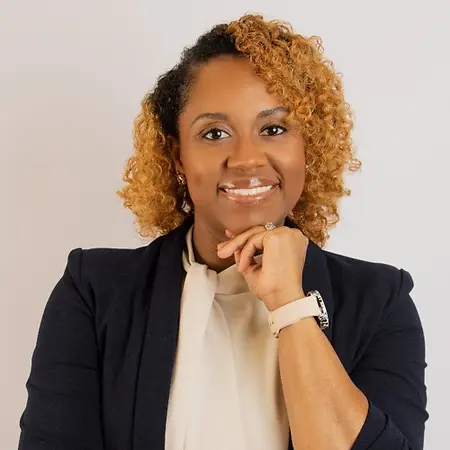
Her Story
About Jasmine
Jasmine Harris is a Senior Associate for Family Engagement with Save the Children Action Network (SCAN), the advocacy arm of Save the Children, focused on elevating parent voices and strengthening advocacy in early childhood education. She works across key parishes in Louisiana (Jefferson Davis, Evangeline, & St. Landry), partnering with Head Start programs, rural communities, and local leaders to help parents understand their role as advocates and to engage directly with policymakers. Her efforts center on building trust, expanding civic participation, and ensuring parents and caregivers feel confident sharing their lived experiences to influence education policy.
Jasmine brings more than a decade of experience in family engagement, Head Start programming, and community-based education. Her career spans direct service and systems-level advocacy, supported by a Master of Arts in Adult Learning & Development and Continuing Education Administration from Northwestern State University. Her background also includes higher education, disaster recovery coordination, and parent engagement roles—each reinforcing her commitment to community resilience and equity.
Jasmine’s advocacy is grounded in lived experience, service, and a strong belief in the power of parent leadership. She has helped secure funding for early learning initiatives, advance grassroots organizing, and launch community-based programs that expand access to early education resources. Through her work, she continues to support and inspire families—especially in underserved, rural communities—to find their voice, engage with confidence, and help shape policies that impact the next generation.
Her Interview
Ten minutes with Jasmine
01What do you attribute your success to?
I attribute my success to the leadership and vision of the Board of Directors and Executive teams of Save the Children and Save the Children Action Network (SCAN), as well as the strength of their divisions and programs—especially Family Engagement. The training, strategic guidance, and investment in this work have equipped me to effectively support and elevate parents and caregivers every day.
A key part of my impact is also rooted in the strong, collaborative partnership with Head Start through the Louisiana U.S. Programs. Their openness, trust, and consistent access to centers and families make this work possible. Whether through advocacy trainings or initiatives like SCAN’s Have a Heart campaign, this partnership allows parents and caregivers to step into advocacy, use their voices, and engage directly with policymakers on issues that matter most to their children.
Finally, my success is deeply grounded in my family. Their love, support, and daily inspiration fuel my commitment to this work and remind me why advocacy for children and families matters so much.
02What’s the best career advice you’ve ever received?
The best career advice I’ve received is to find your passion—work that feels so aligned with your purpose that it doesn’t feel like “work” every day. And while that sounds simple, I’ve learned it’s a lot more intentional than just chasing what feels good in the moment.
For me, passion showed up at the intersection of service, advocacy, and community. It’s in the moments when I’m sitting with parents and caregivers, helping them realize that their voices matter. It’s in watching someone go from unsure to confidently sharing their story with a policymaker. That’s the kind of work that energizes you, even on the hard days.
But here’s the part people don’t always say out loud—passion alone isn’t enough. You also need discipline, a growth mindset, and the willingness to keep learning. The work that feels meaningful still requires preparation, strategy, and consistency. The reason I’m able to show up fully in my role today is the investment in training and leadership development, and the opportunity to learn from others within organizations like Save the Children Action Network and Save the Children.
I’ve also learned that passion often grows through people and partnerships. Collaborating with programs like Head Start has shown me that when you’re connected to a mission bigger than yourself—and surrounded by others who are just as committed—the work becomes even more fulfilling. You’re not just doing a job; you’re contributing to something that creates real, lasting impact.
So if I could offer anything back to this community, it would be this: don’t just look for work that feels easy—look for work that feels meaningful. Pay attention to what keeps calling you back, what challenges you to grow, and where you see the impact of your efforts in the lives of others. That’s where passion lives.
And when you find it, commit to it. Even on the days when it does feel like work—because those days will come. The difference is, you’ll know why you started, and more importantly, who you’re doing it for.
03What advice would you give to young women entering your industry?
For any young woman considering a career in this field, my biggest piece of advice is simple: determine your “why.” Get clear on what drives you, what keeps you grounded, and what impact you want to make. This work will stretch you, challenge you, and call you to show up consistently—but your “why” is what will keep you focused and committed.
In advocacy and family engagement, the work you do is never just about you. It’s about who your next parent advocate will be. It’s about equipping families to confidently engage with lawmakers on critical issues like early childhood education funding, food security, and children’s safety. When you understand your “why,” you begin to see how your role directly connects to real lives, real families, and real change.
This field matters because it’s how we navigate systems and apply pressure to the very people we elect to represent us. It requires courage, patience, and a willingness to keep going—even when progress feels slow. But when you’re rooted in your purpose, the work becomes meaningful, not just busy.
So take the time to reflect and be honest with yourself—why does this work matter to you? Once you discover that, hold onto it. Let it guide your decisions, your growth, and how you show up for the communities you serve.
04What are the biggest challenges or opportunities in your field right now?
One of the greatest challenges in this field is helping shift the narrative so that children are no longer viewed through a political lens. Supporting children—making sure they are fed, safe, and have access to quality early learning—should never be a divisive issue. It should be a shared priority, regardless of party affiliation. Yet, in reality, conversations around policies and funding often become polarized, and that’s where the work becomes both difficult and necessary.
I’ve seen firsthand how discussions around programs like the Supplemental Nutrition Assistance Program (SNAP) and early childhood education supports (i.e., Childcare Modernization Act) can quickly turn into debates about budgets and policy lines, rather than focusing on the real question: how will this impact children and families over time? That long-term perspective is sometimes missing, and helping lawmakers reconnect to it is a constant challenge.
What makes it even more complex is working with decision-makers who may still be undecided or removed from the day-to-day realities families are facing. Issues like food insecurity or access to early learning programs aren’t abstract—they are lived experiences. They affect how a child shows up in the classroom, how a parent can work, and how a household functions overall. Bridging that gap between policy and real life is not easy, but it’s essential.
That’s why I am deeply committed to making sure parents and caregivers understand just how powerful their voices are. Data and statistics are important, but stories move people. When parents share their lived experiences—when they speak directly to lawmakers about what these programs mean for their children—it shifts the conversation. It brings humanity into policy discussions that can sometimes feel distant and transactional.
So while the challenge is real, it also fuels the work. It pushes me to continue building trust with families, creating spaces for them to be heard, and ensuring that their voices are not just included, but centered. Because at the end of the day, the goal is simple: every decision made should reflect what is best for children and the families who depend on these systems to thrive.
05What values are most important to you in your work and personal life?
What matters most to me—both in my work and in my personal life—is integrity. It’s not just a value I believe in; it’s the foundation for how I lead, serve, and build trust with others. Without integrity, the work I do would lose its authenticity, and in a field centered on people, that’s something I’m not willing to compromise.
For me, leading with integrity means being honest, transparent, and clear in every interaction. When I engage with parents and caregivers, I make it a priority to ensure they fully understand what they’re stepping into. I walk them through the process, set clear expectations, and make sure there are no hidden agendas. I also reassure them that their participation comes at no cost—because of the generosity of supporters of organizations like Save the Children Action Network—so they can focus on what truly matters: using their voice.
At the heart of my work is a simple goal—to empower families. I want parents and caregivers to walk away knowing that their voices are not only important but necessary. That kind of empowerment only happens when trust is present, and trust is built through consistency, honesty, and showing up the same way every time.
I also place a high value on emotional intelligence. The ability to be self-aware, to listen actively, and to be intentional in how I engage with others is critical. Every conversation matters. Every interaction is an opportunity to either build a connection or lose it. I choose to lead with empathy, respect, and understanding because people deserve to feel seen and heard.
In both my professional and personal life, I strive to operate from a place of strong values. Integrity guides my decisions, emotional intelligence shapes my interactions, and purpose drives my work. When those things are aligned, I’m not just doing a job—I’m serving in a way that creates real impact.
Join Influential Women and start making an impact. Register now.