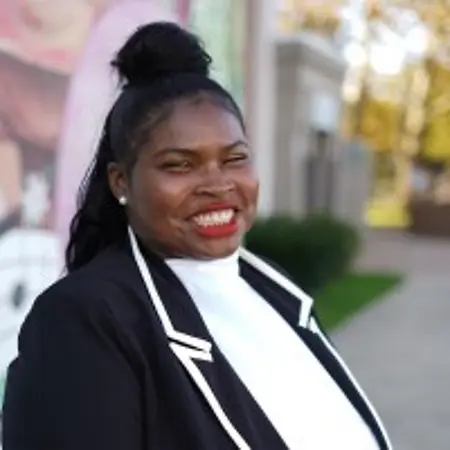
Her Story
About Javonna
Javonna Wylie is a dynamic nonprofit executive and workforce strategist serving as President and CEO of Chester County OIC (CCOIC) in West Chester, Pennsylvania. With more than a decade of experience at the organization, she has risen through the ranks—from intake specialist and case manager to executive leadership—demonstrating a deep, hands-on understanding of community needs and workforce development. As CEO, she leads organizational strategy, coalition building, and program innovation, expanding access to free GED, ESL, and career training programs that now serve over 1,000 adults annually. Under her leadership, CCOIC has secured millions in new funding, strengthening its impact and advancing its mission of economic empowerment.
Javonna’s work is rooted in a strong commitment to equity, education, and sustainable workforce pipelines. She specializes in building cross-sector partnerships that align public policy, private investment, and community-based programming to create lasting opportunity. Known for blending strategic vision with grassroots action, she has developed and scaled workforce initiatives that equip individuals with the skills, confidence, and support needed to thrive. In addition to her role at CCOIC, she serves as President of the Chester County HR Association, further extending her influence across the regional workforce and human resources landscape.
A recognized leader and changemaker, Javonna has earned numerous honors, including being named a 2025 MLT Power Woman and a VISTA.Today 40 Under 40 Superstar. Her leadership extends beyond her organization through board service, community engagement, and mentorship, where she is passionate about developing the next generation of leaders. With a background in social work from Shippensburg University, she brings a people-centered approach to every aspect of her work. Guided by a belief in investing in people and building systems that outlast individuals, Javonna continues to drive meaningful, community-focused transformation across the nonprofit sector.
Her Interview
Ten minutes with Javonna
01What do you attribute your success to?
I would contribute my success to my predecessor, actually. She was at the organization for 23 years, and I worked under her for almost 10. And just because she believed in me, but also gave me opportunities. We have a 30-year age gap, and so sometimes she was annoying, or we did clash heads, or like, just clash about ideas and things, just having like a different generational scope. But at the end of the day, we always have respect for each other, and we're able to hear each other out, and there was nearly nothing that she wouldn't allow me to try or do or be innovative about, so it really gave me the space to build my career versus her being a barrier, which I know exists sometimes in the workforce. And myself as a leader, I aim intentionally to do the same thing for the people who work under me, to make sure that I'm investing in their success, that I let them know, like, I want you to do well here at this organization, but I want you to do well outside of here, too, and giving them opportunities to grow.
02What’s the best career advice you’ve ever received?
I would say clear is kind. I had the pleasure, or the opportunity to have an executive coach, and she has coached me through 3 promotions, from like workforce manager to even CEO. And when I was like mid-career as a manager, I just didn't see the gaps that I had of like how I think, even as a woman, sometimes you just like approach certain spaces, and you feel like you shouldn't speak up, or you have to be a certain way, and all those things. And I think that when I learned clear is kind, it was just like, no, be clear. Like, whether it's a conflict, whether it's just something that you need for yourself to get to the next level, if you're not speaking up and saying it, no one's gonna know. And at least if you can be clear about where you're at, you can get the information you need to make an informed decision. So I would say clear is kind has really supported me, because in those moments where I might be feeling disempowered, or I'll say even maybe insecure, just not sure, I remind myself, just, you know, stand in who you are. And I think that has helped me grow so much.
03What advice would you give to young women entering your industry?
Speak up and be clear about your goals, help normalize the presence of younger leaders in leadership spaces, and actively seek out intergenerational mentorship and support to grow and navigate your career.
04What are the biggest challenges or opportunities in your field right now?
One of the biggest challenges—and opportunities—in the field is addressing disparities in education and access while building durable workforce pipelines that help move individuals from poverty to economic stability. At the same time, strengthening intergenerational mentorship and deeper public-policy engagement is critical to creating lasting, systemic impact.
05What values are most important to you in your work and personal life?
In my personal life, I love to write. I'm a writer, I actually have like a published poetry book from 2022, and that's one thing I love to do in my free time. I also have a rescue puppy named Scuba, and during my free time, I'm always spending time with Scuba and venturing to new parks and just enjoying the calm. That's totally opposite of work. In my work, I think building my network is important, but also people kind of seeing an example in me, and just understanding that every leader has a diverse background. I think there's still rooms I walk into once I say like I'm the CEO, and I'm in my early 30s, so sometimes when I say I'm the CEO, people are either taken aback, or they're really impressed, or it's just surprising. And so I think for me, just being a part of this platform, it's a good thing for people to see, because I want it to become more normalized and not surprising. I think it's important to normalize that there are 30-year-old millennial CEOs, and that there should be more, and also knowing that my journey wasn't linear, and it took a lot of work and challenges to get there, to get here, and I still have challenges that I need support with. I hope that more leaders that are older than me could be that reaching hand to help our generation continue to grow as they age out of the workforce.
Join Influential Women and start making an impact. Register now.