A quiet act of kindness taught me something profound about leadership: we may never witness the impact we have on another person's life. Sometimes showing up, making the connection and ensuring something reaches the person who needs it is enough.
Verified Member
Influential Woman · Nonprofit
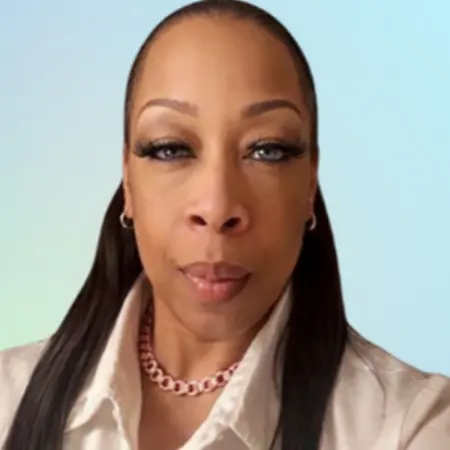
Jazzie Ford
Founder | Brain Health Advocate | Speaker | Community Educator, LaLa Speaks Foundation
Saint Louis, MO 63108
2Years experience
2Articles published
2Awards received
Her Story
About Jazzie
Jazzie Ford is a Founder, Brain Health Advocate, Speaker, and Community Educator dedicated to advancing brain health awareness, health equity, and life-saving education. As the Founder and President of LaLa Speaks Foundation, she leads community-centered initiatives that help individuals and families recognize the warning signs of brain aneurysms, access critical resources, and engage in conversations that can save lives.
The Foundation was established in 2024 following the sudden passing of Jazzie’s daughter, Jacqueline “LaLa” Rhone, from a ruptured brain aneurysm. What began as a mother's response to unimaginable loss has evolved into a growing awareness movement grounded in one truth: Silence is deadly. Awareness saves lives.
Under Jazzie’s leadership, LaLa Speaks Foundation delivers culturally responsive brain health education through survivor-centered storytelling, community engagement, strategic partnerships, and public awareness campaigns. Its flagship awareness experience, Silent Sounds, Loud Impact, brings life-saving education into schools, workplaces, faith communities, and public spaces, transforming conversations into action and awareness into measurable impact.
Since its launch, the Foundation has reached more than 2,000 individuals, supported over 700 families, and built partnerships with medical, nonprofit, and community leaders to strengthen health literacy and close critical awareness gaps. The organization holds the Candid Platinum Seal of Transparency and has received a Missouri State Proclamation recognizing September as Brain Aneurysm Awareness Month.
Drawing on her background in nonprofit grant writing and development, Jazzie combines lived experience with strategic leadership to build sustainable partnerships, expand community education, and advance public awareness efforts. She works alongside healthcare professionals, medical advisors, institutions, and community leaders to ensure brain health education remains grounded in science, equity, and compassion.
Today, Jazzie uses her voice as an advocate, educator, and speaker to elevate brain health conversations beyond awareness months and into everyday life. Her mission is simple but urgent: to ensure that no family experiences preventable loss due to a lack of information.
Her Interview
Ten minutes with Jazzie
01What do you attribute your success to?
I attribute my success to turning pain into purpose, staying obedient to the mission, and building with strategy. After losing my daughter, Jacqueline “LaLa” Rhone, in May 2024, I made a commitment that her life would continue to speak through awareness, education, advocacy, and action. That commitment became LaLa Speaks Foundation.
What began as a response to personal loss has grown into a brain health awareness movement supported by community engagement, public education, strategic partnerships, and survivor-centered storytelling. Our work has been strengthened by organizations including NAMI St. Louis, Regions Bank, Missouri Baptist Healthcare Foundation, Midland States Bank Foundation, The Lil Bit Foundation, ServMO Missouri, VOP News STL, the Alzheimer’s Association Greater Missouri Chapter, Affinia Healthcare, and Family Care Health Center.
A key part of our growth and public awareness efforts has been the leadership of Dr. Abdullah Hakoun, MD, our founding Medical Advisory Board Member. Dr. Hakoun has served as a trusted medical voice for our movement, helping educate the public, spark critical conversations about brain aneurysms and brain health, and elevate awareness as we lead into Brain Aneurysm Awareness Month. His expertise has helped bridge the gap between lived experience and medical education, strengthening our ability to reach communities with life-saving information.
Our advocacy efforts have also contributed to meaningful policy progress. We are proud to have supported awareness initiatives that helped advance a Missouri House Bill that was truly agreed to and passed, further elevating the importance of brain health awareness and education across the state.
We have earned the Candid Platinum Seal of Transparency, received a Missouri State Proclamation recognizing Brain Aneurysm Awareness Month, and expanded our visibility through media features including FOX 2 Now, The St. Louis American, and Studio STL.
My success is not measured only by recognition. It is measured by impact, consistency, and the ability to turn awareness into action. Every step forward is rooted in one mission: ensuring that no family experiences preventable loss due to a lack of information and that brain health becomes a priority in every community.
02What’s the best career advice you’ve ever received?
The best career advice I’ve ever received was to “get out of your own head.” Overthinking can delay purpose, and self-doubt can limit vision. I’ve learned that clarity comes through action.
When you move with intention instead of fear, opportunities begin to align. That mindset has helped me lead with confidence, make strategic decisions, and remain focused on impact rather than hesitation. Progress requires courage, discipline, and the willingness to keep moving before everything feels perfect.
03What advice would you give to young women entering your industry?
If you are entering the nonprofit or advocacy space, build community before you build applause. Passion may ignite a mission, but strategy sustains it. Learn how funding works. Understand how to measure impact. Develop partnerships with intention.
At the same time, do not underestimate the power of your lived experience. Your story has value, but discipline gives it direction. I did not begin with every answer, but I committed to learning quickly, building structure, and leading with purpose. When your work is rooted in service and supported by strategy, recognition will follow.
04What are the biggest challenges or opportunities in your field right now?
One of the greatest challenges in brain health advocacy is sustained visibility. Brain aneurysms are life-threatening, yet public awareness of warning signs, prevention, and early intervention remains inconsistent. Education often peaks during awareness months, but year-round engagement is still limited.
There is also an equity gap. Underserved communities, particularly Black communities, often experience disparities in access to health education and timely care. The opportunity lies in transforming awareness from a moment into a movement. Brain health must become part of everyday conversations in schools, workplaces, faith communities, and public institutions.
05What values are most important to you in your work and personal life?
The values that guide both my work and personal life are awareness, integrity, equity, and service. Awareness is not simply recognition. It is empowerment. I believe families deserve access to life-saving information before a crisis occurs.
Equity means ensuring that prevention resources are not limited by geography, income, or visibility. Integrity means operating with transparency, accountability, and measurable impact. Service means building with intention so that no other family experiences preventable loss due to a lack of awareness. Service means building with intention so no other family experiences preventable loss due to a lack of information.
Turning grief into purpose shaped this mission, but discipline and community sustain it.
Her Content Hub
Articles by Jazzie
The People Who Change Your Life May Never See Your Reaction
Leadership is not always witnessed, celebrated or even acknowledged in the moment. Sometimes its greatest impact happens after you have already left the room.

The People Who Change Your Life May Never See Your Reaction
Leadership is not always witnessed, celebrated, or even acknowledged in the moment. Sometimes, its greatest impact happens after you have already left the room.
I returned to my table and found something waiting for me that I was not prepared for.
A beautifully framed copy of Missouri House Bill 2372.
Inside the frame was the pen Governor Mike Kehoe used to sign it.
At first, I was overwhelmed by the significance of what I was looking at. The legislation represented advocacy, persistence, and a journey that had grown far beyond the place where it began.
But as the moment settled in, something else stayed with me.
Missouri State Representative Kimberly-Ann Collins, who represents the 77th District, had stopped by while I was away from the table. She had somewhere important to be and could not wait for me to return.
Still, she made sure the frame reached me before she left.
She never saw my reaction.
There was no presentation.
There was no photograph of the handoff.
There was no audience waiting to applaud.
She simply made sure what she came to give me reached me, and then she continued on where she needed to go.
That moment taught me something about leadership that I have not stopped thinking about.
We often imagine impact as something visible.
We think we will know when we have changed someone's life because they will tell us.
We think leadership will come with recognition, acknowledgment, or a clear moment when someone says, "What you did mattered."
But that is not always how it happens.
Sometimes impact happens after you have already left the room.
Sometimes it is the introduction you made between two people who later build something meaningful together.
Sometimes it is the recommendation you gave when someone was not in the room to advocate for themselves.
Sometimes it is the information you shared that helped another person make a decision.
Sometimes it is the phone call, the encouragement, the opportunity, the seat at the table, or the quiet act of kindness that becomes part of someone else's story long after you have continued with your own day.
Women do this for one another more often than we acknowledge.
We open doors.
We share what we know.
We speak names in rooms where those people are not present.
We make room.
We encourage someone who is still building.
And sometimes, we never see what happens next.
That can be difficult, especially in a world that often measures impact by what can be counted, photographed, posted, or publicly recognized.
But leadership is not always witnessed.
Some of the most meaningful leadership happens without an audience.
What Representative Collins left for me that day will be carefully preserved. The framed legislation and signing pen represent a meaningful moment in the history of LaLa Speaks Foundation.
But the lesson attached to them is even bigger.
She reminded me that an act does not become meaningful because we are present to see its effect.
It becomes meaningful because we chose to do it.
We do not need to remain in the room long enough to receive the gratitude.
We do not need to know how every introduction turned out.
We do not need to hear how every encouraging word landed.
We do not need proof that every door we opened changed someone's direction.
Sometimes our responsibility is simply to show up, do what we can, and trust that what we offered will reach the person who needed it.
That is leadership, too.
And perhaps one of the most freeing lessons we can learn as women is this:
You do not have to witness the impact to have made one.
Workplace wellness programs have expanded, yet brain health awareness remains largely absent. Employers have a powerful opportunity to integrate life-saving education into everyday workplace culture.
Why Brain Health Belongs in Every Workplace Wellness Program
A critical gap in corporate wellness that employers can no longer afford to ignore
Why Brain Health Belongs in Every Workplace Wellness Program
Workplace wellness programs have expanded significantly over the past decade. Organizations now invest in physical fitness initiatives, mental health resources, stress management tools, and financial wellness benefits. Yet one critical area remains largely overlooked: brain health awareness.
Brain aneurysms and other neurological emergencies do not discriminate by age, profession, or income. Often present without warning, and when awareness is limited, outcomes can be devastating. Despite this reality, education around warning signs, emergency response, and prevention is rarely integrated into workplace wellness strategies.
This is a gap with real consequences.
Employees spend a substantial portion of their lives at work. Workplaces influence culture, communication, and access to information. When employers prioritize health education, they extend that impact beyond the office and into families and communities.
Workplace wellness programs have evolved significantly. Organizations now invest in physical fitness initiatives, mental health resources, stress management tools, and financial wellness benefits. Yet one critical area remains largely overlooked: brain health awareness.
Brain aneurysms and other neurological emergencies do not discriminate by age, profession, or income. They often present without warning. When awareness is limited, outcomes can be devastating. Despite this reality, education around warning signs, emergency response, and prevention is rarely integrated into workplace wellness strategies.
This gap carries real consequences.
Employees spend a substantial portion of their lives at work. Workplaces influence culture, communication, and access to information. When employers prioritize health education, the impact extends beyond the office and into families and communities.
Incorporating brain health awareness into workplace programming does not require a complete overhaul. It begins with intentional education. Brief workshops, awareness campaigns, and accessible resources can equip employees with knowledge of key warning signs and the urgency of timely medical intervention.
There is also an equity dimension to consider. Underserved communities, particularly Black communities, experience disparities in access to preventive health education and early intervention. Employers who integrate culturally responsive brain health education into their wellness initiatives help close critical awareness gaps and demonstrate meaningful commitment to health equity.
Through my work with LaLa Speaks Foundation, I have seen firsthand how the absence of awareness can alter the trajectory of a family in an instant. Prevention conversations must happen before a crisis occurs, and employers are uniquely positioned to lead that shift.
Forward-thinking organizations understand that comprehensive wellness extends beyond gym memberships and mindfulness apps. True wellness includes equipping employees with life-saving information that protects not only productivity, but also people.
Brain health should not be discussed only after tragedy. It should be embedded into proactive care, just as heart health and mental health are.
The future of workplace wellness is not just about performance. It is about protection.
Silence is deadly. Awareness saves lives.
Join Influential Women and start making an impact. Register now.