Operational Excellence is a strategic leadership discipline that aligns people, processes, and performance to deliver consistent, high-quality healthcare while managing costs and driving continuous improvement across clinical outcomes and organizational systems.
Verified Member
Influential Woman · Healthcare
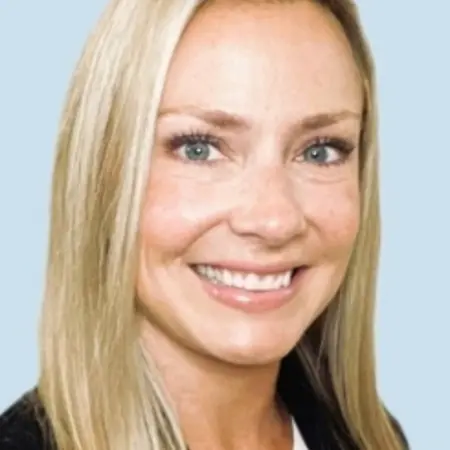
Jenn Agne, MBA, MSN, NEA-BC
NIHSS
VP Clinical Operations, Rezilient Health
St. Louis, MO 63119
3Articles published
2Awards received
Her Story
About Jenn
Jenn Agne, MBA, MSN, NEA-BC, is a healthcare executive and operator who turns clinical strategy into scalable, reliable performance. As Vice President of Clinical Operations at Rezilient Health in Greater St. Louis, she leads enterprise clinical performance across multi-state hybrid care models, integrating virtual and in-person services to expand access, elevate quality, and strengthen operational efficiency.
With experience that spans bedside nursing through senior executive leadership, Jenn brings an end-to-end understanding of how decisions in the boardroom shape care at the bedside. She has led the design and scale of clinical programs, built enterprise operating frameworks, and driven high-impact initiatives in value-based care, care coordination, and technology-enabled care delivery.
Jenn is known for steady, decisive leadership in complex environments, her ability to bring clarity and structure to ambiguity, and a disciplined, evidence-based approach to operational excellence. A committed mentor and talent developer, she is intentional about building high-performing, empowered teams and coaching emerging leaders in clinical operations and population health. She holds an MBA and a Master of Science in Nursing, along with advanced board certifications including NEA-BC and PCCN Alumnus.
Her Interview
Ten minutes with Jenn
01What do you attribute your success to?
I built my career the long way and I’m proud of that. I’ve held nearly every role in the care continuum: massage therapist, teacher, certified nursing assistant, RN, manager, liaison, advisor, Director, and VP of Clinical Operations while also advising VC and PE backed organizations through my consulting work. That range of experience is not a fun fact; it is the backbone of how I lead. I understand frontline teams because I’ve been one of them in almost every seat, and I know how to communicate up, down, and across the organization in a way that feels both clear and respectful.
My leadership philosophy is grounded in situational leadership theory with people-first mentorship and shared goals. I meet individuals where they are, tailor my coaching to what they need, and focus on building cultures of empowerment where wins are collective, not individual. I am intentional about investing in mentoring within my organization to help position us for what’s next, not just what’s now. My aim is to pull people up, give them tools, language, and confidence, and create the kind of support many individuals in healthcare do not always have at their fingertips.
On the quantitative side, my impact shows up in clinical rigor and operational innovation. I build repeatable, scalable frameworks, learning and development pathways, clinical system designs, and operating models that move organizations from zero to standardized, and from standardized to scalable. I’ve built these structures from the ground up, and I know how to refine them so they actually work in real-world, high-pressure environments.
02What’s the best career advice you’ve ever received?
The best career advice I’ve ever received is: “Build a career you can defend in any room.”
For me, that means three things:
• Do the work at every level so you understand the system end to end, not just from the executive seat.
• Make decisions you can explain to a frontline nurse, a CFO, and a patient’s family with the same level of honesty and conviction.
• Invest in people as much as you invest in outcomes because the culture you build will outlast your title.
That guidance has shaped how I move through my career: I say yes to roles that stretch my perspective, I design frameworks that are both practical, pragmatic, and scalable, and I lead in a way I’d be comfortable having replayed in any room - boardroom, break room, or bedside.
03What advice would you give to young women entering your industry?
I’d start by giving her the tools to build repeatable frameworks and strengthen her emotional intelligence early in her career. I’d encourage her to deliberately explore different corners of healthcare, become a thoughtful generalist, and then lean into the spaces where her strengths, values, and beliefs are in alignment. When she operates in environments that match her internal compass, she removes unnecessary friction and is able to show up with more clarity, influence, and impact because her systems and her surroundings are working in the same direction.
04What are the biggest challenges or opportunities in your field right now?
Healthcare today sits at the intersection of macro-level transformation and rapid technological change, creating significant opportunities to scale solutions that improve outcomes and reduce costs across entire populations. At the same time, the rise of AI and digital tools is reshaping how work is organized and prioritized, making delegation, boundary-setting, and strong collaboration essential to sustaining effectiveness across complex, multi-role environments.
05What values are most important to you in your work and personal life?
First and foremost: protect your own capacity. If you don’t take care of yourself, you cannot take care of others and you certainly cannot lead them well. That means being intentional about how you work: leaning into tools like AI to organize, prioritize, and create structure, and being clear about boundaries so you’re not constantly absorbing work that could be taught, delegated, or owned by someone else. Delegation, for me, is not dumping; it’s empowering and collaborating so the load is shared more intelligently across the organization.
Personally, I anchor to the things that keep me grounded: movement, family, friends, and time outside. Even in small doses, I deliberately build those into my days so I’m creating a sustainable “internal workforce” for myself, not just running on adrenaline and obligation. I also hold a healthy tension between high standards and grace: I strive for excellence, but I treat every experience good, bad, or somewhere in the middle as data I can learn from and apply forward, not a verdict on my worth. Self reflection is key!
Her Content Hub
Articles by Jenn
Healthcare Doesn’t Have an Innovation Problem. It Has an Execution Problem.
How Operational Excellence Transforms Healthcare Delivery and Organizational Performance

Healthcare isn't evolving at the margins; it's being fundamentally reshaped. Cost pressure, outcome expectations, technology, and consumerism are forcing a reset in how organizations operate.
In this environment, execution is the differentiator. Operational Excellence (OE) is no longer optional; it's a strategic discipline.
Operational Excellence: A Leadership Mindset
OE is a leadership philosophy. It aligns people, processes, and performance to deliver consistent, high-quality care while managing cost. In healthcare, reducing variation isn't just operational; it directly impacts outcomes.
From Strategy to Execution
Sustainable OE requires alignment across:
- A clear purpose tied to frontline impact
- Accountable, decision-oriented behaviors
- A disciplined, process-driven management operating system
- Standardized, high-quality workflows
- Technology that enhances human capability
When aligned, strategy becomes operational reality.
Sustaining Performance
High-performing organizations embed continuous improvement into daily work, standardizing what matters, measuring what drives outcomes, and iterating quickly. This is how organizations shift from reactive to proactive performance management.
Why It Matters
Operational Excellence drives:
- Consistent clinical outcomes
- Strong cost stewardship
- Empowered, accountable teams
- Scalable best practices
- Clarity in complexity
Ultimately, it's a shift from managing processes to designing systems that reliably deliver value for patients, care team members, and the broader healthcare ecosystem.
Explore essential Clinical Operations strategies for Series A startups, covering workflow standardization, operational visibility, clinician enablement, scale-ready foundations, and trust-building to ensure quality and safety while enabling sustainable growth.
Series A Is Where Clinical Operations Grows Up: From Clinical Heroics to Scalable Excellence
Scaling Clinical Operations: How Process Enables Patient Safety and Sustainable Growth at Series A

As I reflect on the startup world I've been operating within for the last four years, I thought I’d share some insights for those who also live and breathe in this space. Series A startups present a necessary inflection point for Clinical Operations maturity. In Clinical Ops, early success in the seed stage is often powered by grit, clinical judgment, and manual intervention. At Series A, that model begins to reach its limits and no longer scales, demanding rapid evolution of processes to protect patient safety and enable sustainable growth.
The “what” and “why,” you might ask?
Five top areas to consider:
⚙️ Standardize workflows: Clear processes, escalation protocols, and handoffs reduce variability and risk.
📊 Operational visibility: Defined goals, metrics, and reporting rhythms allow leaders to see issues before they impact care.
🧠 Clinician enablement: Thoughtful processes remove friction so clinicians can focus on patients, not workarounds.
📈 Scale-ready foundations: Focused quality and compliance processes built early prevent downstream bottlenecks.
🤝 Trust at every level: Consistency builds confidence with patients, clinical teams, leaders, and cross-functional partners.
In Clinical Operations, process is not bureaucracy; rather, it is how we ensure quality, safety, and growth coexist at scale.
#ClinicalOperations #HealthcareLeadership #BuildingHighFunctioningTeams #SeriesA #ScalingCare #PatientSafety #HealthcareTech #Quality
A healthcare executive's journey across clinical, corporate, and startup environments reveals how credibility is built through evidence-based frameworks that prioritize readiness, fidelity, and measurable competency over time-based completion.
I Didn’t Inherit a Playbook. I Wrote One.
Building Credibility Through Evidence-Based Frameworks and Measurable Readiness in Healthcare Operations

As I reflect on what it truly means to build operational excellence in healthcare, I keep coming back to where it all started… credibility isn't given; it's built, one framework at a time.
Most healthcare executives come from one world. I’ve built my career across three, and that combination is the difference. I didn’t inherit a playbook. I wrote one.
I started in the clinical realm as a licensed massage therapist and transitioned to teaching massage therapists hands-on clinical practicums alongside brilliant clinicians, accountable to two outcomes: licensure and quality. Not completion. Not orientation. Licensure and quality. That distinction shaped everything I’ve built since.
As a leader, I’ve transitioned dozens of care team members from new hire to autonomous practice. Most programs are built around time. Mine are built around readiness and are grounded in evidence, designed for fidelity, and built to hold.
Every learning and development framework I’ve designed transfers across any clinical role, any program, and any care team. Not separate programs—one architecture that adapts.
Corporate enterprise taught me how to build programs and training teams that hold at volume, survive compliance scrutiny, and earn the trust of multiple stakeholders. Startup environments taught me how to build when there is no playbook and document it so the team behind me can run without me in the room.
The standard I hold is the same across every environment:
High fidelity.
Evidence-based.
Competency-driven.
Built to produce a result, not a binder.
Readiness isn’t a feeling. It’s a measurable state that a well-designed program produces consistently. That’s the work. That’s the standard. And it goes with me everywhere.
#OperationalExcellence #HealthcareOperations #LearningAndDevelopment #HealthcareExecutive #ClinicalExcellence #WorkforceReadiness #HealthcareLeadership #EvidenceBasedPractice
Join Influential Women and start making an impact. Register now.