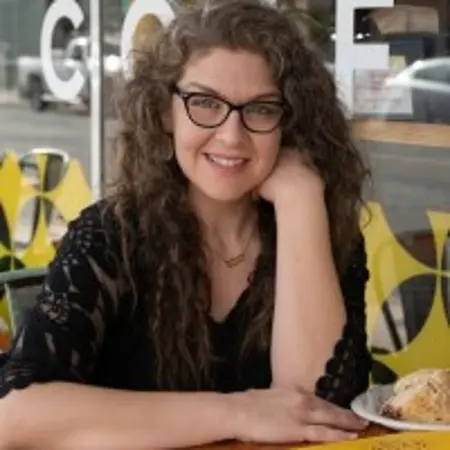
Her Story
About Jenna
Jenna Annas is the founder of Happy Hope Wellness LLC, a holistic wellness practice dedicated to helping individuals and organizations cultivate resilience, emotional intelligence, and nervous system regulation. An Air Force veteran, speech-language pathologist, grief and trauma coach, and creative arts and sound wellness practitioner, Jenna brings a multidisciplinary approach to her work. Through her practice, she offers grief coaching, sound wellness experiences, corporate wellness workshops, and virtual consultations designed to support people navigating stress, burnout, grief, and life transitions.
Jenna’s professional journey blends service, science, and personal transformation. She served in the United States Air Force in bioenvironmental engineering, where she worked to safeguard the health and safety of individuals in diverse environments. After completing both her undergraduate and graduate degrees in communication disorders at Texas State University, she spent several years working as a speech-language pathologist, helping children and adults develop communication skills and strengthen cognitive and social functioning. Over time, her interests expanded to the deeper connection between emotional wellbeing, the nervous system, and the healing potential of sound and embodied practices.
Today, Jenna integrates evidence-based approaches—including HeartMath techniques, vocal toning, and sound-based wellness—into her coaching and wellness programs. Drawing on both professional expertise and her personal experience as a bereaved mother, she is passionate about helping others transform hardship into growth and renewed purpose. Through workshops, community partnerships, and individual coaching, Jenna’s mission is to create supportive spaces where individuals, workplaces, and communities can develop resilience, reconnect with themselves, and move forward with hope.
Her Interview
Ten minutes with Jenna
01What do you attribute your success to?
Grief and trauma coach who owns a business in Schertz, Texas. has experienced significant personal losses (infant son, pregnancy losses, both parents before age 40). Air Force veteran with a master's degree in communication disorders and previously worked as a speech-language pathologist.For more than a decade, my work has lived at the intersection of science, service, and the human experience of grief. My professional path hasn’t been linear, but every chapter—from my time in the Air Force to my career as a speech-language pathologist—has led me to the work I do today as a grief and trauma coach focused on nervous system regulation and holistic wellness.
Like many people who enter the healing professions, my motivation is both professional and deeply personal. Experiencing loss and navigating grief firsthand pushed me to search for tools that could truly help people move through pain—not just intellectually, but physically and emotionally as well. Over time, I discovered that healing often happens when we learn how to regulate the body and reconnect with our internal sense of safety.
That realization ultimately reshaped my career.My early professional background began in the Air Force, where I worked in bio-environmental engineering. Military service instilled in me a strong sense of discipline and purpose, but it also exposed me to the realities many service members and their families face—stress, trauma, and profound life transitions.
After my time in the military, I pursued graduate studies in communication disorders and became a speech-language pathologist. That experience was transformative. Working with individuals across the lifespan—helping them recover their voice, language, and cognitive processes—deepened my understanding of how the brain, body, and emotions are intimately connected.
Speech pathology gave me a scientific lens to study communication, cognition, and neurological function. But over time, I became increasingly interested in the emotional and physiological layers beneath communication: how trauma shapes the nervous system, how grief lives in the body, and how sound and breath can shift our emotional state.
Those questions eventually led me into the world of somatics and holistic healing.One area I’m particularly passionate about is the use of sound and vocal toning as part of trauma-informed care. Sound has a powerful effect on the body’s perception of safety. Something as simple as humming can stimulate the vagus nerve, which plays a key role in calming the nervous system.
These practices aren’t meant to replace traditional medicine—they complement it. My background in speech-language pathology and neuroscience allows me to approach holistic methods with a strong scientific foundation while also remaining open to integrative approaches that support the whole person.
Professional Focus:
Specializes in nervous system regulation and heart-brain coherence
HeartMath certified practitioner
Offers services through a small clinic (one day/week) and virtual consultations
Notable achievement: Presented trauma-informed workshop at University Health San Antonio in January 2026 with high enrollment
I really just wanted to bring something new and innovative to people to really make them feel good and change their life for the better. So many people are suffering or stuck in a negative situation they don't know how to get out of, so I just wanted to give people some hope.When your body feels safe, it is able to make clearer decisions, you're able to communicate with people better, you just feel better altogether.
02What advice would you give to young women entering your industry?
For anyone looking into holistic wellness, I want them to know that there are so many different innovative, alternative ways to address a specific situation. When your body feels safe, it is able to make clearer decisions, you're able to communicate with people better, you just feel better altogether. Not every single practice and treatment is right for everyone, but if you don't try it out, you're never gonna know. I really encourage people to think outside the box and really try to address what's going on, or at least try to figure it out, versus kind of shoving it under the carpet. A lot of people know there's stuff going on, or they know they're not feeling that great, but they kind of try to cover it up. For starting a business, I would say go for it. You're the only one keeping yourself from your dreams, and just have the confidence and the knowing what you're doing is so purposeful. Make sure that you have a purpose, and you have your why, because when things do get difficult - and things always can be difficult, there's always contrast in the world - but when you have your why, you can rise up and know that you're unstoppable, and you have the capability to just move mountains. If you give yourself that faith and that confidence, then you can do anything. So I just say, go for it, you keep going, and you keep doing it, because you can move it.
03What are the biggest challenges or opportunities in your field right now?
Like many entrepreneurs and professionals who pivot into new fields, my journey has come with its share of challenges. Transitioning from structured environments like the military and clinical healthcare into the world of holistic wellness required both courage and patience. In traditional medical settings, roles and expectations are clearly defined. In contrast, building a practice centered around nervous system regulation, grief coaching, and somatic healing meant stepping into a space that is still emerging and not always widely understood.
One of the greatest challenges has been bridging the gap between conventional healthcare and integrative approaches. With my background in speech-language pathology and neuroscience, I have always valued evidence-based practice. At the same time, I have witnessed firsthand how powerful complementary tools—such as breathwork, sound therapy, and somatic awareness—can be in helping people process trauma and regulate their bodies. Communicating the legitimacy of these practices while maintaining scientific integrity has been an ongoing balance.
04What values are most important to you in your work and personal life?
As an Air Force veteran, I remain deeply connected to the military community. Many of the people I work with—including veterans, first responders, and their families—are navigating complex layers of grief, transition, and trauma.My goal is to create spaces where people feel safe enough to reconnect with themselves. When the nervous system begins to settle, clarity and healing often follow.
In addition to my clinical work, I frequently collaborate with organizations that support veterans, families experiencing bereavement, and individuals facing neurological or developmental challenges.Volunteer work remains an important part of my life. I dedicate time to organizations supporting suicide prevention, autism awareness, bereavement support, and programs that assist transitioning service members and first responders.
Balancing professional work with volunteer commitments can be challenging, but service has always been central to who I am. Whether it’s participating in community events, supporting nonprofit initiatives, or offering educational presentations, I believe meaningful impact often happens in small but consistent ways.
Join Influential Women and start making an impact. Register now.