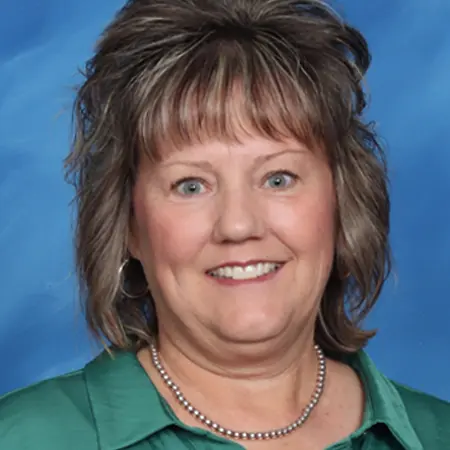
Her Story
About Jennifer
Jennifer Newton Black is a seasoned educational leader serving as Principal within the Clark County School District in Henderson, Nevada, where she has spent her entire 32-year career in education. Her professional journey is uniquely rooted in one of the largest school districts in the United States, where she has served in only three schools across more than three decades of service. After graduating from the University of Wyoming in 1993, she began her career as an elementary teacher, a role she held for 12 years before being identified for leadership by her principal, which led her to pursue a master’s degree in educational leadership approximately six years into teaching. She went on to serve as an assistant principal for two and a half years, a required leadership step within her district prior to becoming a building principal, and was appointed to the principalship in 2008. In 2011, she transitioned to Lincoln Elementary School, where she currently serves as principal. This was an especially meaningful return, as she had previously taught at the same school earlier in her career. Many of her former colleagues remain at Lincoln, reinforcing a deep sense of continuity and community that she values greatly. Over time, she has continued to advance her leadership preparation through the Public Education Foundation Executive Leadership Academy, the National Institute of School Leadership year-long program, and most recently, the completion of her Executive MBA in March. A lifelong learner and relationship-centered leader, Jennifer has focused extensively on understanding trauma, attachment styles, and their influence on workplace culture and performance. She believes strongly that educators are often shaped by the mentors who first believed in them, and she applies that insight to her leadership philosophy prioritizing trust, positivity, and the intentional development of people’s strengths to build strong, cohesive school cultures. She has served in multiple leadership roles across the district and education organizations, including President and Secretary of the Clark County Association of School Administrators and Professional Technical Employees and President of the Nevada Elementary School Principals Association. In 2025, she was named National Distinguished Principal of the Year for Nevada, one of the highest honors of her career. After a distinguished tenure in education, she is preparing to retire at the end of June and transition into the business sector, where she hopes to continue working with and leading people in new ways.
Her Interview
Ten minutes with Jennifer
01What do you attribute your success to?
I attribute my success to finding genuine joy in the work and leading with a deep love for children. For the past 18 years, that passion has grounded me and kept me committed to the principalship. I believe schools play a critical role as advocates for students, especially in communities where families may not have the resources or knowledge to navigate systems of support. When students leave their homes, we become their voice and their champions.
A key strength of mine is building strong, authentic relationships. That foundation creates a positive culture where people feel valued, trusted, and motivated to do their best work. When you leverage the strengths of your team and build collective ownership, the vision for the school becomes shared—it’s no longer just the leader’s responsibility, but a commitment embraced by everyone in the building.
I also see myself as a lifelong learner. Whether through formal programs like leadership academies or through reading, research, and podcasts, I’m constantly growing. That continuous learning helps me stay reflective, adaptable, and focused on improving outcomes for both students and staff.
02What’s the best career advice you’ve ever received?
The best career advice I’ve received from my mentors is that every day is a new day. In this work, not every day is going to go well—there will be challenges, difficult conversations, and moments you wish you could redo. But those moments aren’t the end of the story. You come back the next day, you repair relationships if needed, and you move forward.
That mindset is especially important in education. Just as we give students a fresh start each day, we have to extend that same grace to ourselves and to each other as adults. We’re going to have off days, and that’s okay—but it’s important not to dwell on them or let them define us.
My mentors also emphasized the importance of finding joy in the work. When you focus on the purpose and the impact, it keeps you grounded and reminds you why you chose this profession in the first place.
03What advice would you give to young women entering your industry?
My advice to young women entering education is to always lead with relationships. Whether you’re in the classroom or in administration, strong, authentic relationships with students, families, and colleagues are the foundation of everything. When those connections are in place, the work becomes more meaningful, engaging, and impactful.
As you grow into leadership, visibility and support matter. People need to know you’re present, that you’re listening, and that you’re there to help them succeed. At the same time, never forget where you came from. You were a teacher first—and that perspective should guide your decisions. When new initiatives or mandates arise, take a moment to put yourself in teachers’ shoes. Anticipate their concerns, and think about how you can support them through challenges.
Finally, be intentional and strategic with your messaging. The way you communicate sets the tone. If you approach something with positivity and purpose, your staff is far more likely to receive it that way. But if it’s framed as just another burden, that’s how it will feel. Your mindset and delivery truly shape the culture you’re building.
04What are the biggest challenges or opportunities in your field right now?
One of the biggest challenges in education right now is funding. In our state, funding can fluctuate with the gaming industry, and post-COVID we’ve seen the impact of those shifts more than ever. Because education is already underfunded, those financial constraints trickle down to schools, forcing difficult decisions about where to make cuts. As a leader, you always want to keep resources as close to the classroom as possible, but sometimes that means reducing critical support services. For example, we’ve had to scale back staffing in areas like social work, which directly impacts how well we can serve our students’ academic and social-emotional needs.
Another ongoing challenge is the expectation to do more with less. Schools are continually asked to take on new initiatives and responsibilities, yet the structure of the school day hasn’t changed. Teachers are balancing increasing demands, and it’s incredibly difficult to meet every expectation within the limited time we have with students each day.
That said, there are also opportunities. We’ve made progress in staffing and are now fully staffed, which allows for greater consistency and stronger instruction. More broadly, this moment in education is an opportunity to rethink how we prioritize time, resources, and support systems to better meet the needs of both students and educators. It pushes us to be more strategic, more innovative, and more intentional about how we serve our school communities.
05What values are most important to you in your work and personal life?
The values most important to me in both my work and personal life are integrity and dependability. As a leader, I believe in operating with honesty, even when the message may be difficult to hear. People deserve transparency, and that builds trust over time.
Dependability is equally important to me. I recognize that when I’m not present or not following through, that responsibility shifts to someone else. I take that seriously, because leadership isn’t just about setting expectations—it’s about modeling them.
These values carry over into my personal life as well. With my family and lifelong friends, they know they can count on me to be honest and reliable. Those consistent actions, both professionally and personally, are what strengthen relationships and build lasting trust.
Join Influential Women and start making an impact. Register now.