Her Story
About Jennifer
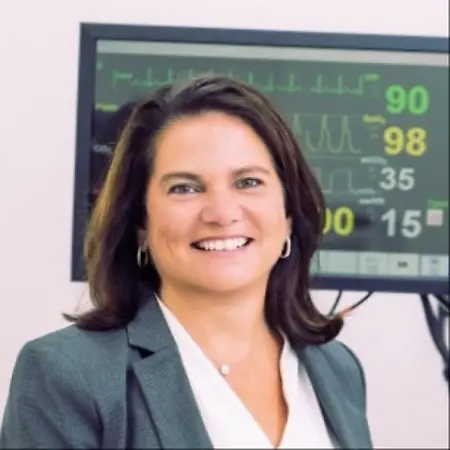
I started my journey in 2000 at Union County College, where I had the immense gift and benefit of learning about simulation in my first academic role as a paramedic program director. For the past 8 years, I've served as the director for clinical simulation, where I facilitate transformational learning experiences for graduate health science students and graduate leadership students. I cultivate an environment where students can practice before they are in live patient care practice or live externships, utilizing their leadership skills. My approach is rooted in providing a psychologically safe environment for people to trust the idea to transform and to use the engagement to become the best that they can be. Without that psychological safety, they can never transform to become the best they're capable of becoming. My 37 years as a paramedic interacting with patients in an uncontrolled environment has given me a wealth of experience to meet students and faculty wherever they are in their transformational practice, meeting them in that moment and helping them individually. That paramedic experience allows me for a personalized approach, because that was the only way to be successful in such an uncontrolled environment. I've been the founder of many programs, and I focus on leaving something better than I received it or started it, making it a value add to the organization, to people in general, and to the culture.
Her Interview
Ten minutes with Jennifer
01What do you attribute your success to?
I would say that my 37 years as a paramedic interacting with patients in an uncontrolled environment has given me a wealth of experience to meet students and faculty wherever they are in their transformational practice. I meet them in that moment and help them individually. That paramedic experience really allows me for a personalized approach, because that was the only way that you could be successful in such an uncontrolled environment. You couldn't have one way to do everything, because no single house doesn't look the same, a highway doesn't look the same, a chest pain patient doesn't look and present the same. So that 37 years definitely infuses in my daily work to meet people individually and not write a prescription of what I think something should look like, but yet meeting them and helping them get to the next level.
02What’s the best career advice you’ve ever received?
The best advice would have been to see in myself what others see in me, to believe that.
03What advice would you give to young women entering your industry?
Trailblazing is not for the faint heart. Respectful disruption can often be misinterpreted when you're female and be labeled as something that it's not. And none of that matters, because if you're driving purposeful change and trailblazing for a better society, a better organization, a better person-centered program, it will always prevail. You can't take the reaction to that personally. Transformation and change is very personalized in who's going through it, so that reaction or a senior leader's reaction to my ideas, it's not about me, it's actually more about their reaction to change and growth, development. And if you don't remember that, you can get stuck in a rip current very quickly. Yet none of that matters if you are driven to make change that is purposeful for people or globally for our society.
04What are the biggest challenges or opportunities in your field right now?
Providing a psychologically safe environment for people to trust the idea to transform and to use the engagement to become the best that they can be. Without that psychological safety, they can never transform to become the best they're capable of becoming, because our neurology works against actual change and transformation when you actually sit down and think about it. It's not comfortable to transform and change, so the psychological safety is the largest underpinning.
05What values are most important to you in your work and personal life?
Making a difference, leaving something better than I received it or started it. I've been the founder of many programs, and leaving it better and handing it off in a better position. And then being the, that whatever I'm designing or implementing, figuring out how to make it a value add to the organization, to people in general, to the culture, has always been important to me.
Join Influential Women and start making an impact. Register now.