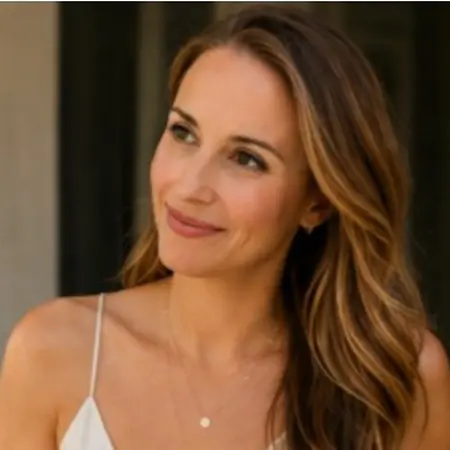
Her Story
About Jessica
Jessica Biber is a strategic marketing and communications leader with more than a decade of experience spanning public relations, nonprofit administration, community engagement, brand strategy, and organizational growth. She currently serves as Director of Community Engagement at Mount Sinai Memorial Parks and Mortuaries in Los Angeles, where she leads integrated marketing, communications, public relations, brand, and community engagement initiatives for a longstanding Southern California Jewish institution. Her work focuses on strengthening the organization’s visibility and relevance while creating more approachable conversations around grief, legacy, remembrance, advance planning, and end-of-life care.
Biber brings a distinctive combination of entertainment public relations and nonprofit leadership experience to her current role. She began her career in entertainment publicity, working with talent, filmmakers, media, and entertainment campaigns before transitioning into nonprofit leadership. Her nonprofit experience includes leadership roles with Jewish Big Brothers Big Sisters of Los Angeles and Adat Ari El, where she worked across scholarship programs, alumni engagement, membership growth, community relations, communications, databases, fundraising initiatives, and volunteer development. She also operates Jessica Hann PR, where she provides strategic public relations, campaign, social media, and brand storytelling services to a select portfolio of clients. She earned a Bachelor of Science in Public Relations, Advertising, and Applied Communication from Emerson College, with a minor in Psychology.
At Mount Sinai, Biber has expanded the organization’s approach to community engagement by developing grief education and community programming, strengthening partnerships, supporting philanthropic initiatives, and creating communications designed to make difficult conversations easier to enter. Her work reflects a broader philosophy that effective marketing is not simply about promotion but about education, listening, showing up, and building trust. Her personal experiences with grief have further shaped her commitment to creating spaces where people feel supported and connected. Outside of her professional responsibilities, she participates in philanthropic and community initiatives involving organizations including the Sheldrick Trust, Planned Parenthood, Jane Doe Inc., and Our Big Kitchen Los Angeles, and serves as Alumni Board President of the Williams Memorial Institute.
Her Interview
Ten minutes with Jessica
01What do you attribute your success to?
I attribute my success to genuinely liking people and wanting to understand them, including what motivates them and how I can support them. That empathy and curiosity have shaped the way I approach my work, particularly my focus on grief and community engagement. Having experienced significant grief in my own life, I understand how important it is for organizations serving families to demonstrate genuine care before, during, and after a loss.
Throughout my nonprofit career, I have ultimately been motivated by helping people find belonging. Building community, creating trust, and showing people that they are cared for are central to how I approach both my professional work and the relationships I build.
02What’s the best career advice you’ve ever received?
The best career advice I have received came from my current supervisor, whom I have known for many years: always enter the room with your answer and recommendation rather than simply coming in with questions and expecting others to guide the conversation.
That advice has taught me to be prepared, thoughtful, and solution-oriented. Instead of only identifying a problem, I try to think through potential solutions and bring a clear recommendation to the table.
03What advice would you give to young women entering your industry?
I would encourage the next generation, particularly young women, to trust their perspective, use their voice, and recognize the value they bring to the room. Communications, marketing, and community engagement require empathy, creativity, strategic thinking, and the ability to understand what motivates people.
I would also encourage young professionals to remain curious and to look for opportunities where they can make a meaningful difference. Building relationships, listening carefully, and being willing to take on complex or unfamiliar challenges can create opportunities for growth that may not be immediately obvious.
04What are the biggest challenges or opportunities in your field right now?
One of the greatest opportunities in my field is the ability to modernize the way organizations communicate about subjects that have traditionally been difficult to discuss. In deathcare, that means making conversations about grief, advance planning, legacy, and end-of-life decisions more approachable and understandable.
There is an opportunity to move beyond traditional promotional marketing and instead educate, listen, show up for communities, and build trust before people ever need a service. I believe organizations can create stronger relationships by becoming useful resources and by communicating about sensitive subjects in language that feels human rather than institutional.
05What values are most important to you in your work and personal life?
The values that are most important to me are empathy, connection, trust, community, and genuine care for others. I believe people should feel seen, heard, and supported, particularly when they are navigating difficult experiences.
In my professional life, I value building meaningful relationships and creating a sense of belonging. Whether I am working in marketing, communications, nonprofit leadership, or deathcare, I want the work I do to demonstrate that people matter and that organizations can make a meaningful difference in the communities they serve.
Join Influential Women and start making an impact. Register now.