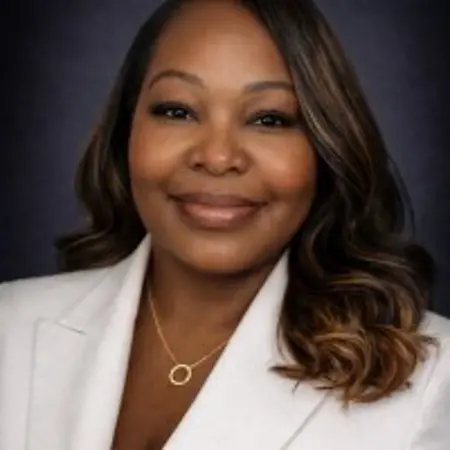
Navigating unexpected change comes down to "Heart & Hustle"; staying rooted in purpose while moving forward with intention, seeing change as refinement, not setback.
Jessica M. Clerk · In Her Own Words
Her Story
About Jessica
I've been working in senior living and post-acute care for over a decade, though this career path found me rather than the other way around. A mutual acquaintance submitted my name for a position, and I initially applied for business office and administrative work. After reviewing my resume, they believed I would be a great fit for business development, sales, and marketing instead. I actually turned down the position when they first offered it to me. After what I call a 'badge-off moment' where they took me to lunch and explained the purpose of skilled nursing and why it was needed, and how my position would help, I agreed to try it for 90 days. That 90 days has now turned into 10 years. My work is deeply purposeful. I help families navigate the transition to post-acute care during some of the most challenging moments of their lives, whether it's after a fall that resulted in a fracture, when a parent gets lost and can't remember how to get home, or when adult children realize their loved one's medications haven't been taken and the fridge is full of expired food. It's emotional work because I'm helping people through life-changing situations, and often the aging process in post-acute care ends in death, which is scary for families to face. But I'm motivated by impact on people, not just outcomes. I value growth through lived experiences and believe in meeting people where they are in their evolution rather than viewing life as having a peak. I lead with authenticity, prioritizing honesty over being polished and creating meaningful connections over titles. Even when I've done everything right by the book and haven't met my monthly goals, if I've helped even one family make an educated decision for their loved one, I feel good about my work, even if it wasn't always the best for my company. This isn't just a job for me; it's purposeful work, and I've realized I'm not just building a career but becoming an advocate for people at one of life's most human stages.
Her Interview
Ten minutes with Jessica
01What do you attribute your success to?
I attribute my success to disciplined resilience, strategic courage, and an unwavering commitment to growth.
As a first-generation college graduate who built her career in healthcare leadership without a linear roadmap, I learned early that preparation, adaptability, and integrity are non-negotiable. I did not inherit access or shortcuts — I built my foundation through persistence, curiosity, and an intentional decision to keep evolving.
Over the past decade in senior living and post-acute care, I have led multi-site growth initiatives, rebuilt underperforming markets, strengthened referral ecosystems, and aligned business development strategy with operational execution. I have navigated complex regulatory environments, workforce challenges, and competitive markets — and emerged stronger each time.
What I am most proud of is not the titles, but the impact.
Strengthening systems.
Elevating teams.
Restoring trust with families and partners.
I lead with heart — grounded in empathy and faith — but I execute with discipline and accountability. That balance has shaped every chapter of my journey.
My success is not accidental. It is the result of intentional growth, resilience through adversity, and the courage to step into leadership even when the table wasn’t fully built for me.
02What’s the best career advice you’ve ever received?
The best career advice I’ve ever received is: “Master the business, not just the role — and don’t shrink to fit the room.”
Early in my career, I realized titles can change, but understanding systems creates longevity. When you understand revenue drivers, operational structure, compliance frameworks, and workforce dynamics, you become adaptable — not replaceable.
I’ve also learned that growth requires courage. There were moments when I was the only woman in the room or the youngest at the table. The advice to never shrink — but instead sharpen my expertise — shaped how I lead today.
And perhaps most importantly, I hold onto this: What is meant for you will not miss you — but preparation is your responsibility.
That balance of faith and discipline has guided every step of my journey.
03What advice would you give to young women entering your industry?
I would tell them I didn't choose this, it definitely chose me, because I didn't graduate with a clear vision of becoming this person. Honestly, I didn't even know you could do this. First, understand that the work is emotional. You're not just managing operations, census, or partnerships. You are walking families through some of the hardest decisions of their lives. Learn everything, not just one lane. Learn the difference between acute care, post-acute care, skilled nursing, assisted living, home care, hospitals, and how they all connect, because the leaders who understand the full ecosystem, that's how you become indispensable. Your reputation is everything. People remember how you show up when things are hard, not when they're easy. The career may not look linear, and that's okay, because growth in this industry often comes from experience and not being perfect. Every role will teach you something that you need later. Most importantly, protect your heart while using it. In order to be in this industry, I believe you have to care deeply, but you also have to learn boundaries so you can stay in this work long enough to make a real change. Because it isn't just a job. I think it's very much purposeful work. And if you stay, you'll realize you're not just building a career, but you're becoming an advocate for people at one of life's most human stages.
04What are the biggest challenges or opportunities in your field right now?
That’s such an important question because our field is really at an inflection point.
Workforce sustainability is obviously one of the biggest challenges. We’re asking a lot of caregivers, nurses, and operators. Burnout and turnover impact quality, culture, and financial performance. But I also see that as an opportunity. Organizations that invest in leadership development, culture, and structured career pathways will absolutely outperform.
Reimbursement is another major shift. As we move toward more value-based models, senior living and post-acute providers can’t operate in silos. Leaders have to understand clinical outcomes, operational efficiency, referral dynamics, and financial performance at the same time. That integration is where the future is headed.
But something I don’t think we talk about enough is consumer education.
Families are often incredibly undereducated about how the system actually works. Most decisions are made in crisis — after a hospitalization, a fall, or a sudden diagnosis. That crisis-driven decision-making leads to underuse or misuse of benefits, unnecessary stress, delayed progress, and honestly, money being left on the table that could be used to better support their loved one.
I’ve seen families exhaust private funds because they didn’t understand payer pathways. I’ve seen delayed transitions because no one clearly explained options across the continuum.
There’s a huge opportunity for our industry to lead in proactive education — earlier conversations, clearer navigation, and stronger cross-sector coordination. When families understand their options before they’re in crisis, outcomes improve. Length of stay stabilizes. Satisfaction improves. Financial planning becomes more strategic.
And that’s where leadership matters — building systems that support both operational performance and informed decision-making.
Overall, I see a field under pressure, but full of opportunity for organizations willing to align workforce, strategy, reimbursement, and consumer education in a meaningful way.
05What values are most important to you in your work and personal life?
My top three values are purposeful service, growth through lived experiences, and authentic leadership. I'm deeply motivated by impact on people, not just outcomes. I value evolution over perspective, especially when looking at the aging process. Some people see life as peaking, but I don't look at it that way. I think people are just evolving, and you have to learn to be in the present of where they are, meet them where they are, and learn how to guide and support them where they are. I believe in authentic leadership because I'm human first. I value honesty over being polished and creating meaningful connections over any title or ranking. I value transparency over performing. I've had times where I've done everything right by the book, spent the whole day, invested time, and I still may have not met my goal for that month, but if I helped even that one family navigate and make an educated decision for mom or dad, I was good, even though it wasn't always the best for my company. Emotional intelligence along with strategy is important. I'm more heart and responsibility forward momentum.
Join Influential Women and start making an impact. Register now.