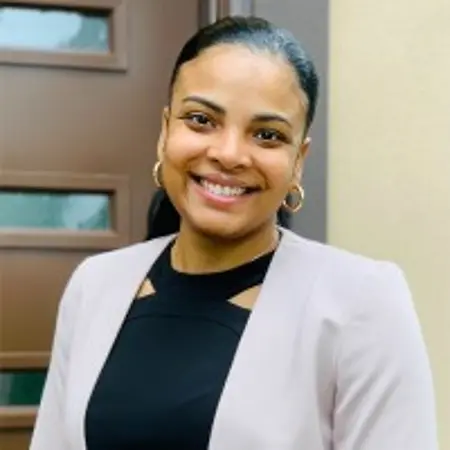
I realized my value couldn't be defined by others' opinions. True fulfillment came from choosing resilience and defining success by who I know I am.
Jessica Clair Didier · In Her Own Words
Her Story
About Jessica
Jessica Didier is a Human Resources leader with more than nine years of progressive experience shaping people strategy across nonprofit, unionized, and corporate environments. She currently serves as a Deputy Chief of Human Resources at Jericho Project.
In her role, Jessica leads the organization’s human resources function, focusing on strengthening compliance, developing effective policies and systems, and supporting leadership with thoughtful, people-centered strategies. She has played a key role in advancing HR operations by building frameworks that support sustainable growth while ensuring the organization remains aligned with best practices in workforce management.
Throughout her career, Jessica has developed deep expertise in employee and labor relations, organizational development, compliance, and change management. She has successfully built HR infrastructure from the ground up, improving organizational compliance and implementing scalable systems for onboarding, performance management, and talent development.
Jessica’s professional background also includes experience in unionized environments, including leadership roles at The New York Racing Association, where she further strengthened her expertise in employee relations and workforce strategy.
She holds a bachelor’s degree in Human Resource Management from the University of Greenwich and an associate degree in Labor Studies from Cipriani College of Labour and Cooperative Studies. She is currently pursuing a master’s degree in Employee and Labor Relations at Rutgers University with a minor in organizational change management.
Jessica remains passionate about fostering positive workplace cultures and strengthening the relationship between employees and organizations. Through her work, she continues to support mission-driven teams in building environments where people and communities can thrive.
Her Interview
Ten minutes with Jessica
01What do you attribute your success to?
When I reflect on the foundation of my success, I attribute it to a combination of intentional curiosity, resilience, and a commitment to leading with authenticity and integrity.
Early in my career, I made a conscious decision not to limit my perspective to the traditional scope of Human Resources. I prioritized learning how organizations function as a whole, how each department contributes to the broader mission, how operational decisions impact people, and how strategy and culture intersect to drive performance. That level of curiosity allowed me to approach HR not simply as a support function, but as a strategic partner within the organizations I have served.
Equally important has been my commitment to authenticity in leadership. Throughout my journey, there have been moments where external expectations could have easily shaped how I showed up as a leader. Instead, I remained grounded in who I am and the values I bring to the table. I have found that authenticity builds trust, and trust creates the foundation for meaningful influence and lasting impact.
Resilience has also played a defining role. Leadership often requires navigating complexity, challenges, and moments that test your resolve. Those experiences have strengthened my perspective and shaped the way I lead, with empathy, clarity, and a deep understanding of the human side of organizational success.
Finally, I believe strongly in the importance of alignment between contribution and value. Meaningful work deserves meaningful recognition. Being able to contribute at a high level while also being valued and compensated fairly for that contribution is not only important for individual leaders, but it also reflects how organizations truly honor the impact of the people who help move them forward.
Together, these principles, curiosity, authenticity, resilience, and a clear understanding of value, have been the pillars that continue to guide my leadership journey.
02What’s the best career advice you’ve ever received?
The greatest pieces of advice I’ve received actually came from two people who have had a lasting impact on my life and career, Ian Daniel, a former lecturer of mine, and Christopher Penjilia, a former manager who are both dear friends to this day.
Mr. Daniel once told me something that has stayed with me throughout my journey: never allow anyone else to define your value. He also shared that if someone is not a person I admire, respect, or aspire to be like, if they do not have character traits or behaviors I would want to model, then I should not allow their opinions to influence how I see myself or how I move through the world. That advice grounded me early on. It taught me to weigh feedback wisely and to remain confident in who I am, even in environments where others may try to project their limitations or perceptions onto me.
Christopher’s advice complemented that mindset in a very practical way. He encouraged me to learn an organization inside and out. While my role may be in Human Resources, he stressed that understanding how the entire organization operates, how every department functions and contributes to the bigger picture, would make me far more effective in my work.
I truly took that advice to heart. I never limited myself to only understanding HR functions. I made it a priority to learn how the business works as a whole. I sought to understand the goals, challenges, and contributions of every department, and how HR could support and strengthen those moving parts.
That combination of advice has shaped the way I approach my career. Knowing my value has allowed me to lead with authenticity and confidence, while understanding the business has allowed me to practice HR in a way that is strategic, collaborative, and impactful.
I have seen firsthand how that approach transforms the perception of HR. In many of the organizations I’ve worked in, I’ve often heard the same feedback “You’re like no other HR professional I’ve experienced.” To me, that is a reflection of what happens when HR moves beyond policies and procedures and truly partners with the business.
Together, those two pieces of advice helped me realize that HR done right can change not only workplace culture, but also how people experience leadership, support, and growth within an organization. I’ve been grateful to witness that impact throughout my career.
03What advice would you give to young women entering your industry?
One of the most important things I would share is to learn to embrace the beauty of discomfort.
Human Resources sits at the intersection of people, emotions, accountability, and business. Because of that, you will often find yourself in situations that require difficult conversations, addressing performance concerns, navigating conflict, setting boundaries, or delivering news that someone may not want to hear. Early in your career, those moments can feel intimidating. But over time, you begin to realize that discomfort is not something to fear, it is often where the most meaningful work happens.
The beauty of discomfort is that it creates space for honesty and growth. In HR, avoiding hard conversations rarely solves problems; it usually allows them to grow. When you approach those moments with integrity, empathy, and clarity, you create opportunities for understanding, accountability, and sometimes even transformation. A well-handled difficult conversation can strengthen a team, support someone’s development, or bring resolution to a situation that might otherwise have continued to cause harm.
For women especially, there can sometimes be an unspoken pressure to soften messages or avoid conflict in order to keep the peace. But effective HR leadership requires courage, the courage to speak truth with compassion, to advocate for fairness, and to stand firm in what is right even when the conversation is uncomfortable.
Over time, you learn that those uncomfortable moments are not obstacles to the work, they are central to it. They are where trust is built, where cultures are shaped, and where real leadership begins to take form.
So my advice would be to not shy away from discomfort. Learn to navigate it with wisdom and empathy. Because in Human Resources, some of the most impactful moments you will have in your career will come from the conversations others are afraid to have.
04What are the biggest challenges or opportunities in your field right now?
One of the biggest challenges in the Human Resources field today is that many organizations still underestimate the full impact HR can have on business success. Over the years, the profession has made tremendous progress in being recognized as a strategic function rather than purely administrative. More organizations are beginning to understand that effective people strategy directly influences culture, leadership, performance, and long-term sustainability. However, despite that progress, there is still work to be done. For years, the conversation has centered around HR “having a seat at the table,” but I often say it is really about having the right impactful seat at the table.
While there is growing acknowledgement that HR is strategic and impactful, the real opportunity lies in translating that recognition into action. Organizations must move beyond simply acknowledging the value of HR to fully empowering it to operate strategically. That is where we shift from acknowledgement to execution, and where the true impact of the function can be realized.
Throughout my career, I have been intentional about demonstrating that impact. I believe in addressing challenges directly and naming issues openly, because when we acknowledge problems, we create the opportunity to solve them. My goal has never been to simply maintain existing systems, but to help organizations see what is possible when HR is empowered to operate strategically.
While the perception of HR can still be a barrier in some environments, I have also seen how quickly that mindset can evolve. In some organizations where I have served, once leaders begin to experience the value that strategic HR brings, the conversation shifts, from seeing HR as administrative support to recognizing it as a critical driver of organizational success.
05What values are most important to you in your work and personal life?
The values that guide both my professional and personal life are authenticity, integrity, honesty, and compassion. I believe leadership begins with being genuine about who you are and remaining consistent in your values regardless of the environment you are in. Authenticity builds trust, and trust is the foundation of meaningful relationships, whether in the workplace or in everyday life.
Integrity and honesty are equally important to me. I believe in doing what is right, even when it may not be the easiest path, and in communicating openly and transparently. In leadership especially, people rely on you to set the tone, and I believe that credibility is built when your actions consistently align with your words.
Compassion is another value that shapes how I lead and interact with others. Understanding that every individual carries experiences, challenges, and aspirations of their own helps create space for empathy and thoughtful decision-making.
I also place a strong emphasis on structure, accountability, and a strong work ethic. These principles help ensure that goals are not only set but achieved, both professionally and personally. Whether in leadership, personal growth, or relationships, I believe progress comes from holding ourselves accountable while remaining disciplined in our commitment to growth.
Ultimately, these values serve as my compass. They influence how I lead, how I make decisions, and how I strive to show up in the lives of others every day.
Join Influential Women and start making an impact. Register now.