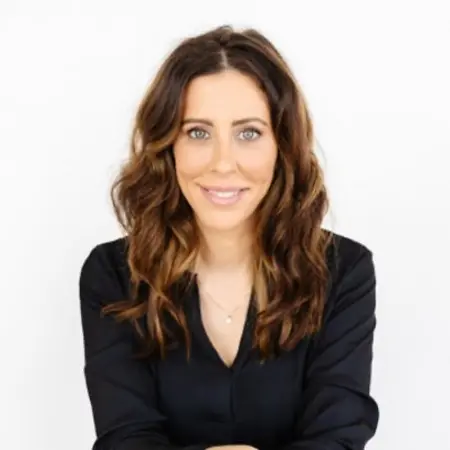
Influential Woman · Marketing
Jessica Gilliam
Founder, Blackstone Digital Marketing & Consulting
Dallas, TX
Her Story
About Jessica
Jessica Gilliam serves as a marketing consultant in Dallas, Texas, where she works with medical aesthetics, plastic surgery, and dermatology practices. With approximately 24 years of experience in the medical aesthetics and plastic surgery field, she transitioned into marketing in 2022 after obtaining her master's degree in digital marketing during the COVID period. In her current role, Jessica operates as a solo consultant on a project basis, guiding practices on authentic personal and professional branding, effective use of AI for content and SEO, website optimization, and strategies to maintain visibility in digital spaces. She emphasizes helping providers build thought leadership and resonate with their target audiences without relying solely on paid advertising.
Her Interview
Ten minutes with Jessica
01What do you attribute your success to?
I attribute it to a pattern I can trace through my whole career: every time I hit a professional ceiling, I chose to grow past it instead of staying comfortable. I started in medical aesthetics doing facials, and when I could see the next level but not reach it, I learned lasers. When lasers weren't enough, I transitioned into business operations, then into hiring and team development — nearly 20 years of organic advancement by refusing to stay where I was. When 2020 forced a full stop, and I had to face how much I'd sacrificed for a paycheck, that same instinct kicked in. Instead of returning to the same role, I went back to school for a master's degree in digital marketing and data analytics at 40, despite many people around me questioning the timing. That risk is where Blackstone Digital Marketing & Consulting came from. I didn't start over. I took two decades of hands-on medical aesthetics experience and paired it with a technical, data-driven marketing skill set, which is exactly why I can speak both the clinical and the digital language for my clients.
02What’s the best career advice you’ve ever received?
It didn't come as advice in the traditional sense. It came from a mindset shift I picked up following entrepreneur Alex Hormozi. He's said that people often credit hard times with building character, but he believes hard times instead reveal what was already inside you. That reframed everything for me. 2020 didn't build resilience I didn't have — it revealed resilience and grit that I didn't realize I had carried my entire life. Then came entrepreneurship and a new level of revealing strength I didn't know I had potential for. I carry that into how I coach clients through their own hard seasons in business: the goal isn't to survive the hard time, it's to find out who you actually are on the other side of it.
03What advice would you give to young women entering your industry?
Learn the technical side, not just the creative side. So many women get funneled into the "content and social" lane of marketing and never touch SEO, AISEO, or the data underneath it. That's exactly where the leverage and the higher-paying work lives. The women who own both the creative and the technical conversation are the ones who get taken seriously in the room and get to set their own rates.
Also: stop waiting for "one day." I meet so many women with a dream sitting on hold: one day, when the kids are older; one day, when there's more time; one day, when I have the resources. I lived that way too, until 2020 forced my hand. Most of what holds people back isn't a lack of ability; it's the quiet fear of "Is this possible for me?" It is. Start now, even if small, rather than waiting for a perfect entry point that may never come.
And practically, it's never too late to pivot. I didn't start my formal marketing education until I was 40, after two decades in a completely different side of the same industry. Your experience isn't wasted just because you're changing lanes. Mine became my biggest advantage. Build something that can outlast a single client relationship, too: figure out early how to create owned assets — a portfolio, a niche reputation, recurring revenue — so your income isn't only as strong as your last invoice.
04What are the biggest challenges or opportunities in your field right now?
On the ground, running the business day to day, the harder challenge has actually been talent acquisition — finding people who can match the standard I hold for client work.
Entrepreneurship can also be a lonely road; I've learned to lean on a small circle of faith, leadership, and entrepreneurial community rather than trying to carry all of it alone.
On the industry side, the biggest shift is that SEO itself is splitting in two — and most businesses are getting the AI half wrong. I see it constantly: practices dumping generic AI-written content onto their site, or assuming "having a chatbot" or "using AI tools" is the same thing as being visible in AI search. It isn't. Traditional SEO: rankings, backlinks, on-page optimization — still matters, but AI search runs on structured data, schema markup, and authority signals, not just well-written copy. Most agencies, and most business owners, haven't caught up to that distinction yet, which is exactly where the opportunity is for whoever masters both at once, especially in a regulated, high-trust space like medical aesthetics, where accuracy and credentialing directly affect whether AI tools even mention a practice at all.
That gap is actually why I recently expanded Blackstone into e-commerce for medical aesthetics practices, built around image and product search — because AI-driven discovery isn't just text-based anymore. If a practice's product catalog and imagery aren't structured for how AI and visual search engines actually find and recommend things, they're invisible in an entirely new channel of discovery, and most of the industry doesn't realize that channel exists yet.
The challenge is the pace. What worked six months ago for AI visibility can be outdated today. Staying credible in this field means treating it like an ongoing education, not a skill you learn once.
05What values are most important to you in your work and personal life?
Grit, transparency, integrity, servant leadership, and work/life balance — those are the five I lead with.
Grit is what got me here. Nearly 20 years of pushing past every ceiling I hit in medical aesthetics, then the risk of going back to school at 40 to rebuild an entire career — none of that happens without a willingness to stay in the hard thing longer than it's comfortable.
Transparency and integrity are really the same value applied to how I keep my word. I don't operate as a different version of myself depending on the room. You get the same Jessica whether we're in a client meeting, community event, or 1:1. If I can do something for you, I'll tell you; if I can't, I'll tell you that too, even when it's not what someone wants to hear.
Servant leadership shapes how I show up for clients and for my team. My job isn't to be the smartest person in the room; it's to see potential in someone before they see it in themselves and help them realize it, develop it, and shine brightly in their niché.
And work/life balance is the value I protect the hardest. Blackstone exists because I refused to make that trade again. Being a wife and mother isn't something that competes with the business; it's the reason the business has boundaries at all.
Join Influential Women and start making an impact. Register now.