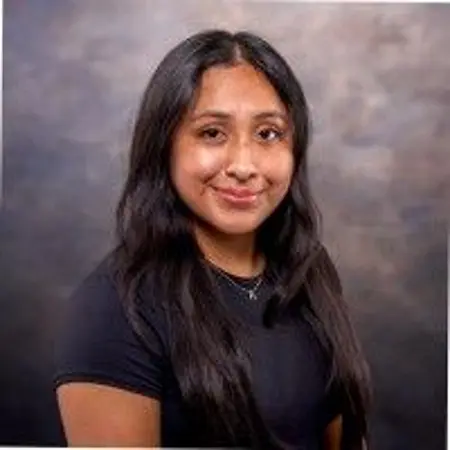
Her Story
About Jessica
Jessica Lugo is an experienced Reliability, Maintainability, and Systems Engineering professional specializing in aerospace and defense systems. She currently serves as an R&M technical lead at Northrop Grumman Corporation, where she supports complex programs. In this role, she leads a reliability engineering team to ensure incorporation of Design for Reliability (DFR) implementation as part of the engineering development activities. Throughout her career, Jessica has built a diverse background spanning multiple high-risk and highly regulated industries, including aerospace defense, nuclear systems, petrochemical, refinery, and underwater systems. Prior to her current role, she spent over a decade at Lockheed Martin as a reliability and maintainability subject matter expert, supporting system design influence, reliability growth modeling, software safety. Earlier in her career, she contributed to major infrastructure and industrial operations at Bechtel Corporation and BP, where she focused on equipment reliability, root cause failure analysis, turnaround planning, and maintenance engineering for large-scale refinery and utility systems. Jessica holds a Bachelor of Science in Mechanical Engineering from the University of Illinois Chicago and a Master of Science in Reliability Engineering from the University of Maryland College Park. She is also a Certified Reliability Engineer (ASQ) and an active participant in professional engineering communities such as SHPE and ASQ. Her professional philosophy centers on teamwork, collaboration, and communication in order to identify and mitigate system failure modes ensuring mission readiness, safety, and long-term performance. She is recognized for her systems-level thinking, cross-disciplinary collaboration, and commitment to continuous learning and engineering excellence.
Her Interview
Ten minutes with Jessica
01What do you attribute your success to?
I attribute much of my success to the strong support and encouragement of my husband. He consistently helps me recognize when I am ready for new challenges and motivates me to pursue new opportunities, sometimes even helping initiate the application process so I can focus on the interview and selection stages. With both of us sharing a background in mechanical engineering, we understand each other’s goals and continuously push one another to grow, and I consider his support and belief in my abilities to be a key factor in my career development.
02What’s the best career advice you’ve ever received?
The best advice I received was from one of my old managers who said to keep your work-life balance and understand where the bottlenecks are in terms of what's meaningful to you when you define success. Success to some people could be becoming a vice president at a company, or earning $500K a year. So understanding what success is early in your life, and then defining what that is in terms of that balance is what he gave me as advice. It's like, understand what success is, and then rate yourself against that definition that you gave yourself, because it's not the same to everybody.
03What advice would you give to young women entering your industry?
My advice to young women entering engineering is to first define what success means for you and regularly measure your progress against that standard, rather than comparing yourself to others. I would also encourage them to see that it is absolutely possible to build a fulfilling career in engineering while navigating different life stages, including family and unexpected changes that may shift your perspective over time—and that’s okay. Most importantly, I want them to know that they belong in this field; women bring valuable perspectives and problem-solving approaches that complement those of men, and increasing representation is essential as the industry continues to grow, especially with the rising demand in technology.
04What are the biggest challenges or opportunities in your field right now?
I think the biggest challenge in my field is the fact that since I chose the technical route, there's bottlenecks with everything, and I've reached a bottleneck where it's gotten to the point that either I go and become a director and sacrifice the work-life balance that I have, or I stay in the technical as a technical lead. That's challenging because you have to find that sweet spot where you're like, alright, I need to be learning new things, I need to have a reason for me to wake up in the morning and go to work and still feel excited about it 30 years later. Understanding and having that perspective is important, and it's also challenging.
05What values are most important to you in your work and personal life?
The values most important to me in both my work and personal life are accountability, maintaining a healthy work-life balance, and upholding a strong ethical foundation built on integrity. I believe these principles guide how I show up professionally and personally, and they are essential to sustaining long-term success and trust in any environment I am part of.
Join Influential Women and start making an impact. Register now.