Influential Woman · Nonprofit Development and Diversity, Equity, Inclusion Consulting
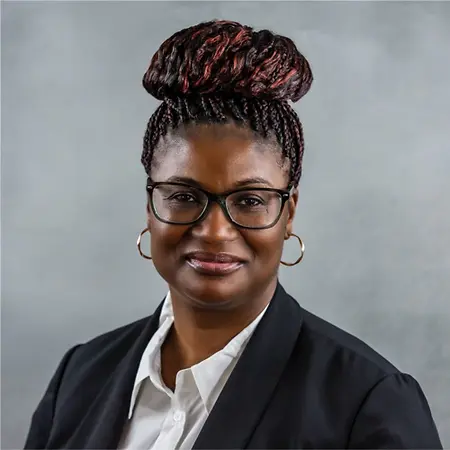
Dr. Jessica Merritt (Spradley)
President, Care Based Leadership, LLC
Pittsburgh, PA 15210
Her Story
About Jessica
Dr. Jessica Merritt (Spradley) is an award-winning innovator, educator, and strategic leader based in Pittsburgh, Pennsylvania, who is dedicated to advancing equity, organizational excellence, and human-centered leadership. She currently serves as Director of Development for the National Council on Education for the Ceramic Arts (NCECA) and is the founder and principal of Care-Based Leadership Collaborative, a consulting and training firm focused on data-driven DEIA strategy, organizational assessment, fundraising, and leadership development. With over two decades of experience, she brings a unique blend of quantitative analysis and storytelling to help organizations understand their current state and design meaningful pathways for growth.
Throughout her career, Dr. Merritt has built a strong foundation in higher education, research, and leadership development. She spent 14 years as a faculty member, earning recognition for her teaching excellence and mentorship, including honors such as the Frederick Douglass Teaching Scholar designation and the Lancelot C. Thompson Advisor of the Year Award. She later expanded her impact through consulting, program development, and international engagement, while earning a PhD in Social Foundations of Education with a focus on research and measurement. Her work is grounded in the belief that effective leadership begins with care, data-informed insight, and a commitment to understanding both people and systems.
Beyond her professional roles, Dr. Merritt is deeply engaged in community impact and nonprofit leadership, particularly through initiatives that support women, girls, and underserved populations. She is the inaugural Vibrant Pittsburgh DEI Innovator Award recipient, recognized for developing innovative DEI training methods and quantitative assessment tools. Passionate about creating equitable environments where people can thrive, she continues to bridge research and practice to foster inclusion, strengthen organizations, and improve lives through care-based, data-informed leadership.
Her Interview
Ten minutes with Jessica
01What do you attribute your success to?
I attribute my success to two things. First, my mom and my dad - both of them had a high school education, and I was a first-generation college student. One of the things that I grew up understanding is that failure wasn't an option. I didn't know what I was gonna do, I didn't know what I was gonna be, but I knew that I was gonna be the best at whatever I was gonna do, not only because that was just a value that was instilled in me, but it's what my parents expected, my family expected, and it's what they were proud of. I could do the most, like, get an A on a spelling retake test, and my dad would always tell me he was proud of me. Like, no matter what I did, I could play basketball and not score any points in the game, and he'd be like, you did so good, I'm so proud of you. I think that there's an element of celebrating the journey on the way to where you are that has made me successful, and that's what I try to teach my kids, too. At the end of the game, I always ask them, did they work hard? Did they do their best? And did they have fun? The fact is they're working hard and they're doing their best, that's enough for me. The second thing is understanding that I represent a lot more than just myself. As a Black woman, a first-generation college student who's gone on to get a PhD, owns two companies, and works for an amazing national organization of international artists, I understand that I'm able to stand on the shoulders of a lot of people that have come before me, and that I have a responsibility for providing that opportunity, not only to my daughters, but for other women, and especially women of color, that come into the field of consulting or development after me. That responsibility pushes me to make me want to not only be the best so someone else can potentially look up to me, but also so I'm in a position where I can help sponsor, mentor someone else when those opportunities arise.
02What’s the best career advice you’ve ever received?
The best career advice I've ever received was from my very first supervisor when I was working at Syracuse University. Her name is Pam Peter, and she told me that it is very important in your career that you understand your worth, and you know when it's time to move up or move on. That philosophy has actually stuck with me. I still use it till this day. Even when I'm thinking about working with my clients, I understand when it's time, when they need something that's outside of my scope of practice. Like, I don't have a problem sending them to another consultant. Or in development, when I'm working with a donor, and they're like, okay, we want to do a long-term plan, okay, then it's time to move up the ask. Understanding how to make sure that you're pushing the envelope without pushing people away from you is not only important, but it challenges everybody in the situation to be their best.
03What advice would you give to young women entering your industry?
Resilience is a virtue. Take some time to get to know yourself, because your triggers will be what help or hinder you in the field. You have to know where your sensitive areas are and where your emotional reactions are, so you can understand what you best need, whether it's for self-care, whether it's for work affirmations, however you want to frame your idea of success. You're gonna have to know what that means for you, and that means getting to know yourself. The second thing that I would say is set lofty goals that scare you. If you can get it accomplished in 6 months, it's not big enough. The last thing I would say is surround yourself by people who don't accept anything less than the best that you have. I have some amazing people around me who will say, Jess, I... this is great, but is it great for you? They know what I can produce, they know what I'm capable of, and they'll push me to reach that every single time, and support me when I don't. Because, again, lofty goals, you won't meet them every time, but some you'll exceed, some you'll fall short, but you need that support around you for whatever is to come.
04What are the biggest challenges or opportunities in your field right now?
I think that the biggest challenge in my field of work is the social environment. As things change year to year, whether it's politically, if there's a social uprising, if there's new legislation, there's all kinds of things that really impact how people are experiencing the world. And at the end of the day, that's what I do, I work with people. Making sure that I not only understand the landscape of the field, but also understand the landscape of the country is very important also. The reason it can be difficult is because it changes from year to year. There could be an economic upturn, an economic downturn, there could be a new administration. My clients on the West Coast, sometimes there are natural disasters that impact their productivity or their ability to go to work. So there's always external factors that influence how people experience the world, and so when you're in the business of helping people, you're always impacted by those things.
05What values are most important to you in your work and personal life?
I think the value that's most important for me in my personal life is to love people like Jesus loves people. I think it's very important for me, and that's a Christian value that I hold dear to my heart. It allows me to see everybody as a person that not only deserves love, but deserves dignity and respect. Professionally, I think that a value that I hold tight to my chest is there's worth in every aspect of work. What that means for me is I don't look at... during the years during COVID, I worked from home, and during that time, one of the things that it was important for me is to acknowledge all the aspects of work that go into me being able to do what I do. I several times thanked my neighbors for keeping their yards clean, because it motivated me so much. I appreciate our garbage men, because if they didn't come once a week, our streets would be gross, like, no one would want to go outside because it smells bad. The grocery store people that were willing to go out and work so we could have food and things like that - a lot of times when people think about their success, it's their success and the people that are immediately around them, but there are so many things that happen, and I don't think that those fields of work are necessarily valued enough, but we couldn't do anything that we do without them.
Join Influential Women and start making an impact. Register now.