Her Story
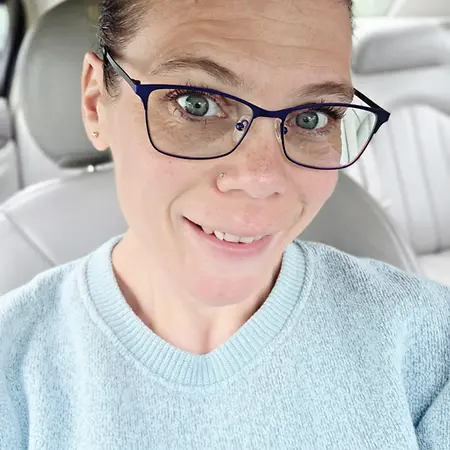
About Jessica
Jessica A. Short is a planning analyst and inventory specialist in the steel manufacturing industry, where she coordinates production, inventory, and order fulfillment activities across the manufacturing process. Her responsibilities include monitoring slab inventory, tracking order status, aligning production schedules with customer requirements, and preparing performance reports to support operational decision-making. She works closely with Sales, Production, and Logistics teams to manage priorities, address constraints, improve material flow, and maintain accurate planning and ERP data.
Before transitioning into steel manufacturing, Jessica built a diverse professional background spanning logistics, transportation, aerospace, corrections, and entrepreneurship. She served as a Logistics Coordinator with PCC AEROSTRUCTURES and previously worked as a Transportation Coordinator with Walmart. She also spent two and a half years as a corrections officer in a maximum-security prison, an experience that strengthened her resilience, crisis-management abilities, leadership skills, and confidence working in male-dominated environments.
Jessica is also a former small-business owner. For four years, she owned and operated her own daycare, maintaining credentials through the State of Ohio before relocating. This experience gave her firsthand experience in business operations, regulatory compliance, responsibility for others, and the many demands of independently managing a business.
Her commitment to education has been a consistent part of her journey. Jessica earned associate degrees in Early Childhood Education and Teaching and Medical/Clinical Assisting, achieving a 4.0 GPA in both programs. Her academic accomplishments earned her recognition in Who's Who Among American College Students on two occasions. Her dedication to education and service has also extended into her community, where she has volunteered with hospice organizations and supported initiatives focused on children with disabilities, while advocating for families and fathers' rights.
Jessica's career journey across corrections, entrepreneurship, logistics, transportation, aerospace, and heavy industry reflects her adaptability, determination, resilience, and commitment to continuous learning. Her experiences have taught her how to navigate high-pressure environments, take initiative, solve problems, and lead with confidence.
Drawing from her small-town upbringing and her experiences navigating traditionally male-dominated workplaces, Jessica encourages young women to speak up, embrace their confidence, pursue opportunities outside their comfort zones, and not be afraid to make waves in their careers. Her story is one of continually reinventing herself, taking on challenges, and proving that a person's career path does not have to follow a straight line to lead somewhere meaningful.
Her Interview
Ten minutes with Jessica
01What do you attribute your success to?
I attribute much of my success to my upbringing, resilience, and an unwavering desire to learn and grow. Raised in a small town, I experienced firsthand the challenges that can come with addiction, job loss, and financial hardship. Rather than allowing those circumstances to define my future, they became the motivation to create a different path for myself. Growing up in a close-knit community also sparked my natural curiosity and taught me the value of asking questions, seeking knowledge, and never being afraid to learn something new.
Across every chapter of my life, I have continued to challenge myself, learn from adversity, and step into spaces where I was not always expected to belong. My experiences in corrections, logistics, aerospace, steel manufacturing, entrepreneurship, and education have strengthened my resilience, confidence, and ability to adapt.
02What’s the best career advice you’ve ever received?
Stop waiting to feel ready. You are probably more capable than you realize.
03What advice would you give to young women entering your industry?
If I could give young women entering a traditionally male-dominated industry one piece of advice, it would be this: do not underestimate yourself, and do not be afraid to take up space.
You do not have to know everything when you walk through the door. Ask questions. Be curious. Learn from the people around you, but never be afraid to form your own opinions. There is strength in saying, "I don't know yet, but I'll find out." Some of the greatest opportunities in my career have come from being willing to learn something completely new.
Do not let being a woman make you feel like you have to prove yourself twice as hard but understand that sometimes you may have to work harder to be heard. When that happens, don't become smaller become more confident. Know your value, know your work, and stand behind what you bring to the table.
You will encounter people who underestimate you. Let them. You don't have to convince everyone of your capabilities. Let your work, your preparation, your consistency, and your character speak for you.
Learn to advocate for yourself. Speak up when you have an idea. Ask for the opportunity. Take the training. Apply for the position even if you don't meet every qualification. Don't wait until you feel completely ready, because sometimes confidence comes after you take the leap, not before.
Most importantly, don't lose yourself trying to fit into an environment. You can be strong without becoming hardened. You can be confident without becoming arrogant. You can be compassionate and still have boundaries. You can be feminine and still be incredibly capable in an environment that may not always recognize those qualities as strengths.
Your career does not have to follow a straight line. Mine certainly hasn't. Every job, challenge, mistake, setback, and new opportunity has taught me something that eventually became useful somewhere else. What feels like a detour today may become one of your greatest strengths tomorrow.
And never stop learning. Your education doesn't end when you receive a diploma. Stay curious. Ask why. Learn how things work. Learn from people who know more than you. Be willing to change your mind when you learn something new. The more you know, the more confidently you can walk into any room.
Finally, don't be afraid to make waves. If you see something that could be better, speak up. If you have an idea, share it. If you believe you belong at the table, pull up a chair. You don't have to wait for someone to give you permission to become the woman you are capable of being.
Your circumstances may shape where you begin, but they do not get to decide where you finish!
You don't have to become someone else to be successful.
Keep your curiosity.
Keep asking questions.
Keep learning.
Keep getting back up.
There will be plenty of people who underestimate you, and there will be plenty of moments when you doubt yourself. Don't let either one make your decisions for you.
You don't need to know exactly where you're going—you just need to be willing to take the next step. One day, you'll look back and realize that all those steps you weren't sure about became the path that brought you exactly where you were supposed to be.
04What are the biggest challenges or opportunities in your field right now?
Working in a male-dominated industry such as the steel mill industry comes with challenges that extend far beyond simply learning the job. For women who are career-driven and determined to succeed, there is often a constant balancing act between professional ambitions and the responsibilities of being a mother, wife, and friend. A career in this environment can be mentally demanding, physically demanding, and emotionally exhausting, and finding the right balance while continuing to perform at a high level requires tremendous resilience, organization, and dedication.
Women are often expected to demonstrate that they belong in an industry where they may be one of the few women in the room, on the floor, or in a leadership position. At times, this can mean working harder to establish credibility, having to prove knowledge and competence repeatedly, or feeling that mistakes are judged differently. The challenge is not simply succeeding in the workplace; it is succeeding while navigating expectations and responsibilities that continue outside of the workplace as well.
Another significant challenge is overcoming unconscious bias. In traditionally male-dominated environments, some male coworkers may be less receptive to ideas, opinions, or decisions presented by women. A woman's perspective may not always receive the same immediate consideration as that of her male counterparts, even when she brings valuable experience, knowledge, and insight to the conversation. This can be particularly frustrating because the industry ultimately benefits when people are willing to listen to ideas based on their merit rather than the gender of the person presenting them.
Creating a more inclusive environment does not mean lowering standards or giving women an advantage. It means recognizing that talent, leadership, problem-solving ability, and industry knowledge are not determined by gender. Women bring different experiences and perspectives to the table, and those perspectives can contribute to innovation, safety, efficiency, employee retention, and the overall growth of the industry.
For women pursuing careers in industries like steel, the challenge is often learning how to be confident enough to make their voices heard while remaining true to themselves. It requires resilience to face skepticism, confidence to stand behind good decisions, and perseverance when opportunities do not come easily. It also requires understanding that being a successful career woman does not mean sacrificing the other important roles in life. Being a dedicated mother, wife, friend, and professional can be demanding, but those roles can also strengthen the qualities that make a woman an effective leader.
Ultimately, women should not have to choose between being successful in their careers and being successful in their personal lives. The goal should be to create workplaces where women are respected for what they contribute, where their ideas are evaluated on their value rather than their gender, and where their presence is recognized as an asset to the future of the industry.
05What values are most important to you in your work and personal life?
The values that are most important to me, both personally and professionally, are staying true to who I am and never losing sight of the person I want to be. It can be easy to become consumed by the everyday stresses and demands that come with both life and a career, but I believe it is important to maintain perspective and remember to “stop and enjoy the little things.”
For me, success is not defined solely by what I accomplish at work. It is also about being the best version of myself for my family, my relationships, and the people who depend on me. Finding a healthy balance between my career and my home life is something I continually strive for, because I want to be able to give my best to both without allowing one to completely overshadow the other.
I also value growth. I want to continue learning, listening to new ideas, and challenging myself to see things from different perspectives. At the same time, I believe in maintaining my own standards and staying grounded in the values that have shaped me. I can learn from others without losing my own identity or compromising what I believe is important.
Ultimately, I want to continue growing without losing myself in the process. I want to work hard, lead by example, be proud of what I accomplish, and still make time to appreciate the people, moments, and experiences that make life meaningful. To me, that is what true success looks like.
Join Influential Women and start making an impact. Register now.