An exploration of true resilience in leadership: not about pushing through, but adapting with purpose, maintaining integrity, and leading with humility through uncertainty and change.
Her Story
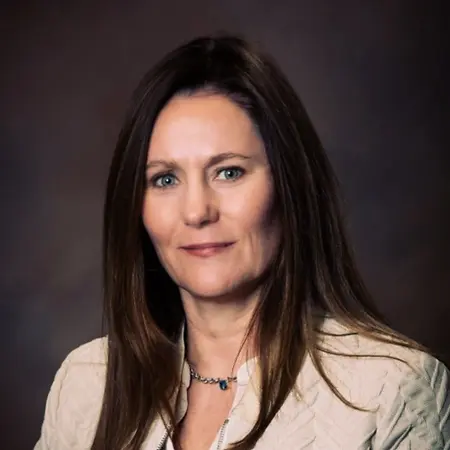
About Jessica
Jessica Smith, PhD, is a retired senior regulatory and quality executive with more than 25 years of experience leading global organizations in the medical technology and life sciences industries. Throughout her career, she became known for building high-performing teams, leading complex regulatory strategies, and transforming quality systems across multinational organizations.
She held executive leadership positions at Integra LifeSciences, Becton Dickinson, Hillrom, and C. R. Bard, where she oversaw global regulatory affairs and quality organizations responsible for product approvals, FDA and international submissions, post-market compliance, and enterprise quality systems. Her work also included organizational transformation initiatives, mergers and acquisitions due diligence, process improvement, and the development of scalable quality systems supporting extensive global product portfolios.
Jessica earned both her Master of Engineering and PhD in Bioengineering from the University of Utah. She began her professional career in civil engineering before transitioning into bioengineering and regulatory affairs and later, quality assurance. Jessica has also been an elected leader, invited guest speaker and/or sponsor for the SLC Women’s Leadership Conference (2021), the Hillrom Women’s Leadership Network (2020), the BD Women’s Initiative Network (WIN) (2019), and the Bard Access Systems Women’s Leadership Forum (2016).
Before entering the corporate world, Jessica was an All-American collegiate gymnast and a member of the University of Utah's 1990 NCAA Division I National Championship team. The discipline, resilience, and teamwork developed through athletics became foundational to her leadership philosophy.
Today, she devotes her time to mentoring, advisory work, and sharing insights on leadership, resilience, and the human side of executive leadership.
Her Interview
Ten minutes with Jessica
01What do you attribute your success to?
I attribute my success less to individual accomplishments and more to the people I had the opportunity to lead. Throughout my career, I found the greatest satisfaction in building strong teams, helping others grow, and watching people accomplish things they didn't think were possible.
I've always believed in doing high quality work, leading by example, and focusing on the work itself rather than chasing promotions. This approach has allowed me to maintain an authentic, disciplined approach and led to several opportunities to excel in my professional career.
My leadership was also shaped by experiences outside of work. Growing up with frequent moves, being raised by a single mother, competing as a collegiate athlete, becoming a single parent myself, and later losing my daughter all taught me resilience, empathy, and perspective. Those experiences influenced how I led people just as much as my professional experiences did.
02What’s the best career advice you’ve ever received?
I've received a great deal of valuable career advice over the years, but one conversation with a complete stranger has stayed with me the longest.
Early in my career, I was working in pharmaceutical sales for a large multinational pharmaceutical company. I was flying to a national sales meeting and found myself talking with the passenger seated next to me, who also worked in sales. As the conversation progressed, he shared with me something I've never forgotten: that success in sales isn't about having a certain personality—it's about being able to adapt to the person sitting across from you.
That advice extended far beyond sales. Whether leading organizations, working with regulators, or building teams, I've found that understanding other people and adapting your communication to meet them where they are is one of the most valuable leadership skills you can develop.
03What advice would you give to young women entering your industry?
Focus on doing excellent work rather than chasing titles. Build a reputation for integrity, reliability, and treating people well. Careers are long, and those qualities have a way of opening doors over time.
Don't feel pressured to fit a particular leadership mold. Leadership doesn't have to be loud or forceful. Some of the most effective leaders are thoughtful, empathetic, authentic, and consistent.
Give yourself permission to make mistakes. Everyone does. What defines your career isn't whether you avoid failure—it's how you respond, what you learn, and whether you continue moving forward. Finally, be kind to yourself. Confidence grows through experience, not perfection.
04What are the biggest challenges or opportunities in your field right now?
Medical technology continues to evolve rapidly, while regulatory expectations around the world become increasingly complex. Organizations must navigate changing regulations, emerging technologies, global supply chains, cybersecurity considerations, and increasing expectations for quality and patient safety—all while coordinating teams across multiple countries and time zones. The introduction of AI has also been a challenge as well as an opportunity. I firmly believe that AI will become a critical tool in both the regulatory and quality professions. However, every company will face a variety of challenges on the road to implementing and optimizing how it is used.
At the same time, those challenges create tremendous opportunities. Regulatory and quality professionals play a critical role in bringing innovative technologies to patients safely and efficiently. Helping guide a product from concept through years of development, testing, clinical evaluation, regulatory review, and ultimately into the hands of physicians and patients remains one of the most rewarding aspects of the profession.
05What values are most important to you in your work and personal life?
The values that guide both my professional and personal life are authenticity, integrity, resilience, empathy, and accountability. I believe people learn more from what leaders do than from what they say, so I've always tried to lead by example and take pride in producing work I'm proud to stand behind.
I've also learned that leadership is fundamentally about people. Treating others with respect, being transparent, listening well, and helping people succeed creates stronger organizations and more meaningful relationships, both at work and in life.
Her Content Hub
Articles by Jessica
Built Through Change: Why Resilience Still Defines Great Leadership
How adaptive leadership and honest accountability shape true organizational resilience.

Resilience in Leadership
In today's workplace, where disruption, transformation, and relentless pressure have become the norm, the term "resilience" has become commonplace. It appears in corporate values, leadership development programs, and performance reviews, often presented as an unquestioned virtue.
Yet despite its popularity, resilience remains surprisingly misunderstood.
What does it actually mean to be resilient?
More importantly, how should leaders apply resilience when faced with uncertainty, failure, or the need to change direction?
To me, resilience has never been about simply "pushing through." It is the ability to adapt while preserving judgment and direction. It is the discipline to remain steady under pressure, make difficult decisions when outcomes are uncertain, and continue leading when circumstances might tempt others to retreat.
It is also the humility to acknowledge mistakes and the courage to change course when necessary.
Built Through Constant Cross-Functional Collaboration
Throughout my career, I have led global regulatory and quality organizations at Integra LifeSciences and global regulatory organizations at Becton Dickinson, Hillrom, and C. R. Bard.
In those roles, resilience was built through constant cross-functional collaboration, clear expectations, integrity, and perseverance in the face of daily challenges.
Regulatory and quality leaders operate at the intersection of science, compliance, business strategy, and ethics—an environment where resilience cannot be compromised. The ability to withstand pressure while maintaining conviction can determine not only the trajectory of an organization but also the safety and trust placed in it by patients, healthcare professionals, and customers.
Stability Doesn't Come From Circumstances
For me, resilience began long before my professional career or executive leadership.
Looking back, I realize those early experiences taught me that stability doesn't come from circumstances—it comes from learning to adapt without losing your sense of purpose.
By the time I was seventeen, I had moved more than a dozen times, repeatedly navigating new schools, new environments, and a tumultuous home life.
Those experiences taught me adaptability.
More importantly, they taught me conviction and the ability to remain grounded in who I was, even when everything around me was anything but stable.
Looking back, I can clearly see how those experiences shaped my leadership style long before I recognized it myself.
Built Through Mistakes, Missteps, and the Humility to Confront Them
I have also learned that resilience is not built solely through endurance or professional success.
It is built through mistakes, missteps, and the humility to confront them honestly.
One of the most overlooked aspects of resilient leadership is the willingness to acknowledge when something hasn't gone as planned, take accountability, and course-correct without defensiveness or blame.
Executive leadership often creates pressure to appear flawless rather than openly acknowledge mistakes. Yet the strongest leaders I have known were never those who avoided mistakes altogether.
They were the ones who learned from them, adapted, and emerged with sharper judgment, greater perspective, and deeper credibility.
Sustainable Resilience
Too often, resilience is confused with exhaustion.
It is celebrated by rewarding constant availability, glorifying overwork, or equating endurance with silence.
That is not resilience.
Sustainable resilience is grounded in self-awareness, adaptability, accountability, and the courage to evolve while maintaining a strong sense of self.
It allows leaders to guide organizations through transformation without losing their humanity in the process.
Resilience Is Not About Resisting Change
This matters now more than ever because organizations are navigating unprecedented shifts: technological disruption, changing workforce expectations, increasing regulatory complexity, economic uncertainty, and growing demands for transparency and accountability.
Organizations need leaders who can remain composed through volatility while inspiring trust, confidence, and alignment.
They need leaders who understand that resilience is not about resisting change, but about learning how to move through it with purpose.
The future of leadership will not belong solely to the loudest voices or the most aggressive operators.
It will belong to leaders who combine expertise with emotional steadiness, conviction with adaptability, accountability with humility, and performance with integrity.
The Capacity to Recover, Recalibrate, and Continue Forward
Perhaps that is the most important lesson resilience has taught me.
Leadership is not defined by avoiding difficulty, refusing to change course, or escaping mistakes.
It is defined by how we respond to those moments—and how we continue to lead through them.
Sometimes resilience means persevering.
Sometimes it means having the wisdom and conviction to choose a different path.
Resilience is not perfection.
It is the capacity to recover, recalibrate, and continue moving forward.
Join Influential Women and start making an impact. Register now.