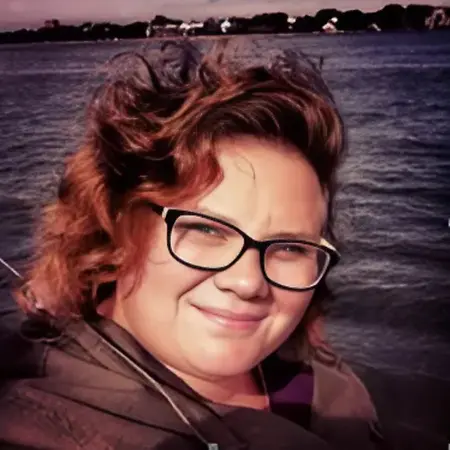
Her Story
About Jessica
Jessica Zserai's journey is rooted at the intersection of equity, community partnership, and systems-level change. With a Master’s in Social Work from Northcentral University and a Bachelor’s in Social Work from Millersville University of Pennsylvania, she blends academic depth with more than a decade of hands-on experience designing programs that uplift underserved communities across South Carolina.
As Program Coordinator at MUSC Hollings Cancer Center, Jessica leads statewide cancer education and screening efforts that bring vital information directly to the communities that need it most. Her work ensures cancer education is not only accessible but culturally grounded and community-driven. She also plays a key role in program coordination and grant management, upholding data quality, operational excellence, and measurable outcomes for initiatives supported by the Duke Endowment and Stand Up 2 Cancer, ensuring compliance, strategic alignment, and measurable outcomes. She thrives at the intersection of project management and community engagement, building partnerships that translate into real-world health improvements.
Her dedication to service also shines through her work with the Fisher House Program, where she has supported hundreds of veteran families during their medical care journey. Jessica coordinates lodging and resources so caregivers can focus on what matters most—their loved ones’ recovery—reflecting her deep belief in compassion and advocacy for those navigating life’s most challenging moments.
Jessica’s commitment to equity extends beyond health systems. Through her volunteer leadership with Macro Pathways, she helps social work students and early-career professionals discover the full breadth of macro-level opportunities available to them. Whether through program development, marketing strategy, or mentorship, she works to expand the field’s visibility and empower emerging social workers to step into roles that influence policy, advocacy, and structural change.
Outside of her professional work, Jessica invests in her community through volunteer efforts with Charleston Parks Conservancy and Keep Charleston Beautiful. She finds balance in sustainable living and gardening, bringing the same care and intentionality to her personal life that she brings to her career.
Across every chapter of her work, Jessica brings a steady dedication to community-centered progress and sustainable systems building—bridging the precision of strong program management with the compassion and purpose that define the heart of social work. Her guiding principle is simple yet powerful: growth happens outside your comfort zone. Jessica encourages women to embrace challenges, take risks, and lead with empathy—because that’s where transformation begins.
Her Interview
Ten minutes with Jessica
01What do you attribute your success to?
For me, success begins with self-awareness. It’s about recognizing that growth is a continuous process and that no one achieves meaningful impact alone. I’ve learned to ask questions, seek guidance, and lean on the expertise of my colleagues—especially when navigating complex challenges for the patients and communities I serve. Collaboration is not a sign of weakness; it’s a strength that drives better outcomes.
This belief shapes my leadership philosophy: leadership is not about having all the answers—it’s about creating space for shared problem-solving and empowering others to contribute their strengths. I lead by fostering trust, encouraging open dialogue, and modeling humility. When we acknowledge that there is always room for improvement and remain willing to learn, we create teams that innovate and thrive.
My success lies in that openness—being willing to grow, adapt, and lead with empathy. It’s not about doing it alone; it’s about building relationships, cultivating resilience, and guiding others toward collective progress.
02What’s the best career advice you’ve ever received?
The best advice I’ve received—and recently been reminded of—is the importance of taking time for ourselves. In the work we do, it’s easy to pour everything into serving others and forget that rest is not a luxury; it’s a necessity. When we neglect self-care, we compromise the quality of our work and ultimately, the care and services our patients receive. They deserve our best, and we can only give that when we are rested, recovered, and whole.
It can feel selfish to step back, but I’ve learned that self-care is not about indulgence—it’s about sustainability. In healthcare and community work, success isn’t just measured by outcomes; it’s measured by the resilience and well-being of those delivering the care. Taking time to recharge ensures that we show up fully present, focused, and capable of making the impact we strive for every day.
03What advice would you give to young women entering your industry?
Reflecting on my career in healthcare and the non-profit sector, the advice I would give to young women entering this field is to embrace every opportunity to grow—even if it means stepping outside your comfort zone. I’ve learned that taking calculated risks, being open to new experiences, and challenging yourself are essential for both personal and professional development. Don’t be afraid to pursue roles or projects that push your limits; it’s often in those moments that you discover your true potential.
04What are the biggest challenges or opportunities in your field right now?
One of the most pressing challenges in social work today is the Micro Pipeline in Social Work (MPISW)—a systemic pattern that funnels social workers almost exclusively into clinical and direct care roles. While these roles are vital, this narrow focus leaves macro-level practice pathways underdeveloped and underrepresented. This challenge is also an incredible opportunity to reimagine what social work can be.
Through my volunteer work with Macro Pathways, I’m committed to advancing three core priorities:
- Reimagine the Pathways of Practice: Challenge the Micro Pipeline by redefining what it means to be a social worker—expanding awareness, visibility, and legitimacy of macro-level roles across education, employment, and leadership.
- Expand the Scope of Social Work Practice: Empower social workers to innovate across systems, industries, and communities—redefining how the profession creates change beyond traditional boundaries.
- Drive Structural and Cultural Transformation: Advance equity and sustainability in the profession by collecting data, amplifying diverse voices, and influencing how schools, agencies, and institutions prepare future social workers for systems-level impact.
Our goal is to cultivate a hub of resources—job boards, skill-building workshops, and mentorship opportunities—that help social workers expand their impact beyond traditional clinical practice and step into positions where they can influence policy, systems, and communities. Social workers belong everywhere, and by breaking down barriers, we can amplify the reach and relevance of our profession in shaping a more equitable future.
05What values are most important to you in your work and personal life?
I’ve built my career around a simple but powerful belief: communities thrive when they have the knowledge, access, and support they deserve. That belief has guided me for more than a decade across South Carolina, where I now serve as a Program Coordinator at MUSC Hollings Cancer Center. In this role, I lead statewide cancer education and screening initiatives, working closely with community partners to ensure that lifesaving information and services reach the people who need them most. My work is rooted in equity—meeting people where they are, listening deeply, and building trust that turns outreach into real impact.
Compassion, service, and collaboration have always been the compass points that shape both my work and my life. My career in the nonprofit and healthcare sectors has brought me into community with veterans, military families, individuals experiencing homelessness, and people across every stage of life. Whether I was supporting therapeutic sailing programs, coordinating case management services, or helping people build confidence through job training and social integration initiatives, each experience reinforced the same lesson: meaningful support begins with meeting people exactly where they are.
Today, much of my work focuses on helping patients across South Carolina access essential healthcare services, particularly cancer screenings. I spend my days identifying the barriers—transportation, financial strain, limited access to information—that can stand between someone and the care they need. Coordinating resources like gas cards and using data to understand community needs allows me to take a practical, solutions‑focused approach that keeps dignity and equity at the forefront.
My part‑time work with the Ralph H. Johnson VA Fisher House program has deepened that commitment even further. Supporting veterans and their families during medical crises is both humbling and grounding. One moment that stays with me is helping the spouse of a lung transplant recipient secure caregiver resources—an experience that reminded me how powerful advocacy and steady support can be during someone’s most vulnerable moments.
Outside of my professional roles, I find joy in the things that connect me to community and to my roots. Crafting and gardening are creative outlets, but they’re also a way of honoring my grandfather, an avid organic gardener who taught me to appreciate the quiet work of nurturing something into life. I love propagating plants and volunteering with organizations like Keep Charleston Beautiful and the Charleston Parks Conservancy, where small acts of care add up to a more vibrant city.
Recently, I’ve also become involved with Macro Pathways, a pilot initiative expanding the possibilities for social workers beyond traditional clinical roles. Supporting this work feels like a natural extension of my values—helping others grow, discover new opportunities, and step into roles that shape systems and communities for the better.
Across everything I do, I’m driven by the belief that empathy, advocacy, and teamwork can create real, lasting change. Whether I’m coordinating healthcare access, supporting a family in crisis, tending a garden, or helping build new pathways for future social workers, my goal is always the same: to contribute to a more connected, compassionate, and equitable world.
Join Influential Women and start making an impact. Register now.