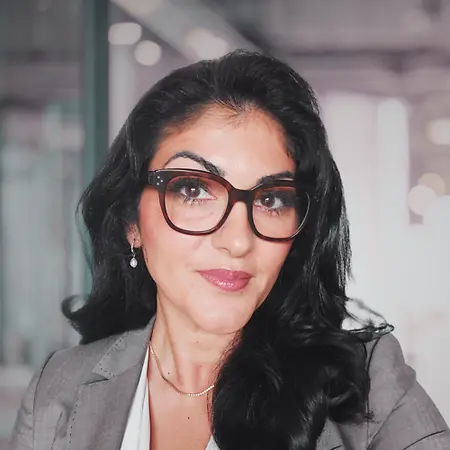
Influential Woman · Law and Government
Jhiela "Gigi" "Gigi" Poynter
LLM
County Judge, Refugio County
Refugio, TX 78377
Her Story
About Jhiela "Gigi"
Jhiela Poynter is the County Judge of Refugio County, Texas, and an experienced attorney with more than a decade of practice in law and public service. In her role as County Judge, she serves as both the chief administrative officer of the county and a judicial authority, overseeing local governance, emergency management, and county operations. Her leadership in Refugio County reflects a commitment to strengthening rural infrastructure, improving public systems, and advancing community resilience through strategic planning and external funding initiatives. Prior to her election as County Judge in 2023, Judge Poynter built a strong legal career as the owner and attorney of Poynter Law, PLLC, and previously practiced with the Law Offices of Bernard T. Klimist. Her legal expertise spans multiple areas, including civil litigation, probate, and estate planning, supported by advanced academic training in wealth management laws. She has also contributed to legal education and professional development through publications and presentations on topics such as mental health commitment law, disaster preparedness, and emerging digital asset regulation. Judge Poynter earned her Juris Doctor from Louisiana State University Paul M. Hebert Law Center and later completed a Master of Laws in Wealth Management at Texas A&M University School of Law. Her academic journey also includes international studies in South Africa, Turkey, and Italy, reflecting a strong global legal perspective. Beyond her professional responsibilities, she is actively engaged in community leadership, youth sports coaching, and civic organizations, and has been recognized as a Texas Super Lawyers Rising Star and a Coastal Bend Woman of Distinction for her contributions to law and public service.
Her Interview
Ten minutes with Jhiela "Gigi"
01What do you attribute your success to?
I attribute my success to having support. My family, my friends, my husband—none of us really get where we are completely on our own.
To me, it can feel a little cliché to say, "I pulled myself up by my bootstraps" or "I did it all myself." That doesn't mean I want to take away from the hard work I've put in or the things I've earned, but I think it's important to recognize the people who helped along the way. I've learned that it's okay to ask for help, to lean on your community, and to accept support when you need it.
A large part of my success comes from being surrounded by people who are driven, supportive, and committed to doing meaningful things. When you surround yourself with people who lift each other up instead of competing with one another, everyone is capable of achieving more than they could alone.
02What’s the best career advice you’ve ever received?
The best career advice I ever received came during a job interview when I was still in college. I had applied for what I thought was an unpaid volunteer internship with a congressional campaign. During the interview, the hiring manager asked me what I wanted to be paid, and I completely froze. It hadn't even occurred to me that I might be interviewing for a paid position.
He told me something that has stayed with me ever since: I should have been prepared to answer that question. He explained that understanding your value and being able to articulate it is an important part of any professional opportunity. He helped me come up with a number, but the lesson was much bigger than that.
Since then, I've always encouraged people-- especially young women-- to know their worth. That doesn't mean overestimating yourself or expecting something you haven't earned. It means recognizing the value you bring to the table, being prepared to advocate for yourself, and not being afraid to have those conversations. If you don't know your worth, it's difficult to expect anyone else to recognize it either.
03What advice would you give to young women entering your industry?
One thing I really want young women to know is that a lot of high-achieving women still struggle with that little voice of self-doubt. We call it imposter syndrome-- the feeling that maybe we're not qualified enough, smart enough, experienced enough, or that somehow we don't belong where we are.
My advice is simple: don't wait for someone else to give you permission. Even if nobody pulls out a chair for you, make space for yourself at the table. You deserve to be there just as much as anyone else. Trust that you've earned your place, speak up, and advocate for yourself. The people who seem the most confident often have the same doubts you do-- they've just learned not to let those doubts make decisions for them.
04What are the biggest challenges or opportunities in your field right now?
In both law and public service, many leadership positions are still held by men, so those fields remain largely male-dominated spaces. That can certainly present challenges, but I also see it as an opportunity.
Women often bring different perspectives, experiences, and approaches to problem-solving, communication, and leadership. Those perspectives don't replace others-- they complement them. When decision-making tables include people with different backgrounds and life experiences, the conversations are stronger and the outcomes are often better. I think one of the greatest opportunities right now is continuing to create space for those diverse voices and ensuring that talented women not only have a seat at the table, but also have the opportunity to help shape the conversation.
05What values are most important to you in your work and personal life?
Respect is probably the most important value in both my work and my personal life. That starts with having respect for yourself, but it also means showing respect to the people around you.
It takes all kinds to make the world work, and we're not all going to agree on everything. But I think respect allows us to recognize the value in other people's perspectives, experiences, and contributions, even when we see things differently. Whether I'm working with colleagues, constituents, friends, or family, I've found that respect is the foundation for productive relationships, meaningful conversations, and lasting trust.
Join Influential Women and start making an impact. Register now.