Her Story
About Jill
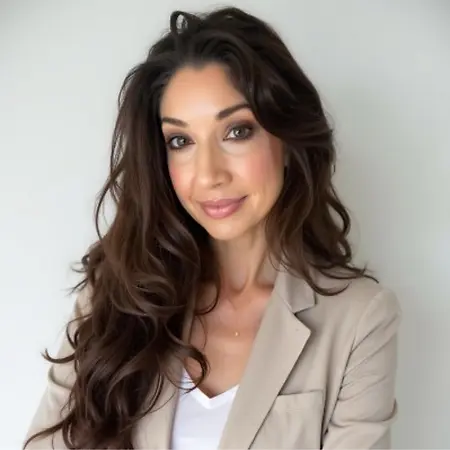
Jill Shull Gildroy is a seasoned strategist and leader in the pharmaceutical and biotechnology industries, currently serving as Executive Director of Radioligand Therapy Business Excellence at Novartis. In this national role she leads the commercial team's Business Excellence division for a new pillar of oncology care, focusing on cross-functional partnerships and customer-centered commercial design. Jill is committed to building today’s work to enable future capabilities while mentoring early-career colleagues, particularly women, to thrive in the healthcare sector. Over her 25-year career, including 20 years dedicated to healthcare, Jill has developed expertise in strategy execution, commercial excellence, and organizational change management. Her experience spans diagnostics, oncology (medical device and pharmaceutical), consumer brands, and management consulting in both the U.S. and Europe. Previously, she served as Director of Strategy for Novartis commercial teams across multiple therapeutic areas, designing initiatives to anticipate trends, develop capabilities, and create sustainable impact for patients and organizations alike. Jill holds an undergraduate degree from Rice University and has completed executive programs at MIT Sloan School of Management and Harvard Medical School. She is an active member of Chief and the Healthcare Businesswomen’s Association and has received multiple awards for professional excellence, including multiple Chairman’s and President’s Club honors. Driven by a philosophy she calls “fly the plane and build the rocket,” Jill balances short-, mid-, and long-term strategy with hands-on mentorship, ensuring her teams and the next generation of healthcare leaders are prepared to innovate and excel.
Her Interview
Ten minutes with Jill
01What do you attribute your success to?
I attribute my success to good old-fashioned hard work and not being afraid to fall and fail. I grew up in a small Pennsylvania town and am the first in my immediate family to go to college. Hard work was not an option. It was the only option. I've been in the work force in some fashion nonstop since I was 14. When I was in high school applying to schools like Rice people didn't understand, and most advised me not to try because the odds of being accepted were so unlikely. I don't think I've ever really feared failure as much as I feared wondering what if. That, I think, is what gets in our way more than anything.
My formative years in management consulting were equally instrumental in shaping my career. I often describe the experience as compressive: one year of consulting can feel like several years elsewhere, because of the pace, the exposure to diverse leaders and organizations, and the breadth of challenges you’re asked to tackle. Advancement is less about title and more about capability: if you can do the work, you’re given the opportunity to do it. That environment, alongside my university experience, played a defining role in how I approach leadership and problem‑solving today.
02What’s the best career advice you’ve ever received?
I’ve received two closely related pieces of advice that have shaped how I think about leadership. The first is that impact isn’t defined solely by the work you do, but by how effectively you articulate the story of how that work enables and empowers others. The second, advice many women hear but often struggle to operationalize, is about taking up space. What finally resonated for me, particularly over the past year, was a refinement shared by one of our executives: taking up space should be intentional and strategic, not constant. Used thoughtfully, it becomes far more effective.
03What advice would you give to young women entering your industry?
Seek out mentors early, trust your scientific instincts, and don’t wait to be invited into the conversation. Biotech moves fast and rewards those who ask thoughtful questions, build strong cross‑functional relationships, and advocate for both the science and themselves. Your perspective is valuable; use it with confidence, even when the room feels intimidating. Find people you can trust to whiteboard ideas and challenge your assumptions and be that same person for others.
04What are the biggest challenges or opportunities in your field right now?
The industry overall is navigating a significant operating‑model transformation while simultaneously needing to accelerate growth. The pharma industry is now being forced to build change agility that other industries developed years ago. Heavy regulation, long development cycles, and risk‑averse cultures historically optimized pharma for precision and compliance, not speed or adaptability. As science, technology, and customer expectations accelerate, the industry is catching up by shifting toward faster decision‑making, empowered teams, and continuous learning, recognizing that agility is no longer optional but essential to delivering impact at pace.
There is a big opportunity for pharma and biotech right now sit at the intersection of science, data, and operating‑model evolution. Breakthrough modalities, AI‑enabled discovery and development, and more personalized, ecosystem‑based approaches to care are creating the chance to deliver better outcomes faster—while fundamentally rethinking how work gets done. Companies that pair scientific innovation with agile decision‑making, smarter use of data, and deeper collaboration across the healthcare system are best positioned to lead the next wave of impact.
05What values are most important to you in your work and personal life?
In my work life, mentorship is incredibly important to me. The best part of my day is when I get to do one-on-one mentorship and coaching sessions, especially with women earlier in their careers, because I didn't have that when I was coming up. I want to be the thing I needed in that formative time. I also value working in an environment that has the potential to dramatically improve human life, which is why I'm in healthcare innovation.
Personally, the most important things in my life are my family (my daughter, husband and dog) and taking care of myself. I'm a mom to an teenage girl who is neurodivergent, so I'm really digging in on how her brain works, and how I can best communicate with her and work with her. I love to work out and belong to a great health club, which is important because I'm also a pretty avid home cook. I grew up in an Italian house with my grandmother teaching me how to cook, and we didn't grow up with recipes - you measure it by when it looks right and tastes right. I love to feed people, and it makes me happy to gather people and cook for them.
Join Influential Women and start making an impact. Register now.