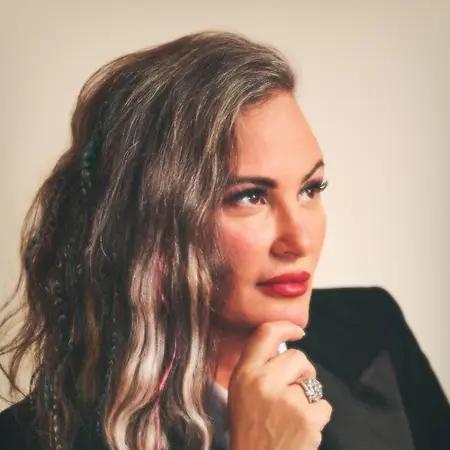
A pivotal realization in public education (not a lack of caring, but a lack of consistent systems) shifted my focus from individual support to building proactive, system-level approaches for schools.
Jillian Haring · In Her Own Words
Her Story
About Jillian
Jillian Haring is a nationally recognized school safety consultant and behavioral threat assessment expert with more than 25 years of experience in public education. Throughout her career, she has specialized in supporting students with complex behavioral, social, and emotional needs, developing a deep understanding of student behavior, intervention systems, and prevention-focused practices that prioritize both safety and support.
Her work has consistently focused on identifying behavioral patterns, strengthening early intervention strategies, and advocating for more effective, collaborative approaches to student support. A pivotal experience in her career led her to transition more fully into behavioral threat assessment and violence prevention, where she has since concentrated on helping schools move from reactive responses to proactive, system-level solutions.
Following a high-profile school safety crisis in her state, Jillian was selected to participate in an extensive review of student systems, intervention practices, and organizational responses. This work required her to examine complex challenges, identify gaps in communication and support structures, and contribute to recommendations aimed at meaningful reform. Her commitment to honesty, transparency, and accountability, even in the face of criticism, has become a defining characteristic of her leadership approach.
Since transitioning from her role in public education, Jillian has dedicated her work to strengthening violence prevention systems across the country. She has trained thousands of educators, administrators, and multidisciplinary teams on effective Behavioral Threat Assessment and Management (BTAM) practices, emphasizing early identification, collaboration, and a whole-child approach.
As a Senior Advisor and Subject Matter Expert in BTAM, Jillian continues to support schools and organizations in building sustainable, prevention-focused systems that move beyond compliance and focus on care, connection, and meaningful intervention. She is also a contributor to national education publications and serves in a leadership capacity with organizations focused on advancing evidence-based strategies for community and school safety.
Her Interview
Ten minutes with Jillian
01What do you attribute your success to?
When I stepped into this work following a national tragedy, it came at a significant personal and professional cost. The intense public attention, scrutiny, and criticism that often accompany highly visible events created challenges I never anticipated and forced me to navigate circumstances that were both difficult and deeply personal.
By the time I left, I was emotionally exhausted and carrying the weight of an experience that reshaped my perspective on leadership, accountability, and change. I had simply tried to approach the work with honesty, examining what had gone wrong, identifying opportunities for improvement, and focusing on lessons that could help prevent future harm. For a period of time, I stepped away from the public conversation altogether, uncertain whether I wanted to remain connected to this work.
Ultimately, however, I came to realize that the experience had given me a unique perspective and a responsibility to contribute. What began as one of the most difficult chapters of my life became the foundation for a renewed sense of purpose and a commitment to helping others build safer, more supportive systems.
02What’s the best career advice you’ve ever received?
Throughout my career, I’ve been fortunate to learn from a number of incredible women who have influenced how I lead and show up professionally. They helped instill the confidence to be strong, own my voice, and lean into conversations that aren’t always easy but are necessary for growth. That influence started early. In high school, I had an exceptional teacher, Gail Pucker, who inspired me to pursue a career in education. She was not only deeply supportive but also played a meaningful role in shaping the path I chose to follow, and I’m grateful that she is still part of my life today.
As my career progressed, I continued to be surrounded by strong, supportive women who modeled what effective leadership looks like and encouraged me to push myself beyond my comfort zone. Their guidance helped me grow both professionally and personally. Even now, I find inspiration in the women I work alongside and with, including clients who bring incredible passion to their work. Their commitment and energy are often what reinvigorate me. They remind me why this work matters and reinforce the kind of impact I want to have and the people I want to partner with.
03What advice would you give to young women entering your industry?
My advixe is simple really, at the end of the day, I believe our work has to remain centered on the people we are trying to serve, children, families, and the educators and staff members who support them every day. It can be easy to become distracted by competing priorities, policies, politics, or bureaucracy, but the most meaningful progress happens when we stay focused on the human beings at the heart of the work.
Throughout my career, I have found that the best decisions are often the ones rooted in a genuine commitment to helping people. When we lead with that mindset, the path forward becomes much clearer. We owe it to our children to create environments where they feel safe, supported, and able to thrive, and we owe it to educators and support staff to ensure they have the resources, training, and encouragement they need to make a difference.
For me, leadership is ultimately about keeping that purpose in focus—remembering why we do this work and never losing sight of the individuals whose lives can be positively impacted when we get it right.
04What are the biggest challenges or opportunities in your field right now?
I'm deeply passionate about addressing the broader cultural challenges impacting education today. Over the years, I've watched increasing instability in school leadership, declining respect for public service professions, educator burnout, and the growing emotional impact social media has had on young people. I believe we cannot meaningfully address violence prevention without also rebuilding community responsibility, empathy, and human connection. Post-COVID, I think kids went deeper into their phones, and they realized they don't need to really invest in school full-time because in three hours they can get their work done. School used to be a place where you got your identity from a holistic standpoint, whereas now it's very transactional. They're filling those cups through social media, and it's a very scary place because so much on social media is not reality, but they're young and don't know how to decipher what is this image of what people portray versus reality. Their problems seem magnified because they seem so abnormal compared to what they're seeing, instead of sitting around a classroom and looking at other kids who are also awkward and going through trials and tribulations of youth. From a federal level, we've kind of really shifted away from focusing on education. The federal DOE is nonexistent and there are states that give unfunded mandates that trickle down. It's very hard for people who do this type of work to have the time dedicated or the resources to really lean in and help.
There was a time when superintendents often remained in their roles for five years or more, which created a sense of stability within a district. Today, we’re seeing much shorter tenures, sometimes just two or three years. With each leadership transition, entire executive teams shift, priorities change, and the culture resets. For educators, that constant change can be exhausting. Every time a new initiative is introduced, there’s an initial investment of time, energy, and belief that things might improve. But when leadership turns over so quickly, those efforts often feel short-lived, and many educators are left starting over again. Over time, that cycle can lead to a sense of apathy and disconnection.
At a broader level, I think we’ve also seen a shift in how we value public service roles. Professions like education, healthcare, and public safety were never driven by financial gain. There was an understood social contract that these individuals would show up for society in critical ways, and in return, they would be respected, trusted, and valued. What’s changed is that many of these roles now feel more like jobs than long-term careers or callings. When that sense of purpose and societal respect erodes, it impacts not just the individuals in those roles, but the systems they support. I think that’s part of why we’re seeing strain across education, healthcare, and public safety. There’s less collective focus on community and more emphasis on individual priorities, and that shift has real consequences for how these systems function.
05What values are most important to you in your work and personal life?
The values that guide both my professional and personal life are service, integrity, resilience, and advocacy. Throughout my career in public education and school safety, I have remained committed to protecting vulnerable students, strengthening communities, and helping create systems centered on prevention rather than reaction. I believe meaningful leadership requires compassion balanced with accountability, and that lasting change begins by listening carefully, intervening early, and supporting individuals before they reach a crisis point. Honesty and courage are also deeply important to me, especially during difficult moments that require thoughtful decisions and strong leadership. Many of my experiences have reinforced my belief that adversity can become a powerful source of growth, purpose, and positive impact. Above all, I value public service, the importance of education, and the shared responsibility communities have in creating safer and healthier environments for future generations.
Join Influential Women and start making an impact. Register now.