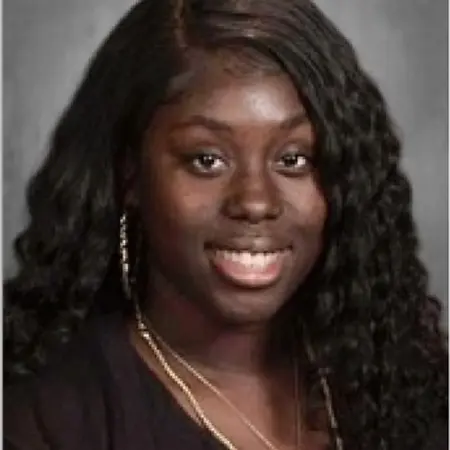
Her Story
About Jimesha
Jimesha Gray is an experienced educator with over 12 years in the field of education. She is currently completing her Master’s degree in Curriculum and Instruction at the University of the Pacific while serving as Dean of Scholars at Alliance College-Ready Public Schools – O.C. O’Donovan High School in Los Angeles. In this role, she focuses on social-emotional learning and school culture development, greeting scholars each morning and fostering an environment where every student feels seen, supported, and empowered to succeed.
Since beginning her career in 2014, Jimesha has held diverse roles within Alliance College-Ready Public Schools, including teacher of AP Psychology, Social Movements, and Economic Studies, grade-level lead, and supervisor of grade-level leaders. She also serves as the school’s Athletic Director, coaching both girls and boys volleyball in the school’s inaugural athletics program. Known for her restorative approach to discipline, she emphasizes communication, accountability, and relationships, helping students navigate challenges while promoting equity and inclusion across the campus. One of her most meaningful professional achievements is helping students who were previously “written off” experience profound mindset shifts—believing in themselves academically and personally for the first time.
Beyond her work in education, Jimesha runs a therapeutic shelter home for children, providing structured care and emotional support for youth in crisis situations. While program guidelines prevent her from adopting the children, she forms deep, impactful connections as part of her mission to serve vulnerable youth. Looking to the future, Jimesha aspires to establish a private holistic boarding school designed specifically for minority students from low-income backgrounds. Her vision includes integrated mental health support, strong academic rigor, character development, life skills training, and a safe residential community—building the type of institution she wishes had existed for children growing up in circumstances similar to hers.
Her Interview
Ten minutes with Jimesha
01What do you attribute your success to?
I attribute my success to my struggle. I grew up in what you would call a poverty-stricken neighborhood. Not only that, but my mother had mental health and drug issues that she faced, and so at a young age, we were removed from her care - my dad kind of took on full term. Being a man, he was raising 4 girls, and he knew nothing about raising 4 girls. He wasn't present that often, but we still strived to be the best that we could be - going to college, getting grades, all those things. I feel like he never asked about a report card, he never came to a parent conference. I was ripping and running the streets, not doing anything bad, but just outside, and I just feel like there was nobody to check on me at multiple points. For kids, that's extremely important to be seen. A lot of times, kids are struggling with things internally that other people don't know about, and I feel like I'm really good at saying, maybe it's not me, maybe it's something else that's happening, and giving them that benefit of the doubt, so still being able to be there for them in their times of need, even when they're being really mean to me and I've done nothing to them. When I talk about my success, my relationships with kids are always so great. I had a kid literally come to me this year and apologize - like, last year I was so crappy to you, and you didn't deserve it, and I'm sorry for my behavior. And I'm like, and I still love you. I just know that there are a lot of times kids are going through things, and they don't know how to express themselves. Every parent isn't the best parent, but it's all we got, and I just feel like I like to see the kids who weren't seen, because I feel like I wasn't seen.
02What advice would you give to young women entering your industry?
I would say don't come in thinking you're going to be the master of your subject. Come in with the mindset of teaching kids where they're at. When you first enter the field, you have this mindset of, oh, I'm the knower of all history, I'm going to teach them this history, and you love your subject so much that you get caught up in teaching content, and you miss the human factor of being in education. Every kid is not going to come into school ready to be like, yeah, I want to learn history, but the relationships that you build are going to provide you access to teach those kids that subject and make those kids love that subject. I've had kids literally say, Ms. Gray, I'm gonna go study psychology because of your AP psychology class, and I'm like, amazing! But the only reason why I can get to them is because I build a relationship with them. And so now I'm able to nerd out with you, because I already made this connection with you, where you trust me. I would just tell people coming into this profession that you're coming in with the mindset of creating or helping mold the next community citizen. Don't focus on the subject, focus on the bonds, because the bonds give you access to teach the subject.
03What are the biggest challenges or opportunities in your field right now?
I think the biggest challenges in my field right now, based on my area, is that I feel like generationally, times are changing. Kids are more disrespectful, they lack respect. I feel like kids don't want to learn - and I don't mean that they can't, I mean I just feel like they don't want to, because they would rather be in the moment, like social media, the internet. At a certain time, we didn't have these things as accessible as they now have, and so they would rather be doing anything else that is more instantly gratifying than things that you can't see the results of until later down the line. For me, growing up, we were taught to be respectful to every adult. I have kids who curse me out, and then I'll have a parent conference, and they're cursing their mama out, and I'm like, oh, wow. I have moments where I'm telling kids, like, don't talk to your mother like that. I don't care how you feel, you don't do that to her, she's got your back, she's doing the best she can. I feel like the lack of respect that this generation has is the biggest issue, and I think that some of the parents just don't know what to do. Obviously so many laws have changed, like how you can discipline your kids, how you can talk to your kids, what you can and can't do. I love them to death, but they're terrible.
04What values are most important to you in your work and personal life?
In my work and personal life, I think one of the biggest things I'll say is vulnerability. I'd say joy, because I think that everybody should have a good time. And then just being honest - honesty goes a long way. I tell my kids, I tell everybody, you cannot have anything or move forward if you don't tell people how you feel. When you're honest, you get a chance to decide what they want to do moving forward. You also free yourself from feeling like nothing is changing. I live in being honest no matter how or what the outcome may be for myself. Now, for the people, obviously, you want to be very specific as to how you say things, because it's not what you say, it's how you say it. But I would say that those are the three things that I kind of live by at my job and at home: vulnerability, honesty, and joy.
Join Influential Women and start making an impact. Register now.