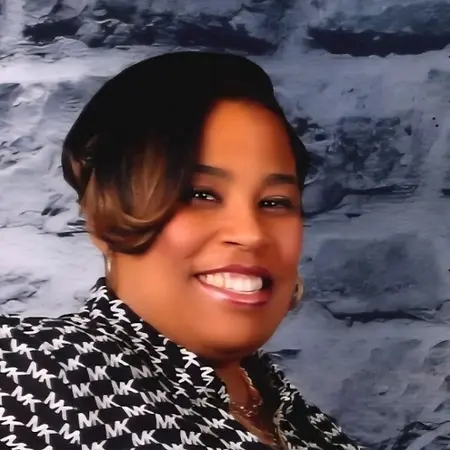
Her Story
About Joan
Joan Wall is a human services advocate and Assistant Director at Benchmark Human Services, where she oversees the Northwest Indiana division and manages multiple residential homes and community-based support programs for individuals with developmental disabilities. In her role, Joan supervises approximately 40 staff members and works closely with clients, families, guardians, and case managers to ensure that individuals receive the care, dignity, and support they need to thrive. She believes strongly in advocacy, daily living support, and helping people build the skills they need to participate fully in their communities. Joan’s career began in education, where she worked as a substitute teacher starting in 2005 before becoming a high school biology teacher. During her teaching career, she developed a passion for working with students with special needs, which eventually led her into the disability services field. After attending a job fair, Joan began working as a job developer helping individuals with developmental disabilities find employment opportunities. Over the past 13 years, she has steadily advanced through positions including program coordinator, residential coordinator, program director, and now lead program coordinator. Today, she manages a wide continuum of care, from individuals who require full assistance to those who simply need support with community outings and independent living skills such as cooking, cleaning, and shopping. Joan describes her work as more than a career—it is a calling. She centers her professional and personal life around humility, empathy, trustworthiness, forgiveness, and service to others. Joan earned her bachelor’s degree and recently completing her Master of Public Affairs degree at Indiana University Northwest, with a concentration in leadership and criminal justice in May 2025. She is also active in Sigma Gamma Rho Sorority, Inc. and has been a longtime member of Trinity Missionary Baptist Church. Joan has been recognized for her leadership through her company’s Rising Stars Manager Development Program and through participation in a statewide leadership academy with the Indiana Association of Rehabilitation Facilities (INARF).
Her Interview
Ten minutes with Joan
01What do you attribute your success to?
I credit my success to humility, dedication, and a genuine commitment to serving others. I make it a priority to treat both my staff and the individuals I support with dignity, respect, and empathy, while promoting a culture grounded in trust, honesty, and forgiveness. I’ve learned that effective communication, hands-on experience, and strong advocacy are key to creating real impact. Above all, the most rewarding part of my work is seeing those I serve succeed—I believe true success is measured by how we uplift others and make a meaningful difference in our community.
02What’s the best career advice you’ve ever received?
The best career advice I’ve ever received comes from the incredible women in my life—my late mother, Joyce, and my late aunt, Joan Hunter. They taught me the importance of encouragement, warmth, and perseverance, showing me how to lead with compassion while pursuing my goals. Their guidance inspires me every day to support others and be a positive influence in my career and community.
03What advice would you give to young women entering your industry?
I would say that to succeed in this field, you really need a strong passion for service and advocacy. These are the two key elements you must have, as advocating for the individuals you work with will be part of your daily routine within the broader community. It's also important to help educate others about the people we serve, showing that they are exceptional and that their disabilities don't define them. This work is more than just a job—it’s a calling. I’d encourage you to also be a role model, offering guidance and being mindful of your surroundings. You never know the impact you can have on someone who seeks your support.
04What are the biggest challenges or opportunities in your field right now?
The IDD field is grappling with several key challenges, including severe staffing shortages (with high turnover rates and low wages), inadequate Medicaid funding (which limits provider ability to raise wages and expand services), and increased regulatory burdens. These issues are further compounded by growing complexity in the needs of individuals with IDD, such as co-occurring mental health conditions, and the shift toward community-based care, which requires more staff and resources. The workforce crisis is causing long waitlists for services and impacting the quality of care.
To address these challenges, experts recommend higher wages for Direct Support Professionals (DSPs), increased Medicaid funding, streamlined regulations, and better training and career pathways for staff. Without these changes, the field risks continued strain and a decline in services for individuals with IDD.
05What values are most important to you in your work and personal life?
I’d say that humility, dignity, and respect are essential. In my role, I teach MANDT training, and we emphasize these values as key to how we show up at work and how we interact with others. I often remind my staff that while you might not always see these qualities in every situation, it’s a learning process, and growth takes time. Personally, I’m a big believer in humility, empathy, trustworthiness, and forgiveness. It’s important to maintain a forgiving spirit, and sometimes you need to step back and realize that it's not about you—it’s about how you can serve and help those in need.
Join Influential Women and start making an impact. Register now.