Her Story
About Joanie
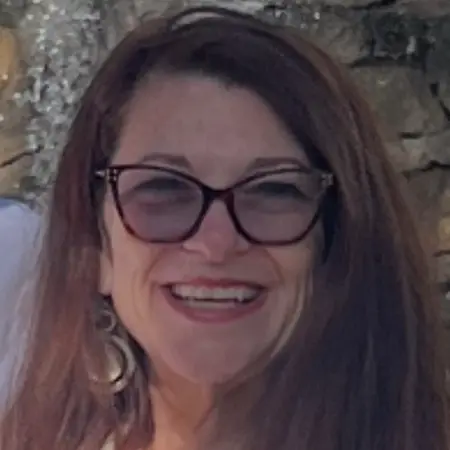
Joanie Brendle is a compassionate healthcare leader and Clinical Supervisor at ACG Hospice, where she oversees interdisciplinary teams delivering end-of-life care to patients and their families. With a strong foundation as a registered nurse and a master’s degree in gerontology, Joanie brings both clinical expertise and deep empathy to her work. Her career reflects a longstanding commitment to improving the quality of life for others, particularly older adults, through thoughtful, patient-centered care that honors dignity, comfort, and individual wishes.
Joanie’s journey into hospice care was unexpected but ultimately transformative. After initially pursuing a broader path in healthcare, she discovered her calling in hospice through an opportunity that aligned perfectly with her passion for helping others. Previously serving as a Medical Case Manager with Southeast Hospice, she worked closely with patients and families throughout their end-of-life journey, coordinating care, managing symptoms, and providing education and emotional support. She values the continuity hospice care offers, allowing her to build meaningful relationships not only with patients but also with their loved ones during some of life’s most significant moments.
In addition to her clinical work, Joanie brings extensive experience in healthcare quality improvement at the local, state, and federal levels. Her background in biology and nursing, combined with her certifications in case management, health coaching, and chronic conditions, enables her to approach care holistically. A graduate of Oklahoma State University and East Central University, she remains committed to staying informed on best practices in gerontology and hospice care. Driven by empathy and purpose, Joanie continues to lead with compassion, ensuring that both patients and families feel supported, understood, and cared for every step of the way.
Her Interview
Ten minutes with Joanie
01What do you attribute your success to?
I attribute my success to my deep empathy and compassion, which drive everything I do in hospice care. I've always just loved helping anybody do anything and helping them feel better. Having a master's in gerontology before I even got my RN gave me a strong foundation for working with older adults, which is what I've always loved. My extensive experience in quality improvement, working for both state and federal government healthcare programs, has strengthened my ability to make an impact at a systems level. What really makes hospice work for me is that, unlike ICU or floor nursing where you barely get to know patients, case management allows me to stay with patients for the rest of their life - and not just care for them, but for their whole family too. I love being able to help patients make the most of the time they have left, because it's not all just about the death, it's about making their remaining time meaningful. The ability to oversee a multidisciplinary team of RNs, aides, social workers, and chaplains, and to help keep people out of the emergency room by providing comprehensive care at home, has been essential to my effectiveness. Even though I never would have picked hospice on my own, a friend encouraged me to apply, and I discovered it was what I was made for - you either love it or you don't.
02What’s the best career advice you’ve ever received?
The best career advice I ever received came from a friend who was doing the hiring for a hospice position. She encouraged me to apply, recognizing that given my gerontology degree, my clinical expertise, and my deep sense of empathy and compassion, hospice management would be an ideal career path for me. That guidance aligned perfectly with my values, and I trusted her advice. I pursued the field with intention and commitment, and in doing so, I discovered not just a career, but a true calling. It's not anything I think I ever would have picked on my own, but it turned out to be what I was made for.
03What advice would you give to young women entering your industry?
I would tell young women entering hospice nursing to volunteer first - volunteer for a hospice while you're still in nursing school, because there's lots of volunteer opportunities available. That way, when you finish nursing school, you'll have some experience under your belt. Getting your foot in the door can be really tough, because hospice organizations generally want somebody that has some experience with hospice already. But you've got to get that experience somewhere, so volunteering or doing things like that just seems to make it easier to get into once you finish school. Beyond that, you have to understand that you either love this work or you don't, and it doesn't take too long to figure that out. It can be very stressful and emotionally demanding, so you need to be prepared for that reality. But if you have the empathy and compassion for it, and you're willing to put in the dedication and heart, you can build a deeply impactful and fulfilling career.
04What are the biggest challenges or opportunities in your field right now?
Some of the biggest challenges in hospice are that it can be very stressful work. We have patients with lots of complex needs - some are just resting and waiting to pass, but others may have a bunch of wounds and lots of medical needs that we manage at home. One of our main challenges is helping keep people out of the emergency room and out of the hospital, because we can do most everything at home. It can be quite the challenge to show families that we can take care of pretty much most all those things at home and that they don't need to go to the emergency room. Another major challenge is that the word 'hospice' is scary to people - they just hear the word and make assumptions. But we've had patients for over a year, and a lot of times patients actually get better and graduate from hospice. When we're visiting a couple or two or three times a week, we catch things before it becomes a hospitalization situation. A lot of our patients have had lots of hospitalizations over the last six months or year, but once we're in there regularly, checking on their medications and their intake and helping them with ways to improve, we see many of our patients get better. At the same time, there are meaningful opportunities in this role. Our hospice team - the RN, aide, social worker, and chaplain - can help patients with so much more than just medical care. Our social workers do amazing work, like tracking down estranged family members in other states to arrange final visits. It's just amazing what a hospice team can help a patient with - it's not just the care, it's also the emotional support and all of that for the families and for everyone.
05What values are most important to you in your work and personal life?
I'm very empathetic and compassionate - those values are central to everything I do, both personally and professionally. I've always just loved helping anybody do anything and helping them feel better. Family is incredibly important to me - I'm a new grandma with a one-year-old and a two-year-old, and spending time with my grandbabies helps me regenerate. My husband is the most supportive person on Earth - he can always tell the look in my eyes and just knows what to do and say. He's my home, he's my space. I'm grounded in my faith, which guides my decisions and interactions. I used to teach Sunday school for about five years, and I play the piano at church. Service to others is a core value - one of the big things I do is volunteer for a dog rescue. My husband and I foster dogs, and we've had as many as six in the house at a time. People ask how I can give them up, but when you find the family that's perfect for them and you know they're getting the best permanent home, you're kind of sad to see them go but you know it's right. I also love to garden, work with the birds, play music, sing, and go to concerts. Music in general is something I love and have passed down through my family. All of these things - the empathy, the family focus, the faith, the service, and finding ways to restore myself - are what keep me grounded and allow me to do the emotionally demanding work I do in hospice care.
Join Influential Women and start making an impact. Register now.