Her Story
About Jo Ann
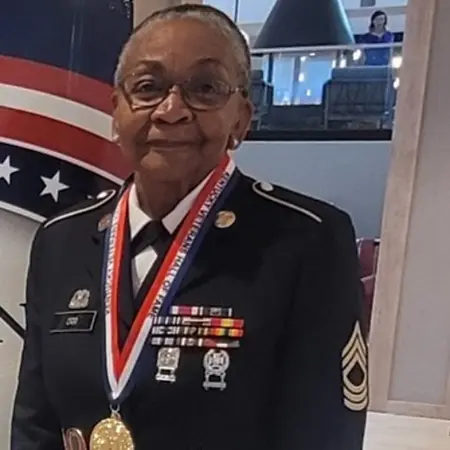
Jo Ann Orr is a retired U.S. Army Master Sergeant whose distinguished military career spanned 25 years of service before her retirement in 2000. As a logistics and quartermaster specialist, she managed multimillion-dollar inventories, supply operations, and support systems while serving in critical military operations, including Desert Storm and Desert Shield. Her military experience instilled a lifelong commitment to leadership, service, and advocacy that continues to define her work today.
Following her military career, Orr became a dedicated advocate for individuals and families affected by sickle cell disease after her son's diagnosis inspired her to take action. Through her leadership and continued service, from 2010 through 2023, as the Marketing and Fundraising Director for the Sickle Cell Association of Kentuckiana, she helped mobilize community and legislative support that contributed to the establishment of specialized sickle cell clinics in Kentucky, improving access to care for countless patients. Her efforts have made a lasting impact on public health and healthcare equity throughout the region. She still serves on the Advisory Board.
Today, Orr focuses her volunteer and advocacy work on issues affecting Veteran Women, seniors, and underserved communities. She serves with numerous civic and nonprofit organizations, mentors youth through the Youth In Action Network, hosts the monthly Sickle Cell Saturday radio program, and leads initiatives supporting homeless individuals, food security, and Veteran Women. Through the Thea Bowman Society, she also helps preserve African American history by researching and identifying historic slave cemeteries and honoring forgotten Civil War veterans.
A Kentucky Colonel and inductee into the U.S. Army Women's Foundation Hall of Fame, Orr has also been recognized as Kentucky Woman Veteran of the Year, a Kentucky Veteran Hall of Fame inductee, and a recipient of the Martin Luther King Jr. Adult Leadership Award. Guided by her belief in "doing what other people wouldn't do," she continues to champion dignity, opportunity, and support for those whose needs are too often overlooked.
Her Interview
Ten minutes with Jo Ann
01What do you attribute your success to?
I attribute much of my success and motivation to my personal experiences, particularly my son's diagnosis with sickle cell disease. That experience gave me a deeper understanding of the challenges families face when accessing healthcare and support services. It inspired me to advocate for improved care and to work toward establishing sickle cell clinics and expanding resources in Kentucky. The challenges my family faced strengthened my determination to create meaningful change for others.
02What’s the best career advice you’ve ever received?
Never give up on an endeavor before you have given it your best. Others can not determine your goals or successes.
03What advice would you give to young women entering your industry?
My advice to young women entering this field is to be passionate about serving others and to never underestimate the impact of advocacy. As an Army veteran, I am deeply committed to ensuring that veterans receive the rights, benefits, and support they have earned through their service. I encourage young women to be confident in their voices, stay persistent when facing challenges, and remain focused on making a difference in their communities. Meaningful change often comes from those who are willing to speak up for others and work tirelessly to address unmet needs.
04What are the biggest challenges or opportunities in your field right now?
One of the biggest challenges is the lack of services specifically designed for Veteran Women in Kentucky. There is a significant need for transitional housing, senior living facilities, and shelters that address the unique needs of women veterans. At the same time, we are seeing increased visibility of homeless women veterans, which presents an opportunity to develop targeted programs and support systems. Another challenge is serving an aging veteran population, including individuals who served as far back as World War II and the Korean War, while also addressing rising senior suicide rates. These issues highlight the need for innovative resources, partnerships, and advocacy efforts.
05What values are most important to you in your work and personal life?
The values that guide me most are service, advocacy, persistence, and compassion. I am committed to supporting vulnerable populations, including Veteran Women, seniors, and individuals living with sickle cell disease. I believe in doing the work that is often overlooked but deeply needed, even when it is challenging. Ensuring that people are treated with dignity and have access to the care and resources they deserve is at the heart of both my professional and personal life.
Join Influential Women and start making an impact. Register now.