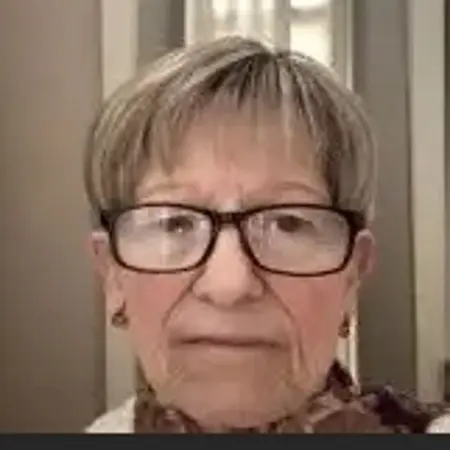
Influential Woman · Risk Management
Joanne M Bronish
CEO and Senior Risk Consultant, Proactive Risk Solutions LLC
Strongsville, OH 44149
Her Story
About Joanne
Joanne Bronish is the founder and CEO of Proactive Risk Solutions, LLC, a firm dedicated to transforming how organizations approach quality, performance, and operational risk. With more than two decades of experience in risk management, she specializes in aligning key performance indicators with operational friction to create proactive, real-time risk monitoring systems. Her work focuses on helping organizations move away from reactive risk management programs toward anticipatory strategies that improve quality, reduce internal costs, and enhance profitability. Joanne’s career began at the Federal Reserve Bank of Cleveland, where she worked in Economic Research, accounting, operational supervision, and project management, implementing frameworks like COSO and developing a metric system pilot. She later joined Key Bank NA as Vice President of Risk Management, where she developed operational risk frameworks based on Basel Accord requirements, designed risk assessment processes, and participated in GRC system implementation. These experiences laid the foundation for her expertise in linking operational risk, quality management, and business strategy. A graduate of Case Western Reserve University’s Weatherhead School of Management with an MBA, Joanne also holds an undergraduate degree in Economics from Cleveland State University. She is the author of Risk Management and Key Performance Indicators and frequently shares her insights through publications, speaking engagements, and free educational Zoom presentations, helping organizations understand that sustainable profitability relies on proactive risk management, quality culture, and strategic KPI alignment.
Her Interview
Ten minutes with Joanne
01What do you attribute your success to?
I would say I am a good researcher and an analytical person. Those skills have gotten me far because I'm always looking for an improved method or approach, looking for an answer, looking for more information. I don't let something go until I find the answer. I'm always looking to improve the process, and not only that, but always looking to learn something new. I'm a lifelong learner. Just like with AI, I've been trying to really get a handle on it, not from the standpoint that I'm going to be working on the tech side, but understanding just the stages of development, potential uses, and what some of the potential risks are. The other attribute to success especially in risk management is the ability to be a good listener and not jumping to solutions until you understand the scope of the issue. This involves being able to assess conversations and formulate the right questions to gain a true insight into the issue.
02What’s the best career advice you’ve ever received?
The best advise I have received was from a superior of mine. When I approached them to discuss a problem I was having the response was "don't come to me with a problem unless you also bring possible solutions"!
03What advice would you give to young women entering your industry?
I really think if you want to do risk management, you have to be able to ask the right questions. Learning to listen and learning to analyze what you're hearing are probably the two biggest things that people have to learn. It's not something that you can be taught in school. I always say you either have it or you don't. Anybody can pick up my book and say, okay, now I know what risk management is, I know all the components, I know the rating scale and methodology. I made the comment early on that those are all based on what I call traditional risk management, and in today's world, traditional risk management just doesn't fly. It's not immediate and flexible enough in a fast paced business environment, and it's become nothing more than a rubber stamp program. This approach has to be replaced with something that's more dynamic and more reasonable Something that people can really wrap their head around so that it becomes part of the way you think, not just something on a piece of paper that somebody's asking you. I think being flexible, analytical, and adaptable are skills required not only for risk management but in the business environment of today. .
04What are the biggest challenges or opportunities in your field right now?
People try to assume that risk management is a methodology that you can learn. You can learn, yes, what is the risk, what is the control, how do you test, all of these things. The real challenge is that traditional risk management in today's fast paced business world just doesn't fly. It's not immediate or flexible enough, and it's become nothing more than a rubber stamp program. These traditional programs are outdated. They rely primarily on audits to identify when there is a control failure or new issue. This reactive methodology would enable you to have an error in place for six, seven, eight months until audit comes and finds it, or your customers satisfaction drops due to poor products/services. The biggest opportunity is replacing these with something that's more dynamic and more reasonable, something that people can really wrap their head around so that it becomes part of the way you think, not just something on a piece of paper. That's why I created a program that's more proactive, aligning operational frictions or risks with the proper key performance indicators. Managements gets dashboards on a regular basis so why not align KPIs to risks and create the ability for management to identify issues and begin solutions on a more immediate basis. The key to this is ensuring that the KPIs answer the proper question related to the potential risk. This concept was then linked to quality management, internal tax rate and ultimately an organizations profitability. By identifying these relationships, the thought of risk now becomes more an exercise in operational management and overall organization quality.
05What values are most important to you in your work and personal life?
Honesty, respect, and being fair would be the values that come to mind first. Even when I was a supervisor, those were the things I knew were most important. If you treat people fairly, if you tell them the truth, if you respect them, and you can listen to them and their point of view, those are the important things.
Join Influential Women and start making an impact. Register now.