Her Story
About Jonita
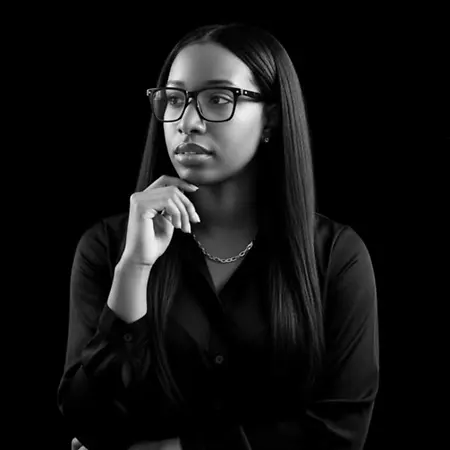
Jonita Ingram Coley is a seasoned Executive Assistant and strategic business partner with more than 15 years of experience supporting C-suite and senior leadership across global technology and healthcare organizations. At ServiceNow, she currently partners with leadership across Observability, Operations Data Platform, and Cloud Capacity Engineering — bringing a sharp ability to streamline executive operations, manage complex global calendars, and drive initiatives that deliver real impact.
Jonita is recognized for her talent in aligning cross-functional stakeholders, orchestrating large-scale events, and ensuring business priorities are executed with precision in fast-paced, distributed environments. She has led the planning and delivery of executive offsites, quarterly business reviews, and global team engagements, while serving as a critical communication bridge between leadership and key departments including HR, Finance, and Recruiting.
A forward-thinking professional, Jonita actively embraces emerging technologies — including generative AI and advanced digital tools — to modernize workflows and elevate operational efficiency. Her proactive mindset, combined with exceptional problem-solving, communication, and organizational skills, empowers leadership teams to operate at scale and stay focused on what matters most.
Jonita's career story is one of resilience, adaptability, and an unwavering commitment to growth. Her journey from healthcare operations to executive support in the technology sector reflects her ability to evolve and excel across industries. Grounded in a lifelong passion for justice and service, she earned an Associate degree in Criminal Justice from the University of Phoenix — a foundation that continues to inform her integrity-driven approach to everything she does.
Now setting her sights on the next chapter, Jonita is building a solid foundation in project management through hands-on experience with ServiceNow's Project Portfolio Management (PPM) platform, alongside ongoing certifications and coursework in project management and office administration. She is intentionally and confidently positioning herself to transition into a project management role within the technology industry — driven by a passion for operational excellence and a vision for what comes next.
Her Interview
Ten minutes with Jonita
01What do you attribute your success to?
My success is rooted in the love of my family and the incredible people I've had the privilege of working alongside — mentors and supervisors who recognized my potential even before I recognized it in myself. Early in my career, I wasn't always certain of the path ahead, but watching colleagues rise through the ranks lit a fire in me. It planted a simple but powerful belief: if they can get there, so can I.
A pivotal moment came when a Senior EA saw something in me, took a chance, and referred me for a permanent EA position within this company. That single act of belief changed not just my career, but my life and my family's life. I will be forever grateful for her generosity and trust.
Later, the leader who brought me into Global Cloud Operations sat down with me for a growth conversation that shifted my entire perspective. He challenged me to see beyond the EA role and opened doors within his department — offering opportunities to explore, grow, and pursue courses that expanded my skill set. That investment in me changed everything. My current manager continues to be a cornerstone of my development. He consistently reminds me that I am capable of more, encourages me to stay committed to earning my certification, and has pledged to help me advance further in my career. His steady belief keeps me focused and driven.
I also want to honor my cousin/ sister, whose unwavering support has meant the world to me throughout my life and this journey. Her words have always been simple and direct: *don't try, just do it.* You can be whatever you want to be and once you are focused you can do it. When you're deep in the work, it's easy to lose sight of how far you've come and she has always reminded me of that— she has always been the voice that reflects it back to me.
The belief others have placed in me has pushed me to want more, do more, and become more. That kind of support doesn't just shape a career — it shapes who you are.
02What’s the best career advice you’ve ever received?
The best career advice I've ever received is simple but transformative: don't try, just do it you are good at whatever you do. Those words came from cousion, one of my greatest supporters. She has always had a way of seeing things in me that I couldn't always see in myself — consistently reminding me that I am capable, that I belong, and that if others can achieve it, so can I. What made it land differently was that she wouldn't let me off the hook with "I'll try." She'd stop me right there and say you can do it I dont think you understand. That shift in mindset — from hesitation to intention and she has been one of the most powerful forces in my growth.
The other piece of advice that truly changed my trajectory came from the leader who hired me into my current role and said plainly: you can be so much more than an executive assistant. Those words opened my eyes. That pushed me to look beyond the boundaries of my title and explore the possibilities right in front of me — opportunities I hadn't allowed myself to consider before. Together, these two pieces of advice didn't just guide my career. They challenged me to stop playing small and start stepping fully into who I'm capable of becoming.
03What advice would you give to young women entering your industry?
One of the most essential qualities for thriving in this role is mental resilience. Executive support is a fast-paced, ever-changing profession — no two days look the same, and the ability to adapt without losing your footing is everything. A positive attitude goes a long way, and knowing when to step back and reset is just as important as pushing forward. At the end of the day, the work matters. You are genuinely making a difference for the people you support, and keeping that purpose front of mind helps you stay grounded.
For those supporting global teams, the complexity only deepens. Managing leaders across multiple time zones — whether in the UK, on the West Coast, or locally — means your workday rarely has clean edges. There are Saturdays spent quietly handling logistics to make sure Monday runs without a hitch. There are moments that go unnoticed and moments that are celebrated. You learn to take the good with the bad, because both are part of the job.
What makes this career uniquely rewarding, though, is how much it teaches you. Transitioning from healthcare into the technology industry was a significant leap — and an eye-opening one. The learning curve is real, but so is the growth. Staying curious, keeping your eyes open, and embracing the knowledge being offered around you can take you further than you expect.
It is worth acknowledging that women in technology still face an uphill road. The industry remains heavily male-dominated, and the barriers are real. But every step forward is meaningful. Pursuing project management — building that expertise, earning that credential — is not a small thing. It is progress. It is an accomplishment. And in a space where women are still carving out their rightful place, every milestone claimed is a statement worth making.
04What values are most important to you in your work and personal life?
Work great leadership begins with being a great person. It sounds simple, but it is the foundation everything else is built on. Kindness is not a soft skill — it is a leadership strategy. The way you treat people shapes the culture around you, and if you want to be surrounded by people who show up with care and commitment, you have to model that first.
Equally important is grace. People make mistakes — all people, at every level. The ability to look at someone in their worst moment and still recognize their humanity is what separates good leaders from great ones. Give people second chances. Lead with empathy, because you rarely know the full weight of what someone else is carrying.
But kindness alone is not enough. Strong leadership also demands honesty, accountability, and the courage to trust a process even when the outcome isn't yet visible. You have to be willing to take ownership — of your decisions, your team, and your results. And perhaps most critically, you have to communicate with clarity. People cannot rise to expectations they don't fully understand. Clear direction, honest feedback, and open communication at every level are what allow individuals and teams to grow and move forward.
These lessons were shaped early, during a season of my career that taught me more about leadership than I ever anticipated. As a training site manager for housekeeping staff at a hospital, I watched firsthand how easily people in service roles are overlooked. Doctors and nurses would walk past without a second glance — but those were the men and women keeping that facility clean and safe enough for everyone else to do their jobs. They were people with feelings, with dignity, with purpose. When I stepped into that management role, I made it my mission to not only train them in the technical work, but to prepare them for the human side of it — to teach them to put a shell on their back, hold their heads high, and remember that their work carried a bigger purpose than most people gave them credit for.
One moment from that time has never left me. A young man came in to interview — covered in tattoos, the kind of appearance that made my supervisor hesitant. But I saw something in him. I thought, that could be my son one day. I advocated for him, helped him get the job, and he went on to work there for over ten years. He used that stability to move his family out of the projects and build a different kind of life. Years later, he transported my grandmother through that same hospital and told my family that if it hadn't been for me giving him a chance, he wouldn't have known what direction to take his life.
That is the power of an opportunity. You never know what one open door can do for a person. You cannot judge someone by how they look, where they come from, or what they've been through. Sometimes all it takes is one person willing to say — I see you, I believe in you, here is your chance. Just give people opportunities. That alone can change everything.
Join Influential Women and start making an impact. Register now.