Influential Woman · Fashion
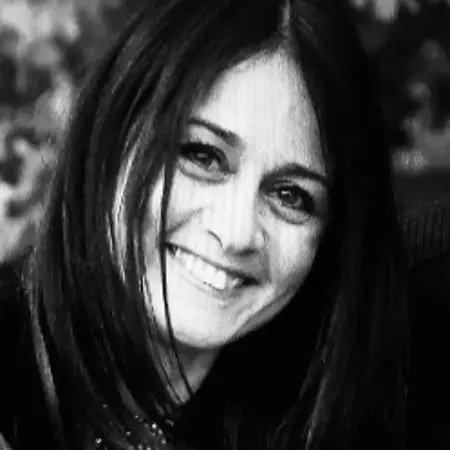
Joyce Rather
Founder/ Vice President Production & Development, Rather Luxe Consulting
Port Washington, NY 11050
Her Story
About Joyce
Joyce Resca-Rather is a production, planning, and development executive currently serving as Vice President of Production & Development at Madewell. In this role, she leads global sourcing, development, and production across a business exceeding $800M, overseeing apparel, denim, leather goods, footwear, and accessories. She is known for blending creative vision with operational strategy, elevating product quality, improving margins, and streamlining supply chain efficiency while guiding cross-functional teams across global markets.
With more than 25 years of experience in the fashion industry, Joyce has held senior leadership roles at major global brands including Tapestry (Coach), Proenza Schouler, Nili Lotan New York, and J.Crew. Her career has included building brands from the ground up, scaling multimillion-dollar businesses, and restructuring global supply chains across Europe and Asia. She has also worked with LVMH-affiliated brands such as Donna Karan, gaining deep expertise in luxury production, sourcing, and brand transformation.
In addition to her corporate leadership, Joyce is the founder of Rather Luxe Consulting, where she advises fashion and luxury brands on strategy, operations, costing, and supply chain optimization. A graduate of the Fashion Institute of Technology, she brings a philosophy centered on cultural transformation, team empowerment, and operational excellence. She is widely recognized for her ability to build high-performing global teams, drive sustainable growth, and help brands translate creative vision into scalable, profitable reality.
Her Interview
Ten minutes with Joyce
01What do you attribute your success to?
I attribute my success to the people that I work with. It's always about the people, my teams, how they've worked with me and alongside me. I could not do any of what I do, or what I've accomplished, or have gotten to this point without the most amazing teams. They are always the most important piece of me. You cannot lose sight of that, ever. They get you where you're going. I'm a builder, I'm a people person, and I kind of know how to sew it all together. When I make a decision, I'm all in. That's what you get. You're always gonna get all of me. I don't know how to be any other way. It's just how I've been raised in my life, and I've always watched my parents do things, and that's who I became.
02What’s the best career advice you’ve ever received?
The best career advice I ever received came from my mentor John Paolicelli, my former CFO at Proenza Schouler. He was always having my back, and if he saw me getting a little tense or taking things too seriously, he would pull me back and say, we're making clothes, we're not curing cancer. It's okay to breathe, take a beat, go for a walk. He gave me that permission, which I never thought I had. I came from such hardcore backgrounds where you just couldn't show that side, you can't show any sign of weakness or give empathy, and he had a different approach. He told me it's okay to be empathetic, it's okay to acknowledge that someone's having a moment. Just get them right back on the page and walk them through it. Don't tell them what to do, but pull it out of them. He probably molded me into this empathetic leader I am today. I didn't come into the role that way, I can promise you. I can be hard to work with. But when you get to that point where you are someone who has to set an example, that was a big unlock for me. Listen more, talk less, observe, and make sure if you say let me come back to you, that you actually get back to that person. If you say something, mean it and do it. It has always served me well.
03What advice would you give to young women entering your industry?
Get out there, talk to anyone and everyone, have your LinkedIn profile from the moment you enter college, and build on it. Be part of the community, volunteer, get into clubs, try everything once so you can really learn quickly what you like, what you don't like, and the type of people you want to be around. Who you surround yourself with is who you become. If you're around people that are entrepreneurial in mindset or do things with integrity, that is who you become. I always try to surround myself with people that knew more than me. I'm not technical, I'm not a pattern maker, I can't sew anything, I never pretend to be, so I always made sure that I always had people around me that were better than me and faster in thinking, and always pulled them in to do the hard things that I just was not strong at. I know my strengths and I know where I need to ask for help, and I think that's something not everyone can say out loud. There's nothing wrong with that. You should always have the strongest and the best surrounding you. And if they surpass you, then you did your job. You have to just be open-minded and not think that everything's coming to you today or it's owed to you. You have to earn it along the way, and make sure that you're really making yourself well-rounded with your interests and what you get involved in. But getting involved is step one.
04What are the biggest challenges or opportunities in your field right now?
I think people have to embrace AI and learn as much as they can so that it doesn't creep up on you. Don't be afraid of it, regardless of your age. And I don't mean just ChatGPT, I mean there's Gemini, there's Coursera, there's just so many things out there. Go to seminars, or if you don't have time to go to something, get on and do the ones that are online. There's tons of things on LinkedIn and BOF. Be exposed to it and understand it. Also, learn something new. I would send my teams doing footwear and handbags to a denim wash course. You don't have to learn it to the point of becoming an engineer, but understanding processes of different categories just opens your mind of how you do things. I always tell people to try to just get out there and take those kinds of things. That really helped me. I think in today's world, that's really important because those tangible things and technical things, that's gonna be where you'll have strength. Those specified areas like footwear and handbags, the people that are more technical and can understand engineering of product will be the most successful, because that's something that AI can't take from them. It's something you are learning and attached to a factory that's sewing and doing all those things. If you understand the technical engineering aspect, it's almost like people today, no one wants to be a plumber and an electrician, except those are the jobs that are going to still be standing when AI's taking over all these other areas in industry.
05What values are most important to you in your work and personal life?
Having integrity is first and foremost, non-negotiable. Being truthful at all times, even when it's uncomfortable. I believe in being direct and being a straight shooter. Nobody needs something sugar-coated that they don't understand later. Be honest. And be respectful. I think people come into things and just assume everything is status quo and you treat everyone the same, but I think being respectful, you have to earn it. You don't just walk in and everyone has to respect you. You can't command it. Those days are long gone. So that's really important to me. And of course, family, first and foremost. When my kids call, when I see them, and they know if I can answer the call, I will. And 9 times out of 10, if I see their name come across my phone, I always pick it up quickly, and I'll say I'm in a meeting, can I call you back? Are you okay? And if they're good, then they know I'm gonna call them right back. They understand that your career is important and it's part of your life.
Join Influential Women and start making an impact. Register now.