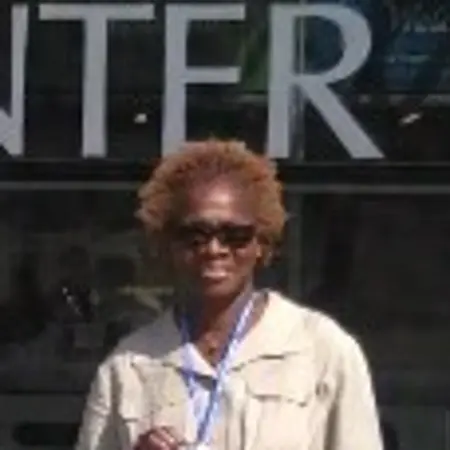
Her Story
About Juanita
I am the Curriculum Chair of the Fashion Design Department at SUNY Westchester Community College, where I've been since 2019, and I also teach as a Fashion Design Professor at the Fashion Institute of Technology (FIT). My expertise spans the entire spectrum of fashion - I teach pattern making, illustration, fashion history, sewing, basically the whole gamut of fashion, everything. I earned my Bachelor's degree in Economics in 1983, and then went to fashion school in Paris at the Paris American Academy, where I received my Master's in Fashion Design. Beyond teaching, I'm deeply involved in empowering women through CRAFT Change Haiti, a foundation where we have a factory that creates jobs for women. I go there to train them how to make things through upcycling plastic to make bags, helping clean the environment in Haiti. I also volunteer at Loris Place, a women's shelter, where I go and help sew for them.
Her Interview
Ten minutes with Juanita
01What do you attribute your success to?
I attribute my success to passion, and even more than passion, I would have to say obsession. I'm in it for what it is, not for the money. As long as I'm doing it, regardless whether I'm making $1 or 50 cents, it doesn't matter - I'm still going to do it. It's not about the money for me. I'm completely dedicated to fashion and what I do, and that unwavering commitment is what drives everything I accomplish.
02What’s the best career advice you’ve ever received?
The best career advice I ever received was from one of my professors when I was in fashion school in Paris. He told me that to truly learn something, especially when it comes to construction, you need to take something and undo it - take it apart and see how it goes down. You have to constantly be analyzing how things are made, whether you're physically taking something apart, looking at what somebody is wearing, or examining what you see on TV. People sometimes think I'm looking at them too much, but it's usually because I'm examining what they're wearing. That's how you learn, because you will never know everything - there's always different ways of making something. By continuously examining how it was all made, you can pass it on and be able to teach it also.
03What advice would you give to young women entering your industry?
The best advice I would give to anyone, especially someone in my field, is to take their hobby and turn it into their profession. For me, when I was little, my hobby was sewing. When you take your hobby and turn it into your profession, you will never feel like you're working. You can do it for free, you can volunteer doing it - that's the first thing: turn your hobby into your profession. I also always advise my students that they need to know fashion design from A to Z. By them knowing it from A to Z, they don't have to depend on getting a job - they can open their own business, they can do their own thing. This is especially important because the fashion industry has changed a lot, with much of the work being sent overseas, making opportunities tougher for students after they graduate.
04What are the biggest challenges or opportunities in your field right now?
The biggest challenge in fashion design right now, especially in the United States and specifically in New York, is that the industry has changed dramatically. A lot of work is being sent overseas, and compared to the 1980s when the fashion industry was really booming in the United States, the opportunities for fashion design students are now kind of tough. After they graduate, it's difficult for them to find the positions that they want. That's why I always advise them to know fashion design from A to Z, so they don't have to depend on getting a job - they can open their own business and do their own thing. On the opportunity side, there's more opportunity in what's called technical design and CAD designer roles, which involve the computerized side - computerized pattern making and all the other parts that have to do with the computer. However, most fashion design students don't really want to be doing that because it involves pattern making, and most fashion design students do not like pattern making.
05What values are most important to you in your work and personal life?
In my work, the most important value is the way I treat my students. I'm more of a classmate than just a professor or teacher. I always look at myself as a classmate in the sense that I am always willing to help them. It's not like it's from 9 to 5 and then it's over - they can always come to me, whatever help they need. I can stay there and help them until they really understand what needs to be done. I want to make them feel that they can always come to me without being pushed away. It's more the feeling of a classmate that you can see and talk to, not only about what I'm teaching them, but also about all the other stuff. When it comes to my family, the most important values are the love we share. Regardless of whether they can sometimes get you upset or whatever, it's about keeping that love and continuing to share it.
Join Influential Women and start making an impact. Register now.