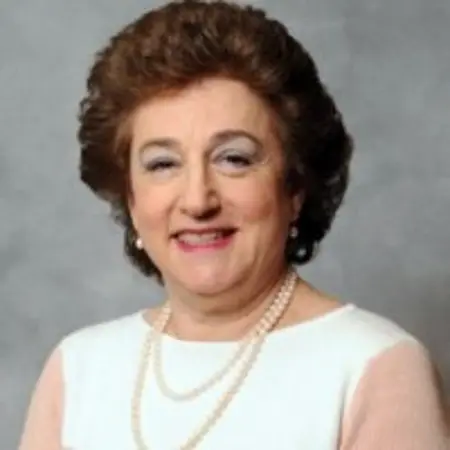
Influential Woman · Mental Health and Wellness
Judith A. Swack Ph.D.
President, Healing From the Body Level Up, Inc.
Needham, MA 02492
Her Story
About Judith
Judith A. Swack, Ph.D., began her professional journey as a biochemist and immunologist at the National Institutes of Health, where she excelled in scientific research. Her path took a transformative turn when she discovered neuro-linguistic programming (NLP) through a self-help workshop, realizing that much of her personal challenges were rooted in the unconscious mind. This discovery sparked her passion for mind-body healing, and she began working with clients, initially as a side pursuit alongside her scientific career.
Over time, Judith’s practice evolved as she moved to Massachusetts and expanded her focus to treating phobias and trauma, quickly gaining recognition for her effective, rapid methods. She developed her signature Healing from the Body Level Up (HBLU) methodology, which integrates her scientific expertise with techniques from energy psychology, hypnosis, NLP, and Reiki. Her approach emphasizes that trauma and emotional obstacles can be healed in hours rather than years, a philosophy she detailed in her book Clear Trauma Now.
Today, Judith leads Healing from the Body Level Up, Inc., offering individual sessions globally via Zoom and in-person in Needham, MA, and conducting trainings nationally and internationally. She is a recognized leader in Energy Psychology, with numerous publications in scientific and professional journals, and has shared her work on national television and at international conferences. With over four decades of experience, Judith continues to empower clients worldwide to overcome trauma, unlock potential, and achieve profound personal transformation.
Her Interview
Ten minutes with Judith
01What do you attribute your success to?
I believe, as in science, nobody works in a vacuum, and nobody gets where they are by themselves. In science, you get a PhD and work in a laboratory with an advisor who is your faculty advisor and mentor, helping you learn how to do science, create research, write grants, and run a lab. You have a PhD committee that looks over your work and makes suggestions. Then you go to postdoctoral training in somebody else's lab and learn how to write your own grants and be at the top of your field. I did the same thing with my healing work. When I moved to Boston, I found a clinical psychologist who was an NLP trainer, and I asked if he would be my case supervisor and mentor. I met with him every week and went over my cases, learning how to do therapy and work with people, not just technique, but the issues that come up and the larger frame. Then I had another clinical psychologist who did case supervision and helped me grow and expand the work and learn about other psychological principles I wasn't familiar with. I worked with him for many years. Then I had another mentor who was also a clinical psychologist, a very famous man, and we met every week for case supervision. For many, many years, I always had a case supervisor who was a clinician who would help me go over my cases and answer questions. Now I have a colleague who is a licensed marriage and family therapist and licensed clinical social worker in the front office, and when I have an issue or question I'm not sure of, I meet with him for case supervision. I do case supervision with him, and he does case supervision with me. I have several colleagues, so periodically, if I run into an issue that I'm not too sure about, I can call up several of my colleagues and have a session with them where they give case supervision. I do not work in a vacuum. I'm always learning from other professionals, and I go to conferences, I present at conferences, but I attend conferences every year, one or two or three, where I learn from other people and then incorporate what I've learned into my practice as it continues to grow and get better. I work in collaboration with others in order to support me in the work that I do and help it evolve.
02What’s the best career advice you’ve ever received?
Nobody works in a vacuum. In science, you need mentors, advisors, and committees to guide you. You get trained by a mentor in your PhD program, then go to postdoctoral training where you learn from another mentor. I applied this same principle to my healing work. I always had case supervisors and mentors who were clinical psychologists to help me go over my cases, answer questions, and help me grow and expand the work. Even now, I have colleagues I can turn to for case supervision when I have questions. I also attend conferences every year to learn from other professionals and incorporate what I've learned into my practice. The key is having peer review and working in collaboration with others to support you in your work and help it evolve.
03What advice would you give to young women entering your industry?
I would say take my training. By taking my training, I can teach you how to cure trauma. I have a 5-day course where you can learn how to clear trauma, cure PTSD in one session, and even cure brain damage in one session. But these are for people who are called to be healers. If you want to be a healer, come take my training. Now, it depends also in terms of their business. I have a PhD and years of postdoctoral training in human immunology, so I have credentials that people respect. I have people that I've trained who are very good at the healing work but have high school diplomas and haven't graduated college, and the question is how are they going to position themselves with credibility. For them, it's gotta be you start a practice with your friends, treat your friends, and then your friends, through word of mouth, recommend their friends. Get a website and advertise what you do, and people start recurring. I also recommended that one gifted woman who just has a high school degree give presentations at Health Expos. You can get a booth and advertise, treat people at your booth, and start doing that. She sold my book at her booth, so she made some money selling the book and started treating people. But I also have people who are already established therapists, licensed mental health counselors, social workers, clinical psychologists, and psychiatrists who train with me. For them, the challenge isn't how to get clients because they have them. The challenge is how to transition people who come to them through insurance referrals, who are expecting talk therapy, because this is not talk therapy, this is mind-body healing. It's a completely different therapy. So you have different types of challenges depending on where you're starting from.
04What are the biggest challenges or opportunities in your field right now?
The challenges depend on where you are in your career. For people who are very good at the healing work but don't have traditional credentials like college degrees, the challenge is how to position themselves with credibility. They need to start by treating friends, building word of mouth, getting a website, and presenting at health expos to build their practice. For people who are already established therapists with licenses as mental health counselors, social workers, clinical psychologists, or psychiatrists, the challenge isn't how to get clients because they already have them. Their challenge is how to transition people who come to them through insurance referrals and are expecting talk therapy, because this is not talk therapy, this is mind-body healing. It's a completely different therapy. So the challenge for established therapist colleagues is how to transition their clients from talk therapy expectations into doing real healing work. But it's very rewarding to heal people.
05What values are most important to you in your work and personal life?
For my personal life, family is most important. I did get happily married, and it worked. I've been married 35, 36 years with no ups, no downs, just nice and smooth, enjoying each other's company. We had a daughter who is lovely, got married, and is very successful in life, and that gives me a lot of pleasure. To keep my life in balance, I swim, and I have a rule for every relationship that my husband and I go on a date every week. It's absolutely a rule. We do something together. My sister and brother live in town, so we'll socialize with them periodically. My husband has a very close group of fraternity brothers who graduated college with him who are in the local area, and we'll get together with them and do activities. We do fun social things on weekends and go on vacation to Hawaii in the winter. I'm a big sun-on-the-beach type person who likes to stand up and walk in the ocean. In the summertime here in Massachusetts, we go to Cape Cod. The Cape Cod beach that we like is an hour and 15 minutes from our house, so every Sunday in the summer, if it's not thunderstorming and it's above 75 degrees, we go to the Cape for the day. We sit on the beach, I walk in the water, and I met another woman who liked to walk the beach who lives down there, so we hang out. Then my husband Terry and I go for dinner overlooking the sunset and drive home. For work, healing people and community are very important. I work in collaboration with others, always learning from other professionals through case supervision, peer review, and attending conferences.
Join Influential Women and start making an impact. Register now.