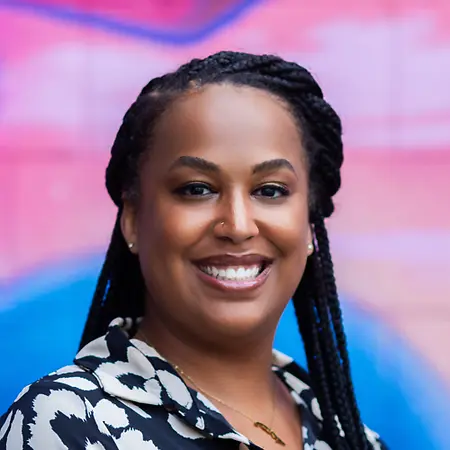
Her Story
About Julia
I discovered my passion for teaching during my college years at Temple University. While I had always enjoyed working with children, taking early childhood education and child development classes in high school and continuing with educational electives in college, it was during my sophomore year that everything clicked. A representative from the AVID program came to speak to one of my classes, and I connected with her afterward. I had been a Boys and Girls Club mentor before that, and I became an AVID tutor my sophomore year and just fell in love with it. I was able to build relationships with the schools I was working at and became a junior teacher part-time. By my junior year, I realized I really wanted to pursue teaching full-time. My parents were supportive but practical, noting that I had spent three years studying television and media production, and it would be expensive to start from scratch. They helped me investigate alternative teaching pathways to get my certification. My cousin, a lifelong educator, suggested Teach for America, and I was accepted into the 2016 Corps, which is when I started my full-time teaching career. I spent about 6 years at my placement school, Oxon Hill Middle School in Prince George's County, teaching for about 7 years total in PG County before transitioning into leadership. In year 7, I became a full out-of-classroom leader. I served as an assistant principal for another school in DC before moving into my current role as Director of Talent for a charter school, where I'm now going into year four. In this role, I focus on recruitment and retention, navigating the changing education landscape and working to attract people to the profession while ensuring they get what they need to invest in it long-term. I've always taught in the southern end of Prince George's County and southeast DC, specifically Ward 7 and 8, serving students in communities that face unique challenges but also possess amazing beauty.
Her Interview
Ten minutes with Julia
01What’s the best career advice you’ve ever received?
The best career advice I've ever received is to be my authentic self and to never compromise who I am. As a Black woman of color, especially with high energy in the workspace, that can be taken in a lot of ways. I've had leaders who have allowed me to be myself and pushed me to be my authentic self, and I've actually felt like by doing that, I've freed up sometimes my other peers and colleagues to be themselves. An authentic workplace is a workplace where people can sustain and be. The caveat to that is knowing when to draw the line in the sand. My very first year teaching, my mentor teacher told me something that really stuck with me: if you leave tomorrow, they're gonna replace you the next day. So remember that when you think about giving 100 percent. You should give 100 percent, but there's gonna be a day where you probably have to give 75 to self-preserve yourself, and that's okay. Because if you burn out and you can no longer be here for whatever reason, they're gonna find somebody else to replace you. That's the nature of this work, that's the nature of the game, that's life. She told me I have to learn to find my hills to die on. There are gonna be hills that you're going to want to die on, but you can't die on every hill, because eventually you're just gonna die out. And then what? That's been really impactful for me, especially as a leader, because that capacity starts to get real thin, and the boundaries start to get very blurry. I've tried to really hone into that as I've gone into my later years, especially in senior leadership.
02What advice would you give to young women entering your industry?
I would tell young women entering education: don't be too hard on yourself. You're going to make mistakes, and those mistakes will color your character and your story, especially from how you learn from them and move forward. I would also tell them to not be pressured into being the smartest person in the room. I think there's this idea that women, especially in education, need all these degrees, and they're great, but do not be pressured to feel like you have to be the smartest person in the room on paper. Be the best person you are at what you're doing. And learn to say no early. Those would be my three things. In the context of the world in which we are, being a woman is a rough thing, and they are attacking us left and right. So it's important to protect yourself while still being excellent at what you do.
03What are the biggest challenges or opportunities in your field right now?
I think the biggest challenge is that the education landscape is changing, and teaching isn't the sexiest job anymore. In my role as director of talent over recruitment and retention, it's really become a focus of how do I attract people to this profession and still share the importance of this work, but then also how do I keep people here and make sure that they're getting what they need to feel like this is something that they can invest in long-term. The challenge is continuing to navigate the changing digital landscape and all of that. But the joys and the things that are really working is that this younger generation, Gen Z, has found a real commitment to mission-driven work. I'm actually finding that we're able to tap into a new set of individuals who are looking to make an impact and are looking to be more boots on the ground and feel and experience things in a different way, which has allowed us to reinvigorate. It comes with a learning curve because attracting them comes differently. The marketing has to look different, the sale has to look different. They don't necessarily care about longevity in the same way, but what will keep them there is if they have certain things. That's been the joy and the challenge of navigating how to capitalize on this new group of individuals who are looking for mission-driven work, but we can't sell to them in the same way that we have versus my generation and millennials. My Gen Z staff are very different in their needs, their wants, and what moves them, and they've pushed me in that way of trying to figure out and navigate those kinds of things.
04What values are most important to you in your work and personal life?
The baseline is that integrity is really big for me. When you're dealing with children, you have to have high integrity for a lot of reasons. Transparency is also crucial. And I would say empathy has become incredibly important. I teach in the southern end of Prince George's County and southeast DC, Ward 7 and 8, very similar areas. I always tell people when we're interviewing, our kids are amazing, but they got a lot going on, just because of the geographical nature of where they live and the situational nature of their zip code. There's nothing that they did to bring that on to them, but they are born into a place that has some interesting challenges but also has some real amazing beauty to it. You have to learn how to learn that balance and find that balance. Having empathy is really important, because our kids bring stuff with them sometimes, physically, mentally, emotionally, and we have to unpack that with them and support them in that. We can't get jaded by it, we can't be thrown off by it, and we have to support them, because they're looking to us. Some mornings, I'm just like, you need a hug, you just need to tap in, you need a moment to just gather yourself, I'm here for you. And then I have some other kids that have something heavy they need to talk about, and I need to take 20 minutes out of my day to unpack that with them so they can feel successful going into the rest of their learning experience for that day. Empathy has grown to be something that, in the beginning, I didn't necessarily value it as much. I knew it was important, but it's a really big value for me now because our kids need it. We're a pre-K through 8th school, so this is a really foundational time at many levels. We can really set kids on a great trajectory, or if we get it wrong, we can mess them up, and they have to fix that later down the line. It's a big charge, and it comes with a heavy responsibility, but it's very worth it.
Join Influential Women and start making an impact. Register now.