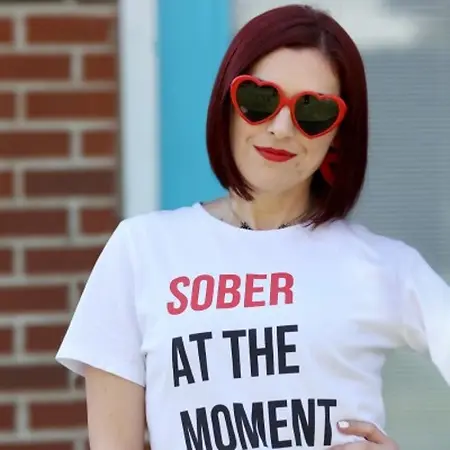
Her Story
About julianne
I'm almost 10 years sober now. I started as a correctional officer at 19 years old for the City of Philadelphia, where I've worked for the last 22 years. Over 15 years I was put into upward mobility programs by supervisors who believed in me, and I'm now a budget officer for licenses and inspections. However, during that time I became addicted to opiates and my life turned upside down. That's when I learned that drug addiction's not a choice and people need help - I only learned that through my own experience. Three years ago I learned about what a certified peer specialist was. I was making recovery content online, making really funny videos about my drug addiction, and I had all these followers on TikTok. I wanted to do something with this, to help people. I always volunteered in animal shelters, but once I became sober myself I wanted to help other recovering addicts. I wanted to have some education behind me because I didn't want to be jumping into people's recoveries without actual knowledge. So I did this course, became a Certified Peer Specialist, and founded my own business two years ago. I still work my day job, which I hate, so that I can do this other thing when I leave work. This is what I want to become the thing. I'm looking for brand partnerships and sponsorships because it costs more than I've been bringing in. There's such a demand for it, but people get really upset when you tell them they have to invest in their own recovery.
Her Interview
Ten minutes with julianne
01What do you attribute your success to?
I spent so much time hiding and suffering in the dark, suffering in silence, and now I recover out loud because I realize it's not a moral failing. It took a lot of time for me to drop the shame in my story. I used to hate myself for so long because I was just like my mom, and that was my worst fear. I share all of this with people to say that people can change. I used to vote a completely different way 15 years ago when I was a kid just listening to what my boyfriends were telling me. That's shameful for me to admit, but everything else is I've learned. When you know better, when you learn better, you should do better. When you know better, you should do better, and I have. I share that with them so they know that there is hope there, and that you can come from being over $100,000 in debt and climb out of it. Sometimes it takes just seeing that somebody else can do it, seeing somebody else that looks like you did it. I lead with my story now - I share everything with them about how I get through things. From the get-go I have not been set up for success, I have been set up for absolute failure, and so to be sitting here in my own home right now that I own on my own is pretty amazing that I've made it.
02What are the biggest challenges or opportunities in your field right now?
Codependency is really hard in recovery. All of us addicts and alcoholics, or people that I find in these communities, are so codependent to a fault, and so are the people in our lives - our husbands, our moms, our whatever. So it's really hard to set boundaries. Boundary setting is extremely hard, and not self-sacrificing and people-pleasing. There's always the assumption that you did something wrong, somebody's mad at you, or someone doesn't like you. People assume and write a lot of stories in their head. They really let the thoughts loop instead of just asking, clarifying, talking, communicating. We really just tend to go to the isolation instead of just saying, hey, I have a question for you about this thing that happened. People want this kind of service and there's such a demand for it, but people get really upset when you tell them they have to invest in their own recovery. They get really pissed off and feel like you're making money off of their traumas. A lot of people have a hard time getting employment when they're in recovery - there are a lot of barriers to entry. There's this idea of what a drug addict is, and that stigma really needs to change. Just because I look a certain way, just because I'm not missing teeth, just because I'm not living under the L tracks, doesn't mean that my addiction wasn't just as harmful or scary or severe.
03What values are most important to you in your work and personal life?
I really, really value dropping the shame in your story. I just don't believe that shame has any place in recovery. That's what kept me sick and suffering for so long. I really value fuck the patriarchy - I bought into that bullshit and made me angry at my mom, and that makes me mad. I really value speaking the truth, speaking your mind. I value vulgar language too because I just feel like people are able to emote, they're able to express a lot more. So I really value authenticity, I value dropping the shame in your story, and I really, really value feminism and valuing and empowering women and other women.
Join Influential Women and start making an impact. Register now.