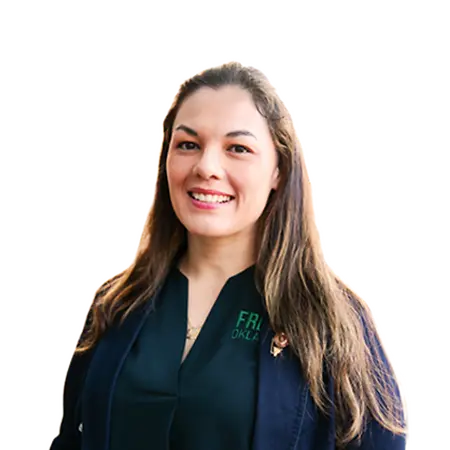
Her Story
About Julie
Julie Barlow, MAS, BSN, RN, is a healthcare leader and nurse executive based in Bixby, Oklahoma, serving as the Program Director of FreshRx Oklahoma. With a background in nursing and public health, she has built her career around advancing “food as medicine” and lifestyle-based healthcare interventions. Her work focuses on addressing chronic disease through community-centered, preventative care models that integrate nutrition, education, and behavioral health support. In her current role at FreshRx Oklahoma, Julie leads the expansion of a 12-month, no-cost program that connects individuals and families-particularly in underserved communities-with locally sourced, regenerative produce and practical health education. The initiative originally began as a small pilot focused on North Tulsa and has since grown to serve the broader city, including a dedicated program for Spanish-speaking populations. Under her leadership, the program combines cooking demonstrations, nutrition education, sleep hygiene instruction, and mental health support, with a strong emphasis on improving outcomes for conditions such as type 2 diabetes, hypertension, obesity, PCOS, and congestive heart failure. Julie holds a Bachelor of Science in Nursing from the University of Oklahoma and earned a Master of Applied Science from the Johns Hopkins Bloomberg School of Public Health, where she also completed her Master of Public Health in patient safety and healthcare quality. She is currently pursuing doctoral studies in Clinical Nurse Specialist (Adult-Gerontology) at the University of Oklahoma. Her professional mission centers on scaling sustainable, reimbursable food-as-medicine models that integrate healthcare systems, local agriculture, and community-based wellness strategies.
Her Interview
Ten minutes with Julie
01What do you attribute your success to?
I attribute my drive to my own life experience. Growing up in Costa Rica, the way we eat is completely different than here in the United States. When I first came here, I gained so much weight and couldn't understand why. I started reading about nutrition and came across research that showed people eating organic food lost weight while those eating pre-made recipes gained weight. That gave me the idea to start growing our own produce at home, and I lost 100 pounds. I was trying to get myself better, and in the way, I just found out a lot more people needed to be better. I also couldn't understand why my daughters were acting the way they were acting, so I started investigating what was going on, and then I figured out that it's also the food. The more junk stuff you eat, the worse it is for the brain, and now we know that it's one of the reasons why we have so many people with dementia. I removed all the crappy snacks from my house - I'm the bad mom because I don't buy them - and their mental health is a lot better.
02What are the biggest challenges or opportunities in your field right now?
Right now, our biggest challenge as well as our greatest opportunity is bridging the gap between medicine and agricultural policy through healthcare reimbursement. We need food-as-medicine programs to be recognized as legitimate medical interventions that insurers pay for. Here in Oklahoma, we proved what’s possible by pushing through a Food is Medicine Act. However, a bill without funding is just a promise, so our next step is legislative advocacy to allow Medicaid to cover these programs directly. But we aren't stopping at the state level. Our team is taking this fight to Washington, D.C., championing a federal bill that connects community health directly to the soil. We are advocating for a shift toward regenerative agriculture, moving away from harmful chemical inputs, and creating a food system that heals instead of harms.
Join Influential Women and start making an impact. Register now.