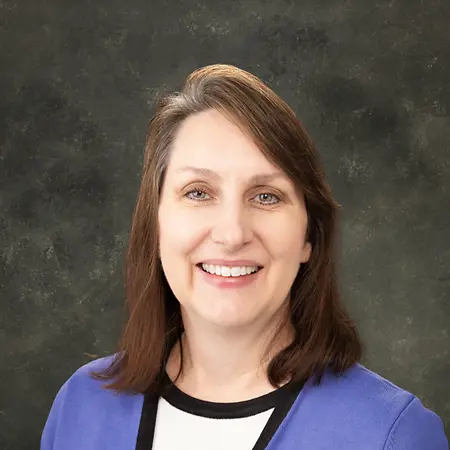
Her Story
About Julie
I am a higher education professional with over a decade of experience in academic advising, student retention, and financial aid, currently serving as Academic Advisor IV at Weber State University, a role I have held since May 2019, where I am a team player in the CS Flex program, serving as an Academic Coach interacting with individual students and guiding them as they progress in the program, presenting CS Flex Information sessions, and using technology to retain students and support their progression toward graduation. I also serve as Research Assistant, a role I have held since May 2022, where I collect and analyze data on transfer students majoring in computer science and engineering as part of the S-Stem Hub, working closely with institutions nationwide. I co-led the Center for Inclusive Computing Grant Project from May 2021 to July 2023, where I worked with Institutional Research, the College of Engineering, Applied Science and Technology, and Northeastern University to submit a successful grant proposal to study retention in computer science courses, enabling the collection of demographic data on women students to inform cultural and institutional changes. Prior to my current roles, I served as a Lead Academic Advisor, Retention Specialist, and CS Flex Academic Coach, helping students explore academic interests, identify resources, and develop plans of study, and assessing retention and graduation data. I also served as a Financial Aid Enrollment Specialist II for nearly 7 years, where I verified and packaged FAFSA applications, advised students on the federal aid process, managed the Stafford Loan Default Prevention process, reducing the Cohort from 8.1 to 7.3, and collaborated with students and external institutional banks. Earlier in my career, I served as a Customer Service Representative at Galileo Processing for over 3 years, resolving customer complaints, researching prepaid card functions, and training new employees on 50+ prepaid credit cards. I hold a Master's degree in Higher Education Leadership from Weber State University with a 4.0 GPA, where I gained a deep understanding of the roles, mechanisms, and policies that impact higher education, as well as a Bachelor of Science in Professional Sales from Weber State University. Across my career in higher education, academic advising, and student support, my work has been driven by a commitment to student success, retention, and creating inclusive pathways for all students. Whether I am advising students, conducting research, or leading grant-funded initiatives, I bring a collaborative, data-informed, and student-centered approach that has made a lasting impact on the students and institutions I have served. I am proud of the work I have done throughout my career and excited to continue advancing student success and retention at Weber State University.
Her Interview
Ten minutes with Julie
01What do you attribute your success to?
My success as an academic advisor is built on active listening, building trust-based personal relationships, deep institutional knowledge, and empowering students to make informed, independent decisions. Building a support group along the way and being willing to adapt to change often builds my success. There are a lot of problems to solve and follow through as an advisor, helping students achieve their dreams. It involves weighing pros and cons, thinking logically, developing solutions based on facts, and working closely with students, the department, and colleges. Higher Education is constantly changing, and having the institutional knowledge by staying fluent in policies, degree pathways, and curriculum changes provides accurate, usable advice for students. I have been blessed to work with amazing colleagues, who are now my friends. We support each other and build each other into better people.
02What’s the best career advice you’ve ever received?
Find out what you are passionate about and follow your dream. Love what you do! You'll never work a day in your life if you love what you do. Work can be very stressful, so many things pulling you in different directions, but by finding time to destress and realize what you do makes a huge difference, makes work very enjoyable. Advising can be very demanding, and case loads can be overwhelming, but in the end, I believe education makes us all better. Education drives economic growth, reduces poverty, and fosters engaged, informed citizens. Education meets workforce demands, increases employability, allowing individuals to improve their standard of living and support national economics.
03What advice would you give to young women entering your industry?
Professional Academic Advising is very rewarding but also demanding. Be teachable and willing to learn, foster a genuine, empathic connection that encourages students to open up and celebrate their wins. Guide students to be independent and take ownership of their degree progress. Recognize students' unique life experiences. Find a mentor, do not be afraid to ask questions; we learn best by asking and learning from our mistakes. Use the catalog to learn about degree pathways and curriculum changes, and be willing to serve on committees where you can learn more about your department and from others. Seeing others succeed is very rewarding.
04What are the biggest challenges or opportunities in your field right now?
The biggest challenge is constant change and time management. Advisors navigate a rapidly evolving higher education landscape with increasing caseloads and burnout. We have high student-to-advisor ratios, making it difficult to build personal relationships with students. Advisors need to learn new technologies and changes to student success technologies, as well as artificial intelligence. Budgets change, and department restructuring can affect resources and often lead to cross-training. The opportunities are endless. Advisors act as a bridge between a student's educational success and their future career. We use predictive analytics to support struggling students and provide referrals to campus resources such as the writing center, math lab, disability office, and financial aid. We help with the transition from high school to college, navigating challenges that may affect a student's motivation to succeed. We serve on committees focused on department- or college-wide initiatives and have a voice in major decisions. Advisors can have a say in the curriculum and help faculty with degrees. There are plenty of opportunities to grow professionally.
05What values are most important to you in your work and personal life?
I feel some core values working in higher education revolve around intellectual curiosity, academic integrity, and community engagement. Having a desire to learn, ask questions, and figure out answers drives both academic research and personal resilience. Working with students by showing empathy goes a long way in building integrity and having a strong moral character. Building a trust-based personal relationship increases academic integrity. Prioritizing what matters most helps align both work and personal life. Building lifelong connections and giving back to my community helps me be grounded and recognize the importance of mental health and a meaningful career. Being accountable for following through with students or personal commitments is also important to me. We can all make a difference in those we associate with, and by following through, we have more opportunities to serve and grow. If we serve others, our connections are expanding, building new friendships and professional networks. Service also improves mental health and can improve our physical health.
Join Influential Women and start making an impact. Register now.