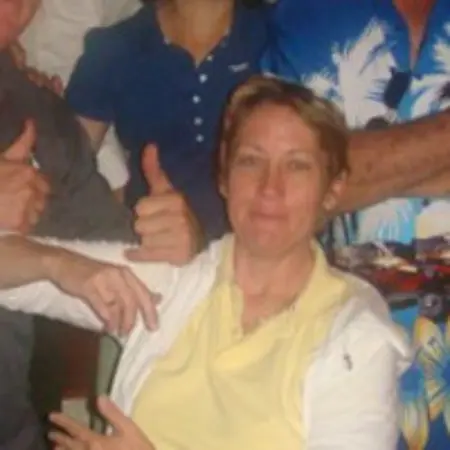
Her Story
About Julie
Julie Roscoe is a Behavior Analyst and Lead Clinician based in Justin, Texas, serving the greater Fort Worth area. She currently works in a community-based clinic model and is a founding member of a small, newly established group practice, Good Brain Behavior, where she also works alongside her daughter in a leadership and ownership capacity. In her current role, which she has held for approximately 15–18 months, she provides direct clinical oversight, behavior analytic services, and program development support with a strong emphasis on collaborative, family-centered care.
Julie brings approximately 30 years of experience in applied behavior analysis and roughly 40 years of total work in education and human services, including 22 years as a credentialed BCBA. Her career began in education as a classroom teacher, where she focused on supporting students with learning and behavioral challenges in inclusive settings. She later transitioned into autism services through respite care work in Missouri, which evolved into a long-term professional commitment at the Judevine Center for Autism, where she spent 25 years in clinical, leadership, and program development roles and contributed to the expansion of residential, day programming, and supported employment services.
Throughout her career, Julie has maintained a strong focus on adolescents and junior high-aged individuals, with a particular passion for creating play-centered, developmentally responsive learning environments. She believes deeply in in-home and clinic-based services that prioritize real-world skill generalization and family involvement as essential components of meaningful progress. Equally central to her professional identity is mentorship—she is committed to training and coaching Registered Behavior Technicians and early-career behavior analysts, ensuring that staff development mirrors the same evidence-based, compassionate, and strengths-focused approach she applies in client care.
Her Interview
Ten minutes with Julie
01What do you attribute your success to?
I attribute my success to people not letting me say no when I thought I had different plans. So many times throughout my career, I wanted to do something specific - like volunteer instead of being paid, or work in schools, or go back to Texas - and someone would say 'you have to' or 'you need to' or 'just try,' and every single time that happened, I learned something new and fell in love with that thing. Who knew, you know? I also credit being surrounded by people who are really good exemplars of passion and living what they love. I've had a lot of that in a lot of different capacities, and it's shaped everything about my journey. The truth is, this work has been as much about what I've received as what I've given - the reciprocity of learning from the kids, families, and young practitioners I work with has been incredible. I really, truly believe that if I weren't doing what I do, my recovery from my stroke eight years ago would not have been as successful, nor would I have been as motivated to work as hard as I did. This work saved me as much as I hope I've helped others.
02What’s the best career advice you’ve ever received?
To stay open to opportunities and not be afraid to try something new. Some of the most meaningful moments in my career came from stepping outside of my comfort zone and saying yes to the unexpected. I kept telling people I had different plans - I wanted to volunteer, not be paid, I wanted to work in schools, I was going back to Texas next year - but every time someone pushed me to try something I hadn't planned for, I discovered a new passion. That willingness to let go of what I thought I wanted and embrace what was actually in front of me has defined my entire career journey.
03What advice would you give to young women entering your industry?
Number one, as young women, don't be scared to mentor young men who can come into the field - that's actually kind of cool, and our clinic has over five of the 14 staff who are men. Don't be scared to put yourself out there to mentor anyone who comes forward and is expressing an interest in the opportunity, whether or not they actually go into a more professional role, or whether you have the opportunity to work with somebody just in the moment because they're interested. Take those teachable moments - I think they're so important. But also remember that they are also your moment to be taught, and there's something to be gleaned from each of those, really and truly. The reciprocity of learning is what makes this work so powerful. And please, don't ever tell someone 'you're supposed to know that' - that's a cop-out. We teach and continue to teach, and if you do anything less than continue to learn as your own passion and continue to teach with that same passion, we're doing a disservice to the children we serve.
04What are the biggest challenges or opportunities in your field right now?
We have several major challenges in the autism and ABA field right now. First, while we passed insurance reform that made access to services possible - and I had the honor of helping write that legislation in Missouri - some of the core tenets like parent training are being given lip service rather than being implemented passionately. It's particularly hard to do parent training when you're working in a clinic and not with kids at home. Second, we're marketing to younger children because they're cuter in photographs, and as a result, we don't have the necessary services for children beyond the age of 10. A lot of organizations will not serve beyond that age, and guess what? Kids still have autism when they're 11. There's a real dearth of services for adolescents and adults. Third, we have a very young field with people who have as little as 9 months to 2 years of experience wanting to become clinical directors immediately, and the average years of experience is only 5. When young RBTs report that their supervisors are telling them 'you're supposed to know that' instead of continuing to teach and mentor them, that's a real problem. We need to be teaching the way we want people to teach. The opportunity I see is in shifting toward more holistic, family-centered approaches, especially in-home services where you can achieve true skill generalization. When you're with your kid and their teacher every day in your home, there's an impetus for parents to learn alongside their children, and those skills continue beyond when the professionals leave. That's why we're starting Good Brain Behavior - to focus on in-home services across all ages.
05What values are most important to you in your work and personal life?
Walking the walk is absolutely central to who I am - not just talking about what's important, but really doing it. This also gets me in trouble a lot, by the way, because when I feel that something or someone is wrong, I'm not very quiet about it, and I'm not super compliant. I call it like I see it, and when somebody's not genuine in what they say they're passionate about and they're not actually doing what they say they need to do, that's a concern. I kind of need to be in leadership because I'm a little bossy, but also because I feel passionately about these things and have been in the field a long time. What matters most to me is helping people feel successful - that people are and can be successful daily, and should be. What really upsets me is when people, especially young women, tell me they're 'not as good as' or 'not as smart as.' It's also very concerning when children of any gender start talking about themselves in a 'not-as-good-as, not as smart as' way. Having worked with kids who have behavior challenges and histories of not being successful, I've seen what happens when people develop a failure set - where you don't trust anymore because you don't want to try and fail anymore. I think everybody has the risk of that, and I've experienced it myself to some degree. I don't think anybody should have to go through that. I think it's possible for people to feel successful, and if people don't think it's going to be fun to learn and grow, they're not going to try.
Join Influential Women and start making an impact. Register now.