Her Story
About K Davina
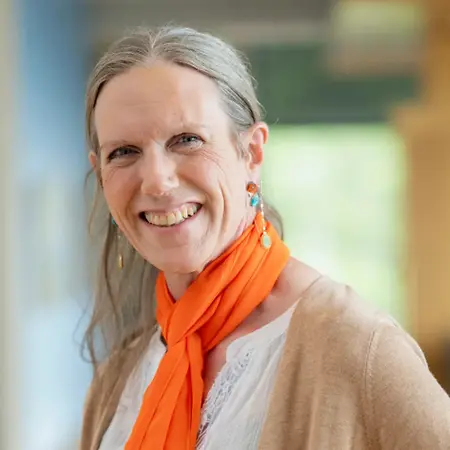
K. Davina Frick, PhD, is a professor and faculty member at The Johns Hopkins University, with approximately 30 years of experience in higher education, health economics, health policy, and health services research. She began her academic career at the Johns Hopkins Bloomberg School of Public Health at age 26, where she spent more than 16 years progressing from assistant professor to associate professor and ultimately full professor with tenure. She later moved within Johns Hopkins to the Carey Business School, where she served as Professor and Vice Dean for Education for more than eight years, overseeing a broad educational enterprise and leading a team of more than 70 staff members. She returned to a faculty-focused role in 2021, allowing her to concentrate on teaching, collaborative research, mentoring, and service.
Throughout her career, Frick has combined academic research with practical application. Her research focuses on health economics, economic evaluation, cost-effectiveness, health services, and public health interventions, with an emphasis on translating research findings into information that can be useful to real-world decision-makers. During her leadership at the Carey Business School, she helped lead the school's initial AACSB accreditation and developed its first online education programs, expanding flexible opportunities for business education. She continues to teach courses including an introduction to the U.S. healthcare system and Business Leadership and Human Values, while mentoring students across Johns Hopkins, professional associations, and alumni communities. She has also contributed to research and professional service through organizations including the National Academies of Sciences, Engineering, and Medicine and AcademyHealth.
Frick's professional philosophy centers on connection, authenticity, reflection, empathy, and purposeful exploration. She describes her career as a form of strategic dabbling guided by a North Star, allowing her to explore different opportunities while building relationships and discovering meaningful ways to contribute. Mentoring is particularly important to her, reflected in her work with students and colleagues, her establishment of an endowed mentoring fund at Penn State, and her service with organizations supporting academic and community development. Beyond academia, she is a poet, avid cook and baker, and distance runner who has completed 14 marathons and two ultramarathons. Her service also includes board and committee roles with Dragonfly Mental Health, the Maryland State Boy Choir, Iron Crow Theater, the National Academies, and AcademyHealth.
Her Interview
Ten minutes with K Davina
01What do you attribute your success to?
I attribute my success to what I would describe as strategic dabbling—exploring different opportunities while remaining guided by a clear North Star. Early in my career, I was often encouraged to focus narrowly on one area, but I found that exploring different subjects, teaching opportunities, and professional experiences created an enormous network of connections and allowed me to discover where I could contribute most meaningfully. That exploration gave me opportunities to expand my teaching, develop new interests, and connect people across different areas of my field.
I also attribute my success to the mentors who supported me throughout my career. I have benefited from both formal and informal mentors who opened doors, shared their experience, and created opportunities for me. I recognize that while I have done the work myself, I would not be where I am today without the people who helped open those doors along the way.
02What’s the best career advice you’ve ever received?
The best advice I ever received was to figure out my true and authentic self, present that as a leader, and people would be willing to follow. I did not believe it at the time. Having figured out who I truly am, I can now say that I have influence and leadership opportunities in ways that I had never imagined. The work that I had to do to figure out who I am was worth all the effort.
03What advice would you give to young women entering your industry?
I would encourage young women entering higher education to go in with their eyes wide open, understand the environment as well as they can, and build bridges so that they always have multiple possible next steps. Careers do not necessarily follow a single predetermined path, so developing relationships and remaining open to different opportunities can create resilience and flexibility.
I also strongly encourage people early in their careers to purposefully find someone they can turn to—a trusted senior colleague, friend, family member, former teacher, mentor, or another person who can serve as a sounding board. Having someone with whom you can discuss ideas, learn from experience, and navigate challenges is incredibly valuable. Mentoring should be about sharing experience and helping the next generation grow, rather than simply being a financial transaction.
04What are the biggest challenges or opportunities in your field right now?
One of the biggest challenges in higher education is responding to the rapid pace of change. Policy changes are affecting both the research environment and the ways students come to higher education, particularly for institutions that serve substantial numbers of international students. Higher education has always evolved, but the pace of change today is particularly significant.
Technology is another major area of change, particularly the increasing use of artificial intelligence. Faculty and researchers need to ensure that AI is being used appropriately in scholarly work, while educators also need to help students understand responsible use. These policy and technology changes are making the traditional higher education environment more complex, while also creating opportunities to rethink how we teach, conduct research, and prepare students for the future.
05What values are most important to you in your work and personal life?
Connection is the most important of my core values. I also place a great deal of importance on authenticity, reflection, and empathy, all of which ultimately serve my desire to connect with other people, share my own story, and listen to theirs.
I believe that understanding someone's story helps us better understand where they want to go and what may be standing in their way. I cannot remove every constraint that someone faces, but I can help them think carefully and creatively about how to make those constraints less binding. Those values guide the way I approach mentoring, teaching, leadership, research, and my relationships with others.
Join Influential Women and start making an impact. Register now.