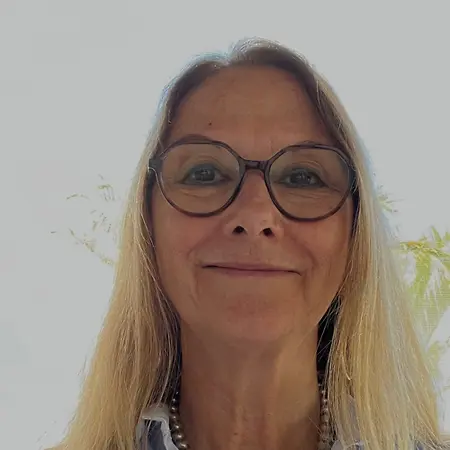
Her Story
About K.
My journey in early childhood development began at the University of Connecticut and continued at Boston University, where I earned my degree in elementary education while taking as many early childhood classes as I could. Boston had more opportunities in the field than Connecticut, and I worked at the Harvard Law School Child Care Center for several years in my first job. After getting married and graduating, I moved back to Connecticut and worked at a child care center in Storrs, where I became a teacher director in a small community program. I got very excited about public policy work through my involvement with the National Association for the Education of Young Children. When I moved to Florida in the 1980s, I started a child care resource and referral program in South Florida, working with Work Family Directions, an organization from Boston that was partnering with IBM and other Fortune 500 companies to help employees find quality child care. This was during a time when there was a lot of child abuse and neglect even within facilities, and regulations were still developing. I spent 18 years doing child care resource and referral in Palm Beach County, getting involved in policy work to put better regulations together for families, children, and providers. During the 80s and 90s, I was part of efforts that brought the Child Care Tax Credit and expanded the Child Care Development Block Grant. I also earned my business degree during this time. After 18 years, I worked for 13 years at a coalition in Broward County, helping providers understand and afford quality childcare while working with the state to find funding. Now I'm at the Achievement Centers for Children and Families in Delray Beach, Florida, where we offer quality programs to under-resourced families, serving children from one year of age to middle school, plus a teen program and family support program. I work on quality assurance, making sure all the accountability pieces are in place. It's been like a circle of life coming around. The day-to-day is not my trouble anymore, so I'm able to watch over what's going on, look at the data, see how we're progressing, and I'm a mentor now too, which is a lot of fun. The biggest challenge we face is that we've put accountability pieces in place, but we still haven't put the money in place to pay the teaching staff what they deserve. These folks work 10 hours a day, hardly get a break, and are supposed to be getting further education, yet they're the ones getting food programs and Medicaid when we really should be finding ways to pay them so they can take care of themselves and their families.
Her Interview
Ten minutes with K.
01What do you attribute your success to?
I guess how God has worked in my life. My spiritual life is very important to me, and I'm a member of Point Beach Community Church in my community. I would say my most notable achievement is my son. He lived through all of this time with me from the 80s and has really grown to be a fine young man and a girl dad. I'm very proud of him. He continues to plug on and be all that he can be and was designed to be. That's the biggest achievement.
02What advice would you give to young women entering your industry?
I would say be authentic. Be yourself and don't compare yourself to other people. Find your purpose for you, because you are an individual, uniquely created. It's taken me a long time to learn that myself.
03What are the biggest challenges or opportunities in your field right now?
The biggest challenge is getting a wage for the folks that are teaching in the classrooms. People at the very top are probably making decent salaries like the rest of other industries, but the teaching staff, the folks that are working 10 hours a day, hardly get a break, and are supposed to be going and getting further education to better their skills and learn the new research and implement it - those folks are the ones that are getting the food programs and the Medicaid programs. We're taking care of them in other ways when we really should be finding ways to pay them so they can take care of themselves and their families. That, I think, is the biggest struggle at this point, at least here in Florida. We've put a lot of pieces in place for accountability, but now we need to pay them. We're funding about 20% of the eligible families for scholarships that the state has and the federal government helps to provide, and that's probably a nationwide statistic as well. We just haven't figured this out, and I don't know if we will, because it's really about being paid on the job what you can be paid in order to afford taking care of your family.
04What values are most important to you in your work and personal life?
Honesty, trust, and I guess responsibility. That's hard to find today.
Join Influential Women and start making an impact. Register now.