Influential Woman · Public Safety
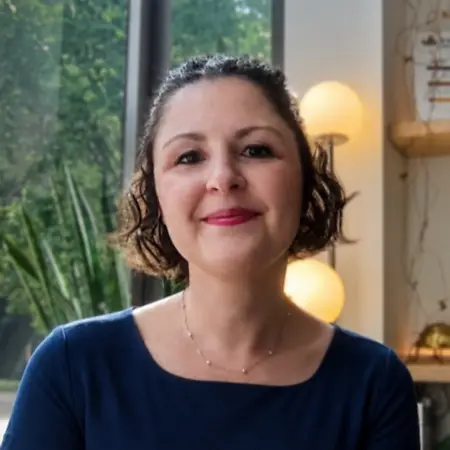
Kaitlin Quinn
Systems Cartographer, Groundtruth 911
Portland, OR 97232
Her Story
About Kaitlin
My work has moved through field operations, municipal GIS, technical support, public safety data, and product management. That range matters because I am interested less in any single piece of technology than in how the whole system behaves once people actually have to use it.
I currently lead Groundtruth 911, where I build practical NG9-1-1 GIS tools and experiment with more open, collaborative ways to solve public safety data problems. The principle is simple: the tool advises; the human decides. Good technology should strengthen professional judgment and transfer capability, not create another dependency.
Alongside that work, I am pursuing a Master of Public Health and applying a population-level lens to questions I first encountered through 911 and emergency response. Public safety and public health are not separate interests for me. They are different views of the same question: how do the systems we build affect people on the ground?
My career has moved from field to support desk to data to product, and now toward population-level systems. Not sequentially by accident. Cumulatively on purpose.
Her Interview
Ten minutes with Kaitlin
01What do you attribute your success to?
Curiosity, range, and a willingness to notice when something does not make sense.
I have learned a lot by moving between very different environments and paying attention to what each one could teach me. I started in high-volume operations, moved into field and GIS work, then public safety data, technical support, and product. Each role changed how I understood the next one.
I also trust observation more than convention. If the people doing the work are struggling with a system that looks successful on paper, I want to understand the gap. If an accepted process creates unnecessary friction, I want to know why it became accepted in the first place.
Most of what has moved my career forward has come from staying curious enough to ask the next question and stubborn enough to follow the answer somewhere unexpected.
02What’s the best career advice you’ve ever received?
My career path and the guidance I’ve received along the way have both been far from traditional.
I have learned from many people, including those whose careers I would never want to emulate. Watching how people lead, communicate, make decisions, treat others, and respond when something goes wrong has been its own education.
The lesson I have carried forward is to pay attention. Keep what is useful. Question what is not. Then decide for yourself what kind of professional you want to become.
03What advice would you give to young women entering your industry?
Trusting yourself is a practice, not a personality trait.
Technical industries can reward fluency in the existing system so heavily that questioning the system begins to look like inexperience. Sometimes it is inexperience. Sometimes you are seeing something everyone else has simply learned to work around.
Learn the standards. Learn the history. Learn why the system exists. Then keep asking questions anyway.
You do not need to imitate the loudest person in the room to have authority, and you do not need to make yourself smaller to be taken seriously. Know your work. Be specific. Stay curious. And when your instincts tell you there is another way through a problem, investigate it.
04What are the biggest challenges or opportunities in your field right now?
Public safety technology has an interoperability problem that is larger than software interoperability.
Knowledge is often fragmented across agencies, vendors, disciplines, contracts, and individual professionals. People repeatedly solve versions of the same problems without always having an easy way to share what they learned. At the same time, agencies are being asked to modernize enormously consequential systems under real constraints: staffing, budgets, procurement, legacy technology, uneven data maturity, and increasingly complex technical requirements.
That fragmentation is also the opportunity.
We have better tools for collaborating, testing ideas, sharing technical knowledge, and building in the open than we have ever had. Groundtruth 911 is part of my attempt to explore what becomes possible when expertise can move more freely across institutional boundaries without pretending every jurisdiction has the same needs.
The future of public safety technology should not be one perfect platform. It should be a healthier ecosystem of people, standards, tools, and information that can actually work together.
05What values are most important to you in your work and personal life?
Agency, warmth, curiosity, integrity, generosity, and community.
I care deeply about doing work that survives contact with reality. That means listening to the people closest to the problem, being willing to change my mind when the evidence changes, and being precise about what I know and what I do not know.
I value agency because it gives me room to question assumptions. I value collaboration because independence, without other perspectives, quickly becomes a blind spot. I value generosity with knowledge. When something can be shared, I would rather increase the number of people who can solve a problem than make myself indispensable to it.
I want to build useful things, tell the truth about their limitations, and leave people with more agency than they had before.
Join Influential Women and start making an impact. Register now.